Skip to content

If you're an Atascocita parent going through a divorce or custody case, the phrase “geographic restriction” can sound intimidating. It’s easy to feel like your rights are being taken away. But in our experience as local family law attorneys, it's one of the most important tools a Texas court uses to protect children and create a stable foundation for their future.
It's not about punishing you; it's about preserving your child's world and making co-parenting work for your family.
What Geographic Restriction Custody Means for Atascocita Families

Think of a geographic restriction as setting up a home base for your child. In a custody order, it defines a specific area where the primary parent—the one who gets to decide where the child lives—must reside. For families in our community, this boundary is designed to keep your child’s life as consistent and predictable as possible during a time of major change.
The entire goal is to support your child's well-being and make co-parenting practical. It does this by:
- Keeping Life Stable: It ensures your child can stay in their Humble ISD school, keep their friends, and continue their favorite activities in Atascocita without interruption.
- Making Co-Parenting Practical: When parents live nearby, it’s much easier to manage possession schedules, share responsibilities for school events, and handle doctor's appointments.
- Guaranteeing Access for Both Parents: It prevents long-distance travel from becoming a hurdle, so the other parent can maintain a strong, frequent, and meaningful relationship with their child.
The Standard Practice in Harris County
Here in Texas, especially in a place as large and populated as Harris County, geographic restrictions are the rule, not the exception. A judge’s top priority is always what’s in the best interest of the child, and that almost always includes stability.
In the vast majority of custody cases we see, a boundary is put in place. From a judge's perspective, it's crucial for a child's emotional health to prevent one parent from suddenly relocating hundreds of miles away. It's safe to say that over 90% of custody orders in urban Texas counties include these limits.
This table breaks down what these restrictions typically look like for parents in our area.
Key Aspects of Geographic Restrictions for Atascocita Families
| Aspect | What It Means for an Atascocita Parent |
|---|---|
| Designated Area | Your order will likely restrict your residence to Harris County and its "contiguous" (touching) counties like Montgomery or Liberty County. |
| Primary Parent | The restriction applies to the parent who has the exclusive right to designate the child's primary residence. |
| Child's School | The boundary is often designed to keep the child enrolled in their current school district, like Humble ISD. |
| Possession Schedule | The proximity makes it feasible to follow a standard possession order without excessive travel time. |
| Flexibility | While restrictive, it still allows for moves within the greater Houston area (e.g., from Atascocita to Cypress). |
The key takeaway is that the restriction provides a framework for life after divorce. A parent living in Atascocita could still move to Kingwood, The Woodlands, or Pearland, but a sudden move to Austin or San Antonio would be prohibited without court permission or the other parent's agreement. You can find more detail by exploring Texas child custody relocation law and how it affects local families.
The goal of a geographic restriction is to anchor your child's world. By keeping both parents within a reasonable distance, the court aims to minimize disruption and maximize your child's access to the love and support of their entire family network.
Ultimately, understanding this concept is the first step toward building a successful co-parenting plan. It’s a standard, predictable part of the process designed with your child's future in mind. If you have questions about how a geographic restriction might apply to your specific situation, the attorneys at The Law Office of Bryan Fagan are here to help. Schedule a free consultation with our Atascocita team to discuss your case.
What Are Geographic Restrictions? A Look at How Texas Law Defines Your Child’s Home Base

When a Harris County judge makes a ruling about your children, every single decision they make is filtered through one guiding principle: the best interest of the child. This isn't just a nice-sounding phrase; it's the legal standard baked into the Texas Family Code, and it's the foundation for nearly every custody order, including geographic restrictions.
Think of it this way. A judge has to map out your child’s life post-divorce. They consider the practical, day-to-day realities—getting to school at an Humble ISD campus, making it to doctor's appointments in Atascocita, or traveling to weekend sports at Lindsay/Lyons Park. The court’s goal is to keep that routine as stable and predictable as possible, even when mom and dad no longer live under the same roof.
A geographic restriction is one of the most effective tools a court uses to create that stability. It’s essentially a legal boundary drawn on a map, designed to keep a child’s world from being turned upside down by a long-distance move.
The Key Legal Terms You’ll See
The language in custody orders can feel like a foreign language, but the core ideas are pretty simple. Two of the most critical terms you'll need to know are "primary conservator" and "domicile." Once you understand these, you'll see exactly how a geographic restriction custody Atascocita order is built.
Primary Conservator: This is the parent who has the exclusive right to decide where the child lives. If you're named the primary conservator, this is a huge responsibility, and it's your home that the geographic restriction centers on.
Domicile: This is more than just a mailing address. It's your child's legal, permanent home. The geographic restriction sets the specific boundaries where the primary conservator must establish the child's domicile.
These two terms work hand-in-hand. The court designates one parent as the primary conservator and then sets a boundary—the geographic restriction—for where that parent can establish the child’s main home. This framework gives your child a consistent, reliable home base.
How Judges Decide Where to Draw the Line
A Harris County judge has significant leeway when it comes to setting the exact borders of a geographic restriction. There isn't a one-size-fits-all map that gets stamped on every case. Instead, the judge will weigh several factors to figure out what truly is in your child's best interest.
For example, a common restriction will cover the county where the case was filed (like Harris County) and all of the surrounding, or "contiguous," counties. This gives a parent the freedom to move from a home in Atascocita to a nearby community in Montgomery or Fort Bend County without having to go back to court for permission, which offers a good amount of flexibility.
On the other hand, the boundaries can be drawn much tighter. It's very common for parents to agree to limit the child's residence to a specific school district, like Humble ISD, to guarantee the kids can stay with their friends and teachers. A judge will almost always approve an agreement like this because it clearly promotes the child’s stability. For parents who want to learn how visitation schedules fit into these plans, you can read about how a Standard Possession Order in Texas works and coordinates with these restrictions.
The legal framework isn't meant to be punishing or overly rigid. It's a flexible tool that helps parents and judges build a post-divorce life that supports a child's deep-seated need for consistency, community, and frequent, meaningful contact with both parents.
Ultimately, Texas law provides this structure to protect what matters most—your child's well-being. By understanding how concepts like "best interest" and "primary conservator" translate into a physical map, you're in a much stronger position to advocate for an outcome that truly works for your family.
Creating a Custody Restriction That Actually Works
For most parents in Atascocita and Humble, the idea that a judge could dictate where you can live with your kids is a scary one. But it's important to understand that a geographic restriction isn't something a court simply imposes on you. You have a real voice in this process, and plenty of opportunities to create a custody order that fits your family's reality.
The moment an Original Petition for Divorce or a Suit Affecting the Parent-Child Relationship is filed at the Harris County courthouse, the conversation about your future begins. While a judge always has the final word, the truth is most custody arrangements are hammered out by the parents themselves, whether through direct talks or in a formal mediation.
Taking the Reins in Negotiation and Mediation
Think of the standard Texas restriction—usually Harris County and its surrounding (contiguous) counties—as a default setting. It’s a starting point judges often use because it’s predictable, but it might not be the right fit for your family. This is exactly where you can step in and take control.
Instead of rolling the dice and letting a judge who has never met your family make this critical decision, you and your co-parent can build a custom agreement from the ground up. You have the power to draw boundaries that make practical sense for your jobs, your support systems, and most importantly, your children.
For example, we’ve helped many clients in Atascocita and Humble who decide to:
- Tie the restriction to a school district: It’s very common to anchor the agreement to the Humble Independent School District. This is a smart, common-sense solution that keeps the kids' lives as normal as possible—they can stay at places like Atascocita High School or Eagle Springs Elementary and keep their friends and routines intact.
- Define a specific radius: Sometimes, a simple radius makes more sense. You might agree on a 50-mile radius from a fixed point, like your child's current home in the Lakeshore community. This offers a ton of flexibility while ensuring you're both close enough to handle co-parenting handoffs and school events without a major headache.
- Plan for the future: A well-crafted agreement can even prepare for life’s curveballs. We can write in terms that create a clear, simple process for one parent to relocate if a major career opportunity comes up.
The best and most stable geographic restrictions are almost always born from thoughtful negotiation, not a bitter courtroom fight. When you work together in mediation, you can craft a solution that protects your child’s stability while respecting the needs and futures of both parents.
The Role of a Skilled Local Attorney
This is where having an experienced Atascocita attorney in your corner makes all the difference. It’s our job to help you see around corners, understand what’s truly possible, and fight for an agreement with clear, enforceable language that protects you down the road.
A good lawyer helps you play out the "what-if" scenarios before they happen. What if your job transfers you from a local office in Atascocita to a new headquarters in downtown Houston? What happens if the other parent wants to move from Humble to The Woodlands? We can build the answers to these questions right into your custody order.
For instance, your order could specify that if a parent gets a job offer more than 100 miles away, they must give 90 days' notice and that you both must try mediation before filing anything with the court. This kind of proactive planning can save you a world of conflict and thousands in legal fees later on. By planning for change, you create a stronger, more flexible agreement that can handle life's surprises.
Ultimately, your involvement is the most critical piece of the puzzle. Whether you're the parent who wants to establish where your child lives or the parent ensuring your time is protected, you are not just a passenger in this process. With the right legal strategy, you can negotiate a geographic restriction custody Atascocita order that gives you clarity, gives your child stability, and sets the stage for a successful co-parenting relationship.
What Happens When You Need to Move? Modifying a Geographic Restriction
Life has a funny way of throwing curveballs right when you think you have everything settled. A custody order that made perfect sense a few years ago can suddenly feel like a cage. Maybe a dream job opportunity has opened up in another city, you’ve remarried, or an aging parent needs you closer. For parents in Atascocita bound by a geographic restriction, the need to move can feel overwhelming.
We understand. It’s one of the most common and stressful situations our clients face. The good news? You’re not permanently trapped. The Texas Family Code was written with the understanding that lives change, and it provides a clear path for modifying your custody order.
The Two-Part Test for Any Custody Change
To convince a judge to lift or alter a geographic restriction, you can't just say you want to move. The court needs you to prove two very specific things:
- There has been a material and substantial change in the circumstances of the child or one of the parents.
- Allowing the move is in the best interest of the child.
That first part—the material and substantial change—is the legal key that opens the door. It means something big has happened since your last order was signed. It can’t be a minor inconvenience; it has to be a significant life event. Think a major promotion, a new marriage, or a family health crisis that requires you to relocate.
A Step-by-Step Look at the Modification Process
Let's walk through a real-world example. Say you live in Atascocita and you've just been offered a fantastic new job in Austin. This isn't just a small step up; it comes with a 50% pay raise, better insurance, and a huge career boost. The problem is, your custody order says your child must live in Harris County or one of the counties next to it.
Here’s the game plan you’d follow:
- Step 1: File a Petition to Modify. This is the official starting pistol. We would file a "Petition to Modify the Parent-Child Relationship" in the same Harris County court that handled your original case. This document formally tells the court about the new job (the material and substantial change) and asks the judge to change the geographic restriction so you can make the move.
- Step 2: Notify the Other Parent. Legally, your co-parent has to be "served" with the lawsuit. This is a critical step that gives them formal notice and the opportunity to respond.
- Step 3: Head to Mediation. Before you ever step foot in a courtroom for a final hearing, virtually every judge in Harris County will order you to mediation. This is where you and the other parent sit down with a neutral mediator to try and work out an agreement. A surprising number of these cases are successfully resolved right here.
- Step 4: Build Your Case. If mediation doesn't lead to an agreement, it's time to prepare for court. This means gathering all the evidence to show why the move is great for your child. We’d collect your job offer letter, research on the great schools in Austin, and details about the home and support system you’ll have there. We’d also create a detailed proposal for a new possession schedule that ensures the other parent maintains a strong, consistent relationship with your child.
This chart gives you a bird's-eye view of how the process usually unfolds, from the initial filing to reaching a potential agreement.
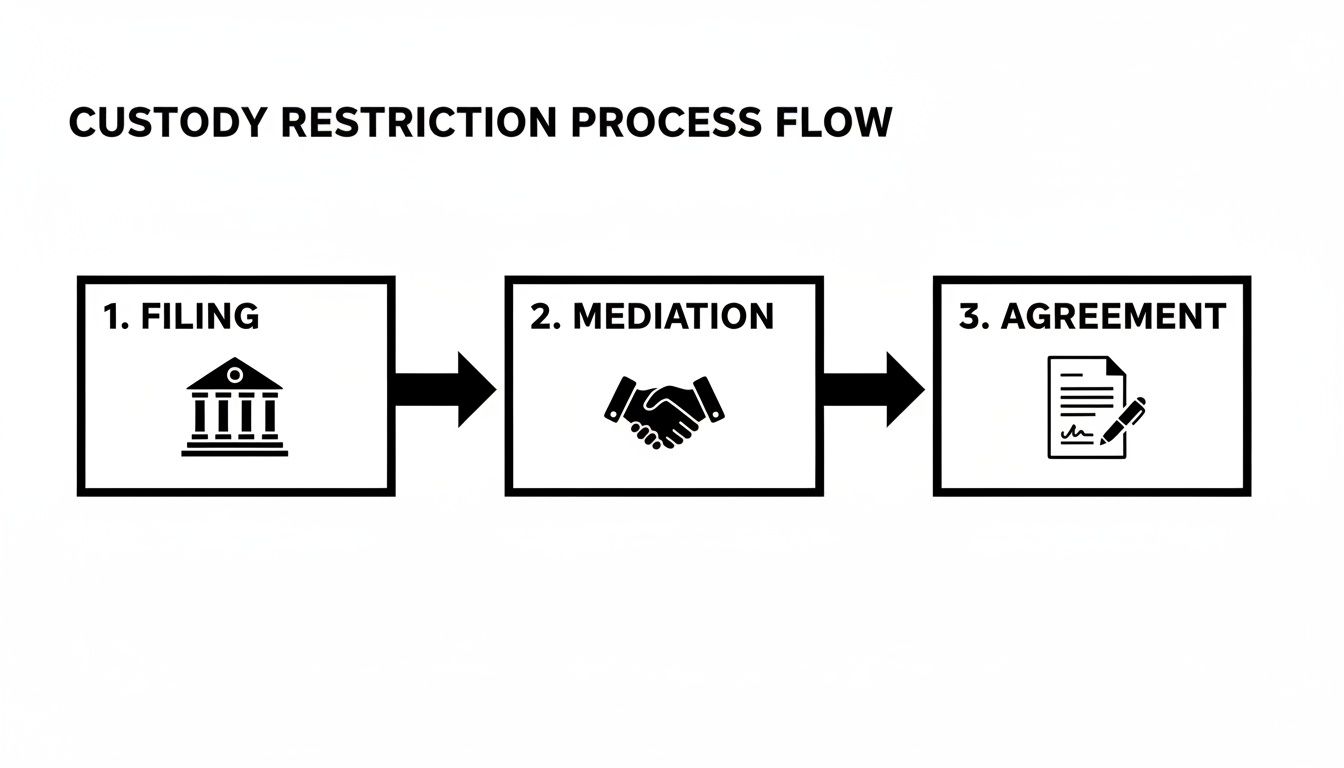
The biggest takeaway here is that the process is designed with multiple off-ramps for you and your co-parent to find a solution together before a judge has to make the call.
A judge will always weigh your reasons for moving against the potential disruption to your child's life and their relationship with the other parent. The more you can show that the move benefits your child—not just you—the stronger your case for modifying a geographic restriction custody Atascocita order will be.
Asking a court to lift a restriction is a big deal. Judges are naturally protective of the stability these boundaries create for kids. That's why building a compelling, child-focused case is absolutely essential. You have to paint a clear picture of how this move will genuinely improve your child's life.
If you're thinking about a move, it's critical to understand the entire process. You can learn more about how to change a custody agreement in our more detailed guide. Even better, talking to an attorney who knows the ins and outs of the Harris County family courts can make all the difference.
Understanding the Consequences of Violating a Custody Restriction

Think of a geographic restriction as a non-negotiable term of your legal agreement. It’s not a suggestion or a guideline—it's a black-and-white, legally binding court order. Moving outside that designated area without a judge’s permission can trigger serious and immediate legal consequences.
While being told where you can live feels intensely personal, a judge sees it differently. Ignoring that order isn't just a personal choice; it's a direct challenge to the court's authority. We want to be upfront about the fallout, not to scare you, but to protect you from making a decision that could backfire badly. A Harris County judge will not hesitate to enforce their order and protect the child's stable life.
The Immediate Legal Fallout
So, what happens if you pack up and move outside the restricted zone without court approval? The other parent has every right to take swift legal action by filing a Motion to Enforce. This is a potent legal document that asks the judge to step in and force you to comply with the custody order.
Once an enforcement action is filed, things can move very quickly. The court can issue orders that are far from minor slaps on the wrist; they are designed to reverse the violation and can permanently alter your custody arrangement.
Here's what you could be facing:
- A Court Order to Return the Child: A judge can—and most likely will—order you to bring the child back to the original geographic area immediately.
- Paying the Other Parent’s Legal Fees: If the court finds you intentionally violated the order, you will almost certainly be ordered to pay every dollar your co-parent spent on attorney's fees and court costs to enforce the order.
- Fines and Sanctions: Judges can also hit you with significant financial penalties for being in contempt of court.
- Loss of Custody: This is the worst-case scenario. A judge might decide your choice to violate the order proves you won't act in your child's best interest. This could trigger a custody modification, potentially even changing which parent is the primary conservator.
A Cautionary Tale From the Lake Houston Area
Let us paint a picture we see all too often. Imagine a parent living in a great home near Lake Houston, with their child thriving in the Humble ISD schools. Feeling frustrated with their ex and convinced they can give their child a better life elsewhere, they decide to move to another city in Texas without going back to court. They just pack up and go, figuring it’s better to ask for forgiveness than permission.
This is a massive mistake. The other parent, understandably panicked, calls an attorney and files an enforcement action. A Harris County judge summons the moving parent to court and, after confirming the violation, orders the immediate return of the child to Atascocita. On top of that, the judge orders the moving parent to pay thousands of dollars in the other parent’s legal fees. The impulsive move didn't just fail; it destroyed their credibility with the court and shattered the co-parenting relationship.
A court order is not a suggestion. A judge will view a unilateral move as an act that prioritizes a parent's desires over a child's stability and their right to have a relationship with both parents.
This story might be a hypothetical example, but it reflects a harsh reality we have witnessed firsthand. The risks of ignoring the legal process are simply too great. If you're considering a move, you can learn more about what you might be up against by reading about the work of a custody enforcement lawyer in Atascocita, TX. The only safe path forward is to get legal advice before you make a move.
Your Next Steps With a Local Atascocita Attorney
We've covered a lot of ground on geographic restrictions—what they are, how they get put in place, and the real-world impact of breaking one. If you’re feeling a bit overwhelmed, that’s completely normal. But the single most important thing to remember is that you have options and a say in this process.
Whether you're building a custody agreement from scratch or need to change one that no longer works for your family, your perspective is critical. No two families are alike, and your case deserves a strategy built around your unique needs and what’s best for your kids.
We’re Part of the Atascocita & Humble Community
At The Law Office of Bryan Fagan, we aren't just attorneys who happen to have an office here; we're your neighbors. Our team lives and raises families in these same communities, from Atascocita and Eagle Springs to the surrounding areas of Humble and Kingwood. This isn’t just a place we work—it's home.
That deep local connection means we understand the day-to-day realities you face. We know the Humble ISD calendar, the nuances of the Harris County family courts, and the specific challenges that come with life in this part of town. This isn't just trivia; it's practical knowledge that allows us to give you advice that actually works for your life here.
Every geographic restriction case in Atascocita is different. The right outcome hinges on a personalized plan that puts your child’s well-being first while fiercely protecting your rights as a parent. Our entire practice is built around creating that plan with you.
It's Time to Protect Your Family's Future
Facing the legal system is intimidating, but you don't have to do it by yourself. The first step is simply understanding your rights and getting a clear picture of your options. This knowledge gives you the power to take back control and build a stable, predictable future for you and your children.
If you’re dealing with a geographic restriction custody Atascocita case, the time to get clear, honest answers is now. We invite you to call The Law Office of Bryan Fagan and schedule a free consultation at our Atascocita office. Let's sit down, listen to what's going on, and give you the straightforward guidance you need to move forward with confidence.
Your Questions About Atascocita Custody Restrictions, Answered
As family law attorneys in the Atascocita and Humble area, we hear a lot of the same questions from parents trying to navigate geographic restrictions. Let's clear up some of the most common points of confusion.
Can We Tie the Restriction to a School District?
Yes, absolutely. In fact, tying the restriction to a specific school district, like Humble ISD, is often one of the smartest moves parents can make. We frequently recommend this approach because it puts the child's stability first.
This ensures your child can stay enrolled in their current school, whether it's Atascocita High School or Eagle Springs Elementary. It allows them to keep their friends, teachers, and routines, which is incredibly important during a family transition. This kind of specific agreement is usually worked out in mediation and must be written clearly into your final order to be enforceable.
What if My Ex Just Verbally Agrees to a Move?
A verbal agreement is a recipe for disaster. Even if you and your co-parent are on great terms, a handshake deal to move outside the restricted zone offers you zero legal protection. If they change their mind, you're the one who could be found in violation of a court order.
When a court order is involved, a casual agreement isn't worth the paper it's not written on. The only way to safely and legally move is to get a new, signed court order that officially modifies the geographic restriction. An attorney can help you formalize the agreement and get it filed properly with the Harris County court.
How Long Does It Take to Change a Restriction?
The timeline for modifying a geographic restriction custody Atascocita order really depends on one thing: cooperation. If both parents are on the same page and agree to the change, the process can be relatively quick—often just a few months to get an agreed order signed by a judge.
On the other hand, if the move is contested, you need to be prepared for a much longer process. A disputed case can easily take six months to over a year. It will likely involve formal discovery, mandatory mediation, and ultimately a final hearing for a judge to decide. This is why it’s so important to start the legal process the moment you know a move is on the horizon.
My Order Has No Restriction. Can I Move freely?
Having no geographic restriction in your order certainly gives you more flexibility, but it's not a blank check to move anywhere you want. The other parent can always file a legal action to try and stop the relocation, arguing that the move is not in the child's best interest.
Even without a formal restriction, it's always a good idea to talk with an attorney before you start packing boxes. We can review your specific order, explain the potential risks, and give you an honest assessment of how a judge might view your planned move.
Navigating a geographic restriction custody Atascocita case requires sharp, local legal insight. The team at The Law Office of Bryan Fagan – Atascocita TX Lawyers is here to protect your rights as a parent and secure your child's future. For a free, confidential consultation to talk about your situation, reach out to us today by visiting our website at https://www.atascocitaattorneys.com.