Skip to content

Divorce often starts with a quiet, practical fear. You may be sitting at your kitchen table in Atascocita or Humble, looking at rent, groceries, insurance, and the cost of starting over, wondering how any of it will work if the marriage ends.
That fear is real. For many people, the legal questions come second. The first question is simpler and heavier: “How am I supposed to support myself while everything changes?”
Spousal maintenance can sometimes help create breathing room after divorce. In Texas, though, it isn't automatic, and it isn't available in every case. The rules are narrower than many people expect, especially in Harris County courts where judges want clear proof, organized financial records, and a practical plan for self-support.
If you're searching for a spousal maintenance attorney atascocita tx, you probably don't need vague advice. You need a plain-English explanation of what Texas law allows, what evidence matters, and what the process looks like close to home.
Many divorces begin during seasons of stress, transition, or renewed focus after the holidays. If that timing feels familiar, this short read on understanding divorce trends like 'January Divorce Month' offers useful emotional context for what many families experience.
Navigating Divorce and Financial Uncertainty in Atascocita
Take a common local example. One spouse has spent years keeping the household running, handling school schedules, medical appointments, and daily family needs while the other spouse earned most of the income. When divorce becomes likely, the lower-earning spouse may know how to manage a family, but still have immediate concerns about housing, transportation, health coverage, and basic bills.
That doesn't mean the court will automatically order support. Texas expects adults to become self-supporting when possible. But the law also recognizes that some spouses need a temporary financial bridge after divorce, especially when the marriage has been long, earning power is uneven, or health and caregiving issues limit work options.
In northeast Harris County, these questions are rarely abstract. They affect parents trying to stay near their child's school in Humble, spouses who paused careers to raise children in Atascocita, and families who need a workable plan before one household becomes two.
What local families usually worry about first
Some concerns come up again and again:
- Housing pressure: Can you afford to remain in the area after divorce?
- Income gaps: If you've been out of the workforce, how do you cover expenses while retraining or job searching?
- Court confusion: What does a Harris County judge need to see before awarding maintenance?
- Timing: When do you ask for support, and how early should you gather records?
Spousal maintenance cases are often won or lost on preparation, not emotion. Judges need facts they can measure.
For many people, the hardest part is not knowing whether they even qualify. That's why it helps to separate three different questions: what spousal maintenance is, who can ask for it, and what steps matter in a real Harris County divorce case.
What Is Spousal Maintenance in Texas
Spousal maintenance is court-ordered financial support that one former spouse may be required to pay the other after divorce. The easiest way to think about it is as a financial bridge. Its purpose is to help a qualifying spouse meet basic needs for a limited period while moving toward self-sufficiency.

Texas takes a conservative approach. Courts don't treat maintenance like a routine part of divorce. As summarized by Modern Family Law's discussion of Texas spousal maintenance limits, Texas requires strict eligibility, generally tied to a marriage of at least 10 years plus proof that the requesting spouse can't meet minimum reasonable needs, unless another qualifying hardship applies. The same source explains that courts cap maintenance at the lesser of $5,000 per month or 20% of the paying spouse’s average monthly gross income under Texas Family Code Chapter 8, §8.055.
Court-ordered maintenance and contractual alimony are not the same
This point trips people up all the time.
Court-ordered spousal maintenance comes from a judge applying Chapter 8 of the Texas Family Code. If the law doesn't allow it, the judge can't award it because one spouse feels the outcome would be fair.
Contractual alimony is different. That's a private agreement between spouses, usually negotiated as part of a divorce settlement. It can be useful in cases where the parties want flexibility that the statute doesn't provide.
A simple way to compare them:
| Type | Who creates it | Main limit |
|---|---|---|
| Spousal maintenance | Judge under Texas law | Must fit statutory rules and caps |
| Contractual alimony | Spouses by agreement | Depends on negotiated terms |
If you want a deeper overview of the distinction, this guide on what spousal support means in Texas is a helpful next read.
What maintenance is designed to do
A lot of spouses worry that asking for maintenance will make them look dependent. That's not how the statute is supposed to work. The law is built around rehabilitation.
Courts look for a temporary support need, not a permanent transfer of lifestyle.
Practical rule: Maintenance is meant to cover a gap in basic support while a qualifying spouse works toward stability.
That means the conversation usually centers on essentials such as monthly expenses, available property after divorce, current income, employability, and what steps the spouse has taken to become self-supporting. In a local case, that could mean showing the cost of rent in the Humble or Atascocita area, the limits of part-time income, and the time needed to complete job training or re-enter the workforce.
Proving Your Eligibility for Spousal Maintenance
A common Atascocita divorce scenario goes like this. One spouse handled the home, school pickups, medical appointments, or a child’s therapy schedule for years. Now the divorce is underway, bills are coming due, and the obvious question is, “How do I show the court I qualify?”
In Harris County, eligibility is usually the first real gate. Feeling stretched financially is not enough by itself. The judge needs to see that your facts fit a specific Texas legal path and that you still cannot meet your minimum reasonable needs after the divorce property is divided.

The easiest way to understand this section is to treat eligibility like building a file for a cautious insurance adjuster. A judge will not fill in gaps for you. If a fact matters, it should usually appear in a document, a sworn statement, or clear testimony.
The main paths to qualify
Texas law gives several common ways to qualify for court-ordered maintenance:
Long-term marriage plus financial need
This is the path many people expect. You may qualify if the marriage lasted long enough under Texas law and you cannot meet your minimum reasonable needs with your own income and the property you will receive.Family violence
A qualifying family violence history can create a separate route to maintenance if it falls within the timing and legal requirements set by the statute.A physical or mental disability
If a medical condition keeps you from earning enough to support yourself, the court may consider maintenance.Caring for a disabled child of the marriage
Some parents can work in theory but not on a reliable schedule in real life. Repeated medical appointments, therapies, supervision needs, or school disruptions can make regular employment unrealistic. That issue matters in Harris County courtrooms because judges often want details about the child’s care schedule, not broad statements about being “needed at home.”
Why proof matters more than the label you use
“I was a homemaker” is a starting point. It is not the full showing.
The same is true for “I cannot work full time.” A judge will usually want to know why, since when, what jobs were attempted, what limits exist, and whether those limits are likely to continue. In the Harris County system, that often means pulling together records early, before temporary hearings and mediation put pressure on deadlines.
Helpful proof may include:
- Financial records. Bank statements, pay stubs, tax returns, monthly budgets, lease information, utility bills, and proof of what assets or debts you are likely to receive in the divorce.
- Work history documents. A resume, prior job titles, licenses, certificates, school records, and evidence of job searches or retraining efforts.
- Medical records. Doctor notes, diagnoses, treatment plans, and functional limits if health affects your earning ability.
- Caregiving records. Therapy calendars, school accommodation paperwork, medical appointment logs, or provider notes showing why a disabled child’s needs interfere with steady employment.
When one spouse controls the accounts, understates income, or mixes business and personal spending, financial proof gets harder. In those cases, it may help to understand the role of a forensic accountant in divorce. That kind of review can help trace income and explain why the numbers on paper do not match day-to-day reality.
A point that matters for local families
Texas law was updated in 2025, including changes that affected maintenance eligibility in some caregiving situations. Since then, family law lawyers in the Houston area have seen more attention given to claims involving disabled children and interrupted work histories. The practical lesson for Atascocita and Humble residents is simple. If caregiving is central to your request, show the court the actual schedule, the missed work opportunities, and why substitute care is not reasonably available or affordable.
That is often where cases are won or lost.
A judge in Harris County may understand, in a general sense, that caregiving limits employment. What the court still needs is a concrete record. Which days involve therapy? Who transports the child? What happens if the parent works an eight-hour shift? How often do emergencies or supervision needs arise? Specific answers carry more weight than broad descriptions.
What judges often focus on
In practice, three questions tend to drive this part of the case:
- Which statutory ground applies to you?
- What documents show you cannot meet minimum reasonable needs?
- What have you done, when possible, to become self-supporting?
That third point causes confusion. Texas courts do not expect the impossible. A spouse with a serious disability, or a parent providing intensive care for a disabled child, may have limits the court recognizes. But if your claim is based on temporary need, the judge may look for evidence that you applied for jobs, updated credentials, enrolled in training, or took other realistic steps to get back on your feet.
Local judges also tend to look closely at the gap between income and basic monthly expenses. If you want a clearer sense of what support may look like after eligibility is established, this guide on how much alimony may be ordered in Texas can help you connect the proof issue with the dollars-and-cents side of the case.
How Harris County Courts Calculate Maintenance Awards
Once a spouse clears the eligibility hurdle, the next question is usually straightforward: How much might the court order, and for how long?
In Harris County, judges don't pull numbers out of thin air. They look at the statutory cap, the parties' financial circumstances, and the shortest reasonable period that gives the receiving spouse a chance to become self-supporting. The court may also weigh matters such as education, job skills, work history, contributions as a homemaker, available property after divorce, and whether one spouse's conduct affected the marriage.
The amount has a hard ceiling
Texas places a firm ceiling on monthly maintenance. Under the Texas authority discussed earlier, the award can't exceed the lesser of $5,000 per month or 20% of the paying spouse's average monthly gross income.
That means even in a high-income case, the court's authority has a limit. If spouses want support beyond what the statute allows, they usually need to address that through negotiated terms rather than rely on the judge to create a larger court-ordered obligation.
A simple example helps. If the paying spouse's average gross monthly income is $10,000, then 20% would be $2,000. In that situation, the cap would be $2,000 because it is lower than the other statutory ceiling.
If you'd like a more focused discussion of these payment issues, this page on how much alimony may be ordered in Texas gives additional context.
Duration depends on the length of the marriage
Texas law also limits how long maintenance can last. As explained by Ramos Family Law's overview of Texas maintenance duration, the maximum duration is:
| Length of Marriage | Maximum Duration of Payments |
|---|---|
| 10 to 20 years | 5 years |
| 20 to 30 years | 7 years |
| 30 years or more | 10 years |
These are maximum limits, not automatic terms. Judges are directed to award maintenance for the shortest reasonable period that allows the spouse to meet basic needs and work toward independence, unless a disabling condition or similar barrier changes that analysis.
What this looks like in practice
Two local cases can have very different outcomes even if the marriages lasted a similar number of years. One spouse may have recent work history, marketable skills, and access to substantial property in the divorce. Another may have been out of the workforce for a long time and need retraining before stable employment is realistic.
The monthly cap matters, but so does the story behind the numbers. A clear budget and credible earning evidence often shape the final result.
For Atascocita residents, preparation proves practical. A judge will want to see more than a general claim that bills are high. The court needs a reasonable, documented budget tied to actual needs and a realistic picture of what the receiving spouse can earn.
The Legal Process for Obtaining Spousal Maintenance
The legal process feels less intimidating when you break it into actions. In Harris County, a maintenance claim usually develops alongside the divorce itself, not as a separate side issue.
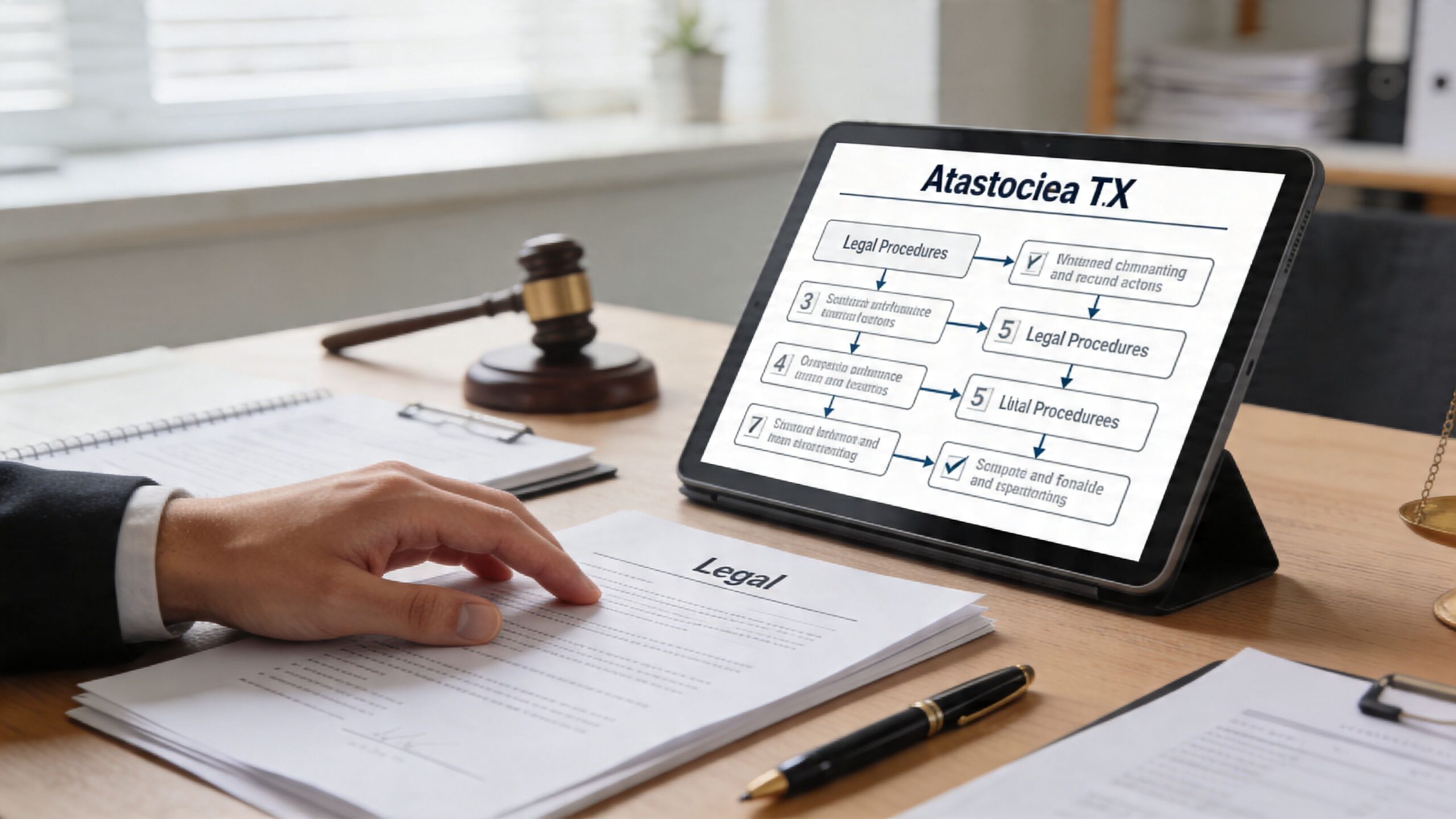
Step one starts with the divorce filing
A spouse typically requests maintenance in the divorce pleadings filed in Harris County. If immediate support is a concern, temporary orders may also become part of the conversation early in the case.
At that point, details matter. Broad statements like “I need help” won't carry much weight. The better approach is to identify your monthly expenses, current income, available savings, debts, and any facts that support your legal basis for maintenance.
Temporary orders can shape the tone of the case
Many people don't realize how important early hearings can be. Temporary orders may address who stays in the home, who pays certain bills, and how finances are handled while the divorce is pending.
If spousal support is urgent, your lawyer may present evidence early so the court understands the immediate financial pressure. Even when the final maintenance issue is decided later, those early hearings often influence negotiation.
A strong temporary presentation usually includes:
- A clean financial inventory: income, recurring bills, debt payments, and available cash.
- Supporting documents: pay records, account statements, lease or mortgage information, and medical records if health is part of the claim.
- A practical explanation: why support is needed now and what plan exists for moving toward self-sufficiency.
Discovery is where hidden facts come out
After filing, each side may exchange information through formal discovery. This is often the point where a vague financial dispute becomes clearer.
One spouse may claim income is low while bank records suggest otherwise. Another may understate monthly needs or overstate available property. Good discovery helps test those claims and builds the evidence needed for settlement, mediation, or trial.
This overview may help you visualize the legal sequence and what lawyers prepare for in support disputes:
Mediation often matters in these cases
Many Harris County divorces go through mediation before trial. That can be useful in maintenance disputes because both sides get a reality check on the strengths and weaknesses of the evidence.
A mediated solution can also address issues a court order may not. For example, the spouses may negotiate payment structure, timing, related property terms, or contractual support provisions that fit the family's actual needs better than a narrow court ruling.
If the case goes to court
At a final hearing or trial, the judge will expect an organized presentation. That usually includes testimony, exhibits, and a concrete explanation of need and ability to pay.
For someone in Atascocita or Humble, the process often feels more manageable once you know the path: file, gather records, address temporary issues, complete discovery, attempt mediation, and prepare for hearing if settlement doesn't happen.
A courtroom request for maintenance works best when every number on your budget can be traced to a document, a bill, or credible testimony.
Modifying or Enforcing a Maintenance Order After Divorce
Six months after divorce, a maintenance order can start to feel less like a final answer and more like a set of rules that has to keep up with real life. A Humble parent loses a job. An Atascocita spouse develops a medical condition that changes work capacity. A former spouse stops paying and says money is tight. Those are the kinds of post-divorce problems Harris County courts see often, and they usually turn on records, timing, and whether the change is real and well documented.
When modification may be possible
Texas courts can modify spousal maintenance if there has been a material and substantial change in circumstances since the prior order. That phrase sounds formal, but the idea is straightforward. The court wants to know whether something meaningful has changed, not whether life has merely become inconvenient.
A few examples help. A layoff may support modification if it was involuntary and the person is making a real effort to find comparable work. A major illness may matter if medical records show it affects earning ability. A significant increase in either party's income can matter too, especially if the original order was based on a very different financial picture.
Judges usually look past the headline and ask for the story underneath it. If someone says, "I make less now," the next questions are often predictable: Why? Since when? What have you done to fix it? In Harris County, voluntary underemployment arguments often fail when the paperwork is thin or the job search effort looks halfhearted.
Useful proof often includes:
- Employment records: termination letters, pay stubs, proof of reduced hours, or updated compensation records
- Job search evidence: applications, interview confirmations, rejection emails, licensing renewals, or recruiter communications
- Medical records: physician notes, treatment records, and work restrictions tied to earning capacity
- Updated budgets: current monthly expenses, not estimates copied from the divorce paperwork
- Tax returns and bank records: documents that show the full financial picture, not just one paycheck
When maintenance can end
Some maintenance obligations end because of specific events under Texas law. Remarriage is the clearest example. Cohabitation can also lead to termination, but that issue often turns into a fact dispute rather than a simple accusation.
That is where practical proof matters for Atascocita and Humble residents. Courts are not deciding gossip. They are looking for evidence that shows a continuing romantic relationship and shared residence on a regular basis. Lease information, utility bills, photographs, social media posts, financial transfers, and witness testimony can all become relevant depending on the facts.
Enforcing an order when payments stop
If court-ordered maintenance is not being paid, the receiving spouse can ask the court to enforce the order. Start with the paper trail. Pull the signed decree or order, payment records, bank statements, and a simple ledger showing each amount due, each amount paid, and each missed date.
That ledger works like a scoreboard. It helps the judge see the problem quickly.
Delay tends to make these cases harder. Bank records get harder to gather, memories fade, and informal side agreements become harder to prove. If you are dealing with missed payments, it also helps to review how to choose a divorce attorney for a post-divorce enforcement or modification case before filing, because these hearings often depend on organization more than emotion.
If a maintenance order no longer fits reality, or if payments have stopped, act while the records are fresh and the timeline is still easy to prove.
Post-divorce maintenance work in Harris County is often less about dramatic courtroom moments and more about disciplined preparation. The spouse who shows up with current records, a clear timeline, and a believable explanation usually stands on firmer ground than the spouse who relies on broad claims.
How to Choose the Right Spousal Maintenance Attorney in Atascocita
You are sitting at your kitchen table in Atascocita, looking at pay stubs, rent or mortgage numbers, and a list of monthly bills. One question keeps coming up. Do I need a lawyer who can handle a spousal maintenance claim in Harris County, or just a general divorce lawyer?
That question matters because maintenance cases often turn on details. A lawyer may be able to file the divorce and still have limited experience building or defending a maintenance request. In Harris County, the right attorney should be able to explain how your facts fit the Texas statute, what proof will carry weight in court, and how local practice affects timing, mediation, and hearing preparation.
A good lawyer should also talk with you in plain English. If the explanation feels vague, or if every answer stays general, that is a warning sign. Spousal maintenance work is practical. It depends on records, timelines, credibility, and a realistic plan.
Questions worth asking in a consultation
A consultation should help you leave with a clearer map of the road ahead. Ask questions that test whether the lawyer can connect the law to your real life in Atascocita or Humble:
- Based on my facts, do I appear eligible for spousal maintenance under Texas law?
- What documents should I bring in first, and which ones matter most?
- How do Harris County judges usually look at a monthly needs budget?
- Will temporary orders, mediation, or discovery likely shape the maintenance issue in my case?
- If I may have to pay maintenance, how do we examine the other side's claimed need and earning ability?
Listen for concrete answers. Strong answers usually mention documents, courtroom procedure, likely weak spots, and what can be proved, not just what sounds fair.
Why local perspective matters
For Atascocita residents, local court experience can save time and prevent expensive mistakes. A lawyer who regularly handles family law matters in Harris County is more likely to understand how busy dockets affect scheduling, how judges expect financial information to be organized, and when settlement talks are realistic versus when a hearing needs to be fully prepared.
That local perspective also helps with the small but important details. For example, a maintenance case may look strong in conversation but weak on paper if the budget is unsupported, the job history is unclear, or the medical evidence is thin. A lawyer familiar with northeast Harris County practice can often spot those gaps early.
If you are comparing attorneys, this guide on how to choose a divorce attorney for a contested family law case can help you ask better questions before you hire anyone.
One option local residents consider is Law Office of Bryan Fagan – Atascocita TX Lawyers, which handles family law matters including divorce, support, custody, and post-decree disputes for clients in Atascocita, Humble, and Harris County.
What the right fit feels like
The right attorney should give you a candid assessment, not a sales pitch. You want someone who can say, "Here is what helps your position, here is what hurts it, and here is what we need to prove next."
That kind of advice is calming because it gives you something to do.
If you are looking for a spousal maintenance attorney atascocita tx, bring the basics to the first meeting. Income information, monthly expenses, the marriage timeline, and any facts involving disability, caregiving duties, or family violence can help the lawyer evaluate your position quickly and give you practical next steps.
Common Questions About Spousal Maintenance in Texas
A lot of Atascocita and Humble residents come into a consultation with the same concern: "I have heard the term alimony my whole life, but I do not know what a Texas judge will do with my case." That confusion is normal. In Harris County, the answer usually depends less on labels and more on proof, timing, and whether the facts fit the Texas statute.
Is spousal maintenance the same as alimony
Texas lawyers and judges often separate these terms for a reason. Spousal maintenance usually means support ordered by the court under Texas law. Contractual alimony usually means support the spouses agreed to in a settlement. That difference matters because an agreed payment can be shaped by negotiation, while court-ordered maintenance must fit legal requirements on eligibility, amount, and duration.
Can child support and spousal maintenance both exist in the same case
Yes. They address different needs.
Child support is meant to help cover the child's needs. Spousal maintenance is meant to help a qualifying former spouse meet reasonable minimum needs. In a real Harris County case, though, those two obligations are looked at together because the judge will want a clear picture of the full monthly budget on both sides.
Do I need to prove every monthly expense
You do not need a perfect spreadsheet with every dollar accounted for, but you do need a budget that feels real and supported. Judges tend to trust numbers that are tied to documents, such as a lease, mortgage statement, utility bill, prescription cost, insurance premium, or car payment.
A practical way to think about it is this: your budget is the map the court uses to see whether maintenance is needed. If major parts of the map are missing, the court has a harder time following your argument.
What if my spouse is self-employed or controls the finances
These cases often take more work because the income picture may not show up neatly on a paycheck stub. Bank records, tax returns, business deposits, credit card statements, and patterns of personal spending may all matter.
That issue comes up often in northeast Harris County divorces involving small businesses, cash-heavy work, side income, or family-run operations. If the numbers do not match the lifestyle, your attorney may need formal discovery to get a clearer record before mediation or a hearing.
Does being unemployed automatically mean I qualify
Being unemployed by itself does not decide the issue. The court will usually ask why you are not working, whether you are able to work, what jobs you have held, what efforts you have made to find work, and whether another legal basis for maintenance applies, such as disability, caregiving duties, or family violence.
Context matters here. A spouse who has been out of the workforce for years caring for children or a disabled family member may be viewed very differently from someone who has not started a job search.
What should I gather before meeting a lawyer
Bring the papers that help tell your financial story clearly and quickly:
- Income records: pay stubs, tax returns, 1099s, freelance income records, benefit statements
- Monthly expense records: rent, mortgage, utilities, insurance, transportation, groceries, medications, and child-related costs
- Property records: bank balances, retirement statements, real estate information, vehicle loan statements
- Case-specific documents: medical records, police reports, protective orders, counseling records, caregiving schedules, job search notes
If you are missing some of these items, do not let that stop you from getting advice. A lawyer can help you identify what to request next.
Is maintenance always long term
Texas courts usually treat maintenance as limited support, not an open-ended income stream. The goal is often to give the receiving spouse time to meet basic needs and, where possible, work toward self-support.
In Harris County, that means the court often looks closely at how long support should last, not just whether support should be ordered in the first place.
What if I'm the spouse being asked to pay
Your records matter just as much. A fair response may involve showing your actual earnings, your own necessary monthly expenses, support for children, debts being handled after divorce, or facts that challenge the other spouse's claimed need.
That is one reason maintenance cases can feel more detailed than people expect. The court is not only listening for who sounds more upset. It is comparing documents, timelines, and credibility.
If you are facing divorce in Atascocita, Humble, or nearby northeast Harris County and need clear answers about support, property, custody, or the next legal step, Law Office of Bryan Fagan – Atascocita TX Lawyers offers free consultations at the Atascocita office. A conversation with a local attorney can help you understand whether spousal maintenance may apply in your case, what evidence to gather now, and what practical steps make sense next.