When you're a parent going through a separation or divorce in our community, the first and biggest question is always, "What's going to happen with our kids?" For most families here in Texas, the answer is some form of joint custody. The courts start with the belief that it’s in a child's best interest to have both parents deeply involved in their lives. This makes a shared parenting arrangement the most common outcome for families in Atascocita, Humble, and across Harris County.
What Joint Custody Really Means for Atascocita Families

For many parents here in Atascocita, the phrase 'joint custody' brings up a lot of questions and even a little anxiety. Does this automatically mean a perfect 50/50 time split? Who gets the final say on big decisions? The good news is that Texas law provides a solid framework designed to help you and your co-parent lead your child's team, even when you're no longer under the same roof. It's about creating stability and support for your child, right here in our community.
Getting the Texas Lingo Right
First things first, let's clear up the legal language in plain English. While everyone uses the term "joint custody," the official term you'll see in court documents is Joint Managing Conservatorship. This is the starting point for almost every custody case in Texas because the law presumes it’s best for a child when both parents share in the decision-making.
Think of it like being co-captains of your child's life. Both parents are given a specific set of rights and responsibilities, empowering them to work together on the big stuff—from choosing a doctor in Kingwood to deciding on extracurricular activities in Humble. This collaborative setup is meant to ensure both of you continue to have a vital and meaningful role in raising your child.
Joint Managing Conservatorship at a Glance
| Concept | What It Means for Atascocita Parents |
|---|---|
| Shared Decision-Making | Both parents have the right to be involved in major decisions about the child's education, medical care, and religious upbringing. |
| Physical Possession | This outlines the parenting time schedule—when the child lives with each parent. It doesn't have to be a 50/50 split. |
| Primary Parent | One parent is typically designated as the "primary" parent, who has the right to determine the child's main residence (usually within a certain geographic area, like northeast Harris County). |
| Rights and Duties | Both parents are given a list of legal rights, like attending school functions and accessing medical records, and duties, like providing support. |
This table shows how Texas law separates the power to make decisions from the schedule of where the child lives. It’s a crucial distinction that allows for flexibility.
Shared Rights and Responsibilities in Action
So, what does this actually look like day-to-day for a family in northeast Harris County? As Joint Managing Conservators, both you and your co-parent will typically have the right to:
- Receive report cards and attendance records directly from your child’s school in Humble ISD or another local district.
- Talk with the other parent before making big choices about your child’s health or schooling.
- Go to teacher conferences, sports games at Atascocita High School, and recitals.
- Be listed as an emergency contact who can be called and can act if needed.
The whole point is to keep both parents on the same page and actively involved. It effectively separates your relationship as co-parents from your past relationship as a couple. It’s absolutely essential to understand the difference between legal and physical custody, as one deals with decisions and the other deals with the calendar.
Facing a custody case is tough, but getting a handle on these core ideas is the first real step toward building a stable, predictable future for your child. The goal is always to create a new normal where your child can feel secure and thrive. If you're an Atascocita resident trying to figure out your next steps, please give us a call. The Law Office of Bryan Fagan is here to help you navigate this with compassion and understanding.
Breaking Down a Texas Custody Order: What "Conservatorship" and "Possession" Really Mean
When a Texas judge finalizes a custody case, the final order isn't just a simple one-page document. It's a comprehensive roadmap for your co-parenting future, and for families in Atascocita and across Harris County, knowing how to read that map is everything.
At the heart of every Texas custody order are two core components: conservatorship and possession and access. Think of it this way: conservatorship is all about your rights to make decisions, while possession and access is the actual calendar of when you have the kids. They're two different things, but they work hand-in-hand to provide stability.
Conservatorship: Your Parental Rights and Duties
In Texas, we don’t really use the term "legal custody." Instead, the law calls it conservatorship. This is the legal foundation that spells out the rights and responsibilities each parent has for their child. When the court names you and your ex "Joint Managing Conservators," it means you are expected to share the power to make the big calls in your child's life.
This is the authority that allows you to have a say in crucial life decisions, including things like:
- Medical Decisions: Which pediatrician in the Atascocita area to use or whether to approve a specific medical procedure.
- Educational Choices: Where your child goes to school, whether it's a particular campus in Humble ISD or another district.
- Mental Health: Agreeing on a therapist or other mental health support for your child.
- Religious Upbringing: Making choices about your child's spiritual life and education.
Now, just because you share these rights doesn't mean you'll always agree. The court order will lay out a game plan for breaking deadlocks. Often, one parent is given the exclusive right to make the final call on a specific issue if you two can't find common ground. For a more detailed breakdown, our guide on conservatorship in Texas goes much deeper into how these rights are assigned.
Possession and Access: The Parenting Time Calendar
While conservatorship covers your legal authority, possession and access is the practical, day-to-day schedule. This is the part of the order that answers the question, "Where will the kids be this weekend?" It's the calendar that details holidays, summer breaks, birthdays, and regular weekly schedules.
Here's where a lot of people get confused: being named a Joint Managing Conservator (sharing decision-making) doesn't automatically mean you get a 50/50 possession schedule. In fact, the most common arrangement in Texas is the Standard Possession Order, which gives a clear, predictable framework for parenting time but isn't a 50/50 split.
A crucial point for Harris County parents to understand is this: even in a joint conservatorship, the court will almost always name one parent the "primary conservator." This parent has the exclusive right to decide where the child lives and is the one who typically receives child support.
This "primary" designation is a big deal. The court will usually tack on a geographic restriction, requiring the primary parent to live within a certain area—like Harris County or the boundaries of a specific school district like Humble ISD. This is done to make sure the other parent can easily exercise their visitation time and stay actively involved in the child's life.
At the end of the day, these two concepts—conservatorship and possession—are the pillars of your court order. One gives you a voice in your child's upbringing, and the other provides the routine and stability your child needs to flourish. Getting a firm grip on how they work together is the first step toward co-parenting with confidence right here in our community.
How Courts Decide What’s Best for a Child
When you walk into a Harris County courthouse for a custody case, whether you’re from Atascocita, Humble, or anywhere else, one core principle guides every single decision: the best interest of the child. This isn't just some legal catchphrase—it's the North Star for every ruling a judge makes. But what does that actually look like when a judge is deciding the future of your family?
For most parents, this idea feels incredibly abstract. Of course, you believe you know what's best for your child, but so does your co-parent. So how does a judge, a relative stranger to your family, make such a monumental choice? To bring clarity to this, the Texas Supreme Court laid out a framework years ago in a landmark case, Holley v. Adams. This case gave us a list of factors, now known as the "Holley Factors," that judges use to build a complete picture of a child’s world.
The Holley Factors: A Judge's Toolkit
Think of these factors less like a scorecard and more like a set of lenses. A judge uses them to examine which parent's home and influence will best help a child grow up happy, healthy, and secure. It’s all about creating a safe, stable, and nurturing environment.
While the list isn't set in stone, some of the most critical factors a judge in Harris County will weigh are:
- The child's needs, now and later: What does your child require emotionally and physically? A toddler’s needs are worlds away from a teenager's. The court looks at the present and the future.
- Each parent's capabilities: Who is better equipped to meet those needs? The court assesses each parent’s ability to provide a loving home, emotional support, and financial stability.
- The stability of the home: A judge will look at the stability of each parent's life. This covers everything from job security and living arrangements in Atascocita to personal choices that might impact the child.
- The child's preference (if they're old enough): For kids 12 and older, a judge can speak with them privately in their chambers to hear their wishes. While not the deciding factor, a mature child's opinion can carry significant weight.
Grasping these factors is a game-changer. It helps you stop focusing on the conflicts of the past and start building a case that shows how you can provide the best possible future for your child.
Why Your Ability to Cooperate Matters So Much
Beyond the classic Holley Factors, judges today put an enormous amount of stock in one thing: how well you and your co-parent can work together. They want to see two adults who can put their child’s well-being above their own disagreements. This is especially true if you're aiming for a joint managing conservatorship, which is Texas's legal term for joint custody.
Texas law and judges strongly favor co-parenting. They’ll scrutinize how you communicate, your history of involvement in your child's life, and, crucially, your willingness to support the child’s relationship with the other parent. Proving you can collaborate on a detailed parenting plan sends a powerful message to the court. You can discover more insights about how cooperation impacts custody outcomes and why it's such a focus in today's courtroom.
Showing the Court You’re the Right Choice
As you prepare for your case, your goal is to demonstrate, with clear evidence, that you are the parent who is laser-focused on your child's welfare. This isn't about grand gestures; it's about consistent action.
You can do this by:
- Keeping a record of your involvement in school, doctor's appointments, and extracurriculars in the Atascocita area.
- Providing proof that you have a safe, stable, and appropriate home.
- Proposing a practical possession schedule that prioritizes routine and minimizes disruption for your child.
Ultimately, every email, photo, and piece of testimony should contribute to a portrait of a parent who is dedicated, capable, and wholeheartedly committed to their child's best interest. Here at The Law Office of Bryan Fagan, we can help you connect these dots and show the court how these factors play out in your unique situation. To talk about your family's needs, you can schedule a free consultation at our Atascocita office.
Common Parenting Schedules and Possession Orders
Once a judge decides on a joint managing conservatorship, the big question becomes: what does that look like day-to-day? That’s where the Possession Order comes into play. For families in Atascocita and Humble, this document is the practical playbook for co-parenting. It’s the calendar that lays out exactly when your child will be with each parent, swapping guesswork for the kind of stability kids need to thrive.
While every family is different, Texas law provides a solid framework to start from. Think of it as a default setting—a clear, predictable schedule that can be tweaked to fit your real life.
The Texas Standard Possession Order (SPO)
The schedule you'll hear about most often in a Harris County courthouse is the Texas Standard Possession Order, or SPO. When parents live within 100 miles of each other, this is the schedule the court presumes is in the child's best interest. It’s the tried-and-true route that works for many families.
Under a typical SPO, the non-primary parent usually has the kids:
- On the first, third, and fifth weekends of a month.
- For alternating major holidays like Thanksgiving and Christmas each year.
- For 30 days during summer break, which can often be split into one or two blocks of time.
This setup gives the primary parent the majority of time during the school year, which helps maintain routine, while still giving the non-primary parent consistent and meaningful time with the children.
Going Beyond the Standard: The Expanded SPO
Life isn't always standard, and Texas law recognizes that. The Expanded Standard Possession Order (ESPO) offers a bit more flexibility and is becoming incredibly common in Harris County. It’s a great option for parents who want to give the non-primary parent more time without jumping to a full 50/50 split.
So, what’s the difference? The ESPO "expands" the weekend visits. Instead of a Friday evening pickup, the non-primary parent gets the child from school on Thursday and brings them back to school on Monday morning. This simple change adds two extra overnights each month, creating more opportunities for everyday parenting moments, like helping with homework or navigating the morning rush.
Every one of these schedules is viewed through the lens of the "best interest of the child." A judge will carefully weigh several factors to make their decision.
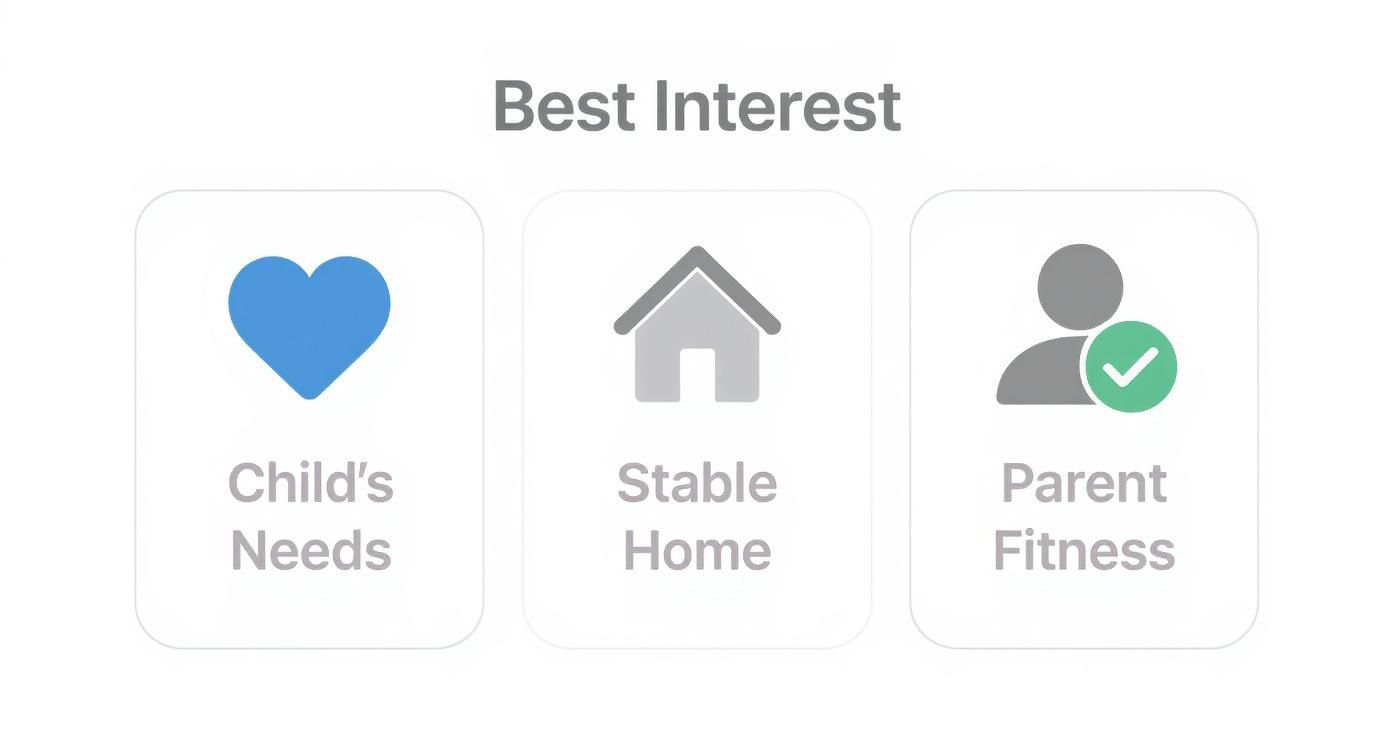
As you can see, the court balances the child’s specific needs, the stability of each parent’s home, and each parent's ability to provide good care.
Custom and 50/50 Schedules
The SPO and ESPO aren't your only choices. Many Atascocita families—especially those with non-traditional work hours or who live just down the street from each other—create a completely custom schedule. True 50/50 possession schedules, where time is divided right down the middle, are also an option.
The most common custody schedule in Texas is a variation of the standard possession order… Only about 10-15% of custody cases result in a true 50/50 split of parenting time, and these are typically reserved for situations where both parents live close to each other, have stable work schedules, and demonstrate a high level of cooperation. You can learn more about these Texas divorce and custody statistics.
Some popular 50/50 arrangements include:
- Week-On/Week-Off: The simplest 50/50, where children spend one full week with one parent and the next week with the other.
- 2-2-5-5 Schedule: This offers more consistency during the week. For example, Parent A always has Monday/Tuesday, Parent B always has Wednesday/Thursday, and they alternate weekends (Friday-Sunday).
Crafting a custom schedule that works takes a ton of communication and a real commitment from both parents. An experienced family law attorney can help you draft an order that fits your family's unique rhythm while making sure it’s clear, enforceable, and truly in your child’s best interest.
Comparing Common Texas Possession Schedules
To help you visualize these options, here’s a quick comparison of the most common schedules we see in Harris County.
| Schedule Type | Typical Time with Non-Primary Parent | Best For… |
|---|---|---|
| Standard Possession Order (SPO) | 1st, 3rd, and 5th weekends; alternating holidays; 30 days in summer. | Parents who live up to 100 miles apart and need a predictable, court-approved structure. |
| Expanded SPO (ESPO) | Same as SPO, but weekends run from Thursday school release to Monday school drop-off. | Parents who live close by and want the non-primary parent to have more routine, school-night involvement. |
| 50/50 Schedule (e.g., Week-On/Week-Off) | An even 50% split of time throughout the year. | Co-parents with excellent communication who live near each other and can manage frequent transitions. |
This table is just a starting point. Your family’s final order can and should be tailored to your specific circumstances.
Ultimately, it doesn't matter which schedule you choose. The goal is always the same: create a predictable, loving environment where your child feels secure and deeply connected to both parents. If you’re struggling to figure out which possession order would be the best fit for your family, contact The Law Office of Bryan Fagan for a free consultation at our Atascocita office. We're here to help you build a plan for a stable future.
Navigating the Legal Process in Harris County

For families in Atascocita and Humble, walking into a custody case can feel overwhelming. Knowing what to expect from the legal system, however, can give you a much-needed sense of control during a very uncertain time. Establishing a joint custody order in the state of Texas follows a clear path, and simply understanding that path can make a world of difference.
While the courthouse can seem intimidating, the process is really just a series of manageable steps designed to land on a fair and stable outcome for your child. It all starts with an initial filing and ends with a legally binding court order. Having a local attorney who knows the ins and outs of the Harris County Civil Courthouse is crucial for hitting every deadline and requirement with confidence.
Kicking Off the Case: Filing the Petition
The first official move in any custody case is filing what's called an Original Petition in a Suit Affecting the Parent-Child Relationship (SAPCR). Think of this document as the starting point for the legal process. It's filed with the Harris County District Clerk and formally asks the court to step in and make decisions about conservatorship (who makes the big decisions), possession (the parenting schedule), and child support.
Once that petition is filed, the other parent has to be officially notified. This is done through a formal process called "service," which guarantees both parents know a case is underway and have a fair chance to respond. From that point on, the court officially has authority over your case.
Temporary Orders: The Initial Rules of the Road
Life doesn’t just stop because a court case has started. To create stability for your child right away, either parent can ask the court for Temporary Orders. These are basically short-term rules that lay out who gets to decide where the child lives, what the parenting schedule looks like, and who pays temporary child support until a final agreement is reached.
The hearing for temporary orders is often your first time in front of a judge. It's a critical moment because it establishes the ground rules for your co-parenting relationship while the case moves forward.
In Harris County, judges expect parents to come in with a clear, child-focused plan from day one. Your conduct and the reasonableness of what you ask for at this early stage can absolutely set the tone for the rest of your case.
The Power of Mediation: Seeking Common Ground
Believe it or not, the vast majority of custody cases in Texas are settled outside of a courtroom through mediation. Harris County courts don't just encourage it; they often require parents to attend mediation before they'll even consider setting a final trial date.
So, what exactly is it? Mediation is a confidential meeting where you, your co-parent, and a neutral third-party mediator sit down together. The mediator’s job isn't to make decisions for you. Instead, they facilitate a productive conversation, helping you find creative solutions to your disagreements. It’s your best chance to craft a custom parenting plan you both can live with—which is almost always better than having a judge decide your family's future for you.
Preparing for a Final Hearing
If you just can't reach a full agreement in mediation, the last step is a final hearing (or trial) before the judge. This is where both sides present evidence and call witnesses to argue their case. The judge listens to everyone, reviews the facts, and then makes a final ruling based on what's in the child's best interest.
Getting ready for a final hearing is incredibly important, which is why our team has put together resources on how to prepare for a custody hearing that can provide invaluable guidance.
Navigating these steps requires a sharp eye for detail and a solid strategy. At The Law Office of Bryan Fagan, we guide families from Atascocita and Humble through this exact process every single day. Call us to schedule a free consultation, and let's map out your path forward.
Your Next Steps for a Stable Future
https://www.youtube.com/embed/x9jBNwMI_h4
Going through a child custody case can feel overwhelming, but you've already taken a huge step by learning the fundamentals. At this point, you have a much clearer picture of how courts approach joint custody here in Texas.
We’ve covered a lot of ground together, especially for families in Atascocita and Humble. We've untangled the legal jargon, clarifying that what most people call "joint custody" is legally termed Joint Managing Conservatorship in Texas—a system built around shared parental rights and duties.
You also now know that every single decision a judge makes hinges on one critical standard: the best interest of your child. And we've walked through the different ways to structure your time with your kids, from the default Standard Possession Order to more customized 50/50 schedules, proving there’s more than one way to create a stable co-parenting life.
Turning Knowledge Into a Plan
Understanding these concepts is one thing; applying them to your family's unique situation is where the real work begins. This guide gives you the map, but now you have to plot your specific course. The good news is, you don't have to do it alone.
For anyone in Atascocita, Humble, or anywhere in northeast Harris County dealing with a custody issue, the single best move you can make is to get advice tailored specifically to you. Every family is different, and your legal strategy should reflect that.
We encourage you to take that next step and protect your family's future. You can do that by setting up a free, confidential consultation at our Atascocita office. You'll sit down with an experienced family law attorney who will actually listen, answer your direct questions, and help you lay out a concrete plan.
This isn't just about hiring a lawyer; it's about partnering with someone who knows the ins and outs of the Harris County courts and is committed to fighting for what matters most: your children. Let us help you transform today's uncertainty into a stable, secure tomorrow.
Common Questions We Hear About Texas Custody
When you're trying to figure out a joint custody order here in Texas, it's natural to have a lot of questions. As lawyers who work with families every day in Atascocita and Humble, we've heard just about all of them. Here are some straightforward answers to the questions that come up most often.
Does "Joint Custody" Mean We Get a 50/50 Schedule?
This is easily the biggest point of confusion for most parents, and the short answer is no, not always.
In Texas, the official term is "Joint Managing Conservatorship," and it’s really about sharing the big-picture responsibilities and decisions for your child. Think of it like being co-captains for your child's life—you both have a say in major decisions about their school, healthcare, and general upbringing.
The day-to-day schedule, or who the child lives with and when, is a separate piece of the puzzle. While a 50/50 possession schedule is certainly an option, the far more common arrangement is the Texas Standard Possession Order (or the Expanded version), which isn't an equal split. Ultimately, the judge will approve whatever schedule is in your child's best interest.
Can We Just Make Our Own Custody Agreement and Avoid Court?
Yes, you absolutely can—and in fact, judges strongly prefer it. It's always better when parents can sit down and work out a parenting plan together, whether it’s done informally or through a structured process like mediation. When you reach an agreement on your own, you keep control over the final outcome instead of handing that power over to a judge who doesn't know your family.
Just remember this critical part: your private agreement isn't legally enforceable until it's put into a formal court order and signed by a judge. That final step is what turns your handshake deal into a binding document that protects everyone and gives your child much-needed stability.
What If We're Co-Parenting and Can't Agree on a Major Decision?
Disagreements are going to happen; that's just a reality of co-parenting. Your custody order is built to handle these moments. Typically, the order will give one parent the final say on certain issues if you two hit a wall.
For instance, one parent might be given the exclusive right to decide where the child goes to school, while the other might have the tie-breaking vote on non-emergency medical decisions. If the disagreements become constant, you might need to go back to mediation. In more serious situations, one parent may need to file for a modification if the current order just isn't working for the child anymore.
What's the First Official Step to Get a Custody Order in Harris County?
To kick off the legal process, one parent has to file a specific document with the Harris County District Clerk. It’s called an "Original Petition in a Suit Affecting the Parent-Child Relationship," or SAPCR for short. This petition officially opens your case and asks a judge to make orders about your child.
Filing this document is just the start. It has to be filled out correctly and then legally "served" on the other parent. Getting these initial steps right is crucial. This is where having an experienced local family lawyer on your side can make all the difference, making sure your case starts on solid ground from day one.
Trying to figure out a custody case on your own can feel overwhelming. You need clear advice and someone who will fight for you. At The Law Office of Bryan Fagan – Atascocita TX Lawyers, we're committed to helping our neighbors in Atascocita and Humble protect their families. To talk about your situation, schedule a free consultation with us today by visiting our website at https://www.atascocitaattorneys.com.