 Skip to content
When you're facing a child custody hearing, your primary job is to show the court that you can provide a stable, loving home for your child. It all comes down to preparation. For families in Atascocita, this means gathering critical documents, shaping your testimony to focus squarely on your child's best interests, and understanding the courtroom procedures right here in Harris County.
Your Guide to Navigating a Harris County Custody Hearing
For parents in Atascocita, Humble, and across northeast Harris County, the very idea of a custody hearing can feel completely overwhelming. It's a complex legal world, but you don't have to walk through it alone. The outcome of this process will define your family's future, which is why your most powerful tool is being thoroughly prepared. Think of this guide as your roadmap, laying out clear, practical steps for the journey ahead.
At the core of every single custody case in Texas is one fundamental principle: the "best interest of the child." A Harris County judge will examine every single piece of evidence you present through this specific lens. Our goal at The Law Office of Bryan Fagan is to help you, our neighbor, grasp what that standard really means and how to build a case that shows you are the parent best suited to meet your child's physical and emotional needs.
The Path to Resolution
Here’s something that surprises a lot of parents: all this prep work often helps you avoid a courtroom battle altogether. The vast majority of custody disputes never actually go to trial. In fact, data shows that roughly 90% of custody cases are resolved outside of court, which really highlights how powerful strong preparation and negotiation can be.
By investing the time now to organize your case, you dramatically boost your chances of reaching a favorable agreement through mediation or informal talks.
This visual shows the typical flow of a custody case, starting with your initial preparation and moving toward a final resolution.
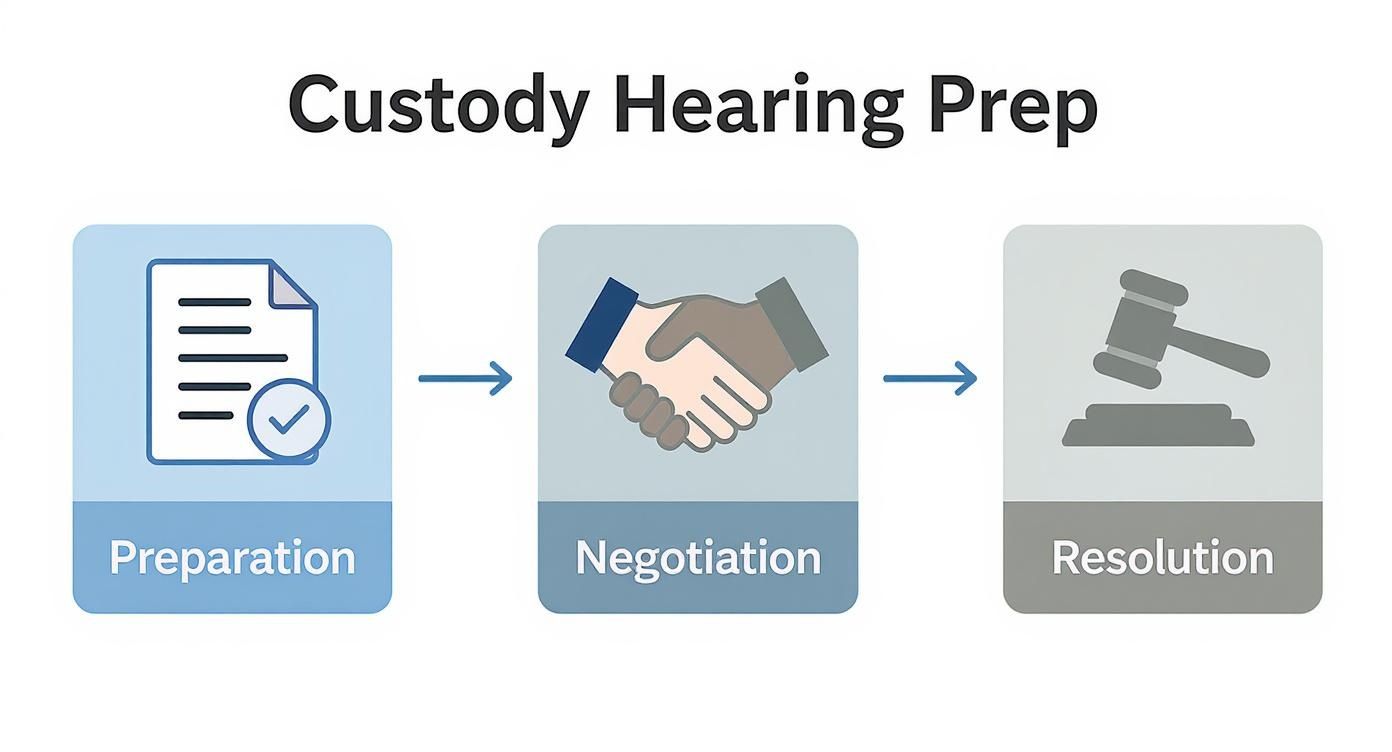
The takeaway is simple but critical: solid preparation is the fuel for successful negotiation, which is what usually leads to a resolution without a judge having to decide for you.
The court's primary focus isn't on the disagreements between parents; it's on creating a stable and predictable future for the child. Every document you gather and every statement you prepare should support that single objective.
Whether your case settles or you end up in a hearing, the work you put in right now is absolutely vital. Being well-prepared gives you leverage when negotiating and the confidence you need if you do have to go before the judge. From understanding the specific nuances of Texas child custody laws to presenting your evidence in a compelling way, every single step counts.
The Law Office of Bryan Fagan is here to support families in Atascocita and Humble through this challenging process. To talk about your specific situation, please Schedule a free consultation with us today.
Gathering Evidence a Judge Needs to See
When you walk into a Harris County courtroom for a custody hearing, your case needs to tell a compelling story. But this story isn't built on opinions or emotions—it's built on clear, undeniable facts. For families here in Atascocita and Humble, this means methodically gathering the documents that paint a vivid picture of your child's stable life with you.
Think of it as creating a comprehensive "custody binder." It’s not just about grabbing a few pay stubs; it’s about presenting an organized, undeniable record that leaves no doubt in the judge's mind. Every single piece of paper should serve one purpose: to prove that keeping your child in your care is in their best interest. That's the Texas legal standard, and your evidence is how you meet it.

Proving Your Stability and Involvement
Your first job is to show the judge that you provide a consistent, secure home life. This is where financial and logistical documents are absolutely critical. Judges look for tangible proof that you can meet your child’s needs without constant disruption or uncertainty.
Start by collecting these foundational items:
- Financial Records: Gather your most recent pay stubs, W-2 forms, and tax returns. This isn't about showing off; it’s about demonstrating a steady income and your ability to provide for your child's needs.
- Proof of Residence: A current lease agreement or mortgage statement for your home in the Atascocita area confirms you have a stable roof over your child’s head.
- School and Extracurricular Records: Report cards and attendance records from Humble ISD schools are incredibly powerful. They show your child is attending school and doing well. Go a step further and include schedules for soccer at Lindsay/Lyons Park or other local Atascocita activities to prove you're actively involved.
These documents form the bedrock of your case. They provide the court with black-and-white proof of the stable world you’ve built for your child.
Documenting Your Co-Parenting and Daily Life
Beyond bills and paychecks, the judge wants to see the human side of your parenting. How do you communicate with the other parent? How are you involved in your child’s day-to-day life? This is where your story really comes to life through communication logs and personal records.
A well-organized binder of evidence is often more persuasive than emotional testimony. It provides the court with a factual, objective view of your commitment as a parent.
It's wise to keep a detailed log of all communication you have with the other parent—texts, emails, and even summaries of phone calls. Note the date, time, and what was discussed. The goal is to show that you are a reasonable, child-focused co-parent, even when disagreements pop up. If the other parent is uncooperative, this log can also demonstrate a pattern of their behavior to the court. You can find more strategies in our guide on how to win child custody in Texas.
In your evidence binder, you’ll also want to include items that showcase your bond:
- Photos and Videos: A picture is worth a thousand words. Photos of you helping with homework, at community events in Atascocita, or just enjoying time together can be surprisingly impactful.
- Medical Records: Printouts from your child’s pediatrician or dentist show you are attentive to their health and well-being.
- Character References: Sincere letters from teachers, coaches, or trusted neighbors who have seen your parenting up close can add a credible, personal dimension to your case.
To help you get organized, here is a checklist of the documents you’ll want to start gathering.
Essential Documents for Your Custody Hearing Checklist
Use this checklist to gather the critical documents that demonstrate your fitness as a parent and support your case for the child's best interest in a Harris County court.
| Document Category | Specific Examples | Why It's Important |
|---|---|---|
| Financial Stability | Pay stubs (last 3-6 months), W-2s, recent tax returns, bank statements | Shows consistent income and the ability to provide for the child's basic needs like food, clothing, and shelter. |
| Housing & Residence | Lease agreement, mortgage statement, utility bills in your name | Proves you have a stable and suitable home for the child in a consistent location. |
| Child's Education | Report cards, attendance records, emails with teachers, IEP/504 plans | Demonstrates your involvement in the child’s academic life and shows they are thriving in their school environment. |
| Child's Health | Medical, dental, and therapy records; proof of health insurance | Shows you are responsible for the child's physical and mental well-being and are actively managing their healthcare. |
| Co-Parent Communication | Printed emails, text message screenshots, communication app logs | Provides a factual record of your communication style and can highlight cooperation (or a lack thereof from the other party). |
| Parental Involvement | Photos/videos of activities, extracurricular schedules, volunteer sign-up sheets | Creates a visual and documented story of your bond and active participation in the child’s life outside of school. |
| Character Evidence | Signed letters of reference from teachers, neighbors, coaches, or clergy | Offers a third-party perspective on your parenting skills, character, and fitness as a caregiver. |
This collection of evidence tells a clear, factual narrative about your role as a dedicated and stable parent. It’s not just about winning; it’s about making sure the court has all the information it needs to make a decision that truly serves your child’s best interests.
If pulling all of this together feels overwhelming, you don't have to do it alone. Our team at The Law Office of Bryan Fagan in Atascocita is here to help you organize your case and present it effectively. Schedule a free consultation with our local Atascocita office to get started.
Preparing Your Testimony and Witnesses
The evidence you’ve gathered is the bedrock of your case, but it’s your words—and the words of your witnesses—that will bring the facts to life for the judge. A custody hearing is your opportunity to speak directly about your commitment to your child. This isn't about scoring points against the other parent; it's about calmly and clearly showing that you are a stable, loving parent focused entirely on your child's well-being.
Your preparation is just as critical as your performance on the stand. The goal is to tell your story with confidence and honesty, without getting sidetracked by old arguments or personal grievances. From our experience, a Harris County judge is far more interested in your ability to co-parent than in hearing a list of past disputes.

Crafting Your Personal Testimony
The best testimony is direct, factual, and always circles back to the child. Before you map out what to say, put yourself in the judge’s shoes. What do they need to hear to feel confident that your child's best interests are truly your top priority?
A great way to prepare is to practice answering potential questions out loud. It feels a bit strange at first, but it helps you organize your thoughts and deliver clear answers without getting flustered or overly emotional. This is where an experienced family law attorney is invaluable; we can run through the types of questions you'll get from the judge and, just as importantly, from the other side's lawyer.
Keep these fundamentals in mind for your testimony:
- Keep the Focus on Your Child: Every answer should be framed around your child’s needs, routines, and happiness. Instead of, "My ex is always late," try framing it this way: "Our child really thrives on a consistent schedule, so it’s important for pickups and drop-offs to be on time to help with their stability."
- Be Honest and Direct: Never, ever exaggerate or bend the truth. Your credibility is your most important asset in that courtroom. If you don't know the answer to a question, it's perfectly fine to say so.
- Stay Composed: The opposing side might try to get a rise out of you. It's a common tactic. Maintaining your composure demonstrates to the judge that you're stable and can handle stress—a vital parenting skill.
The judge isn't just evaluating the facts of your case; they're evaluating you. Your demeanor in court—your calmness, your respectfulness, your child-focused attitude—is a powerful testimony in itself.
Thinking through the tough topics ahead of time is a must. If you're asked a challenging question, take a breath. A thoughtful pause shows you’re considering your response carefully, which is always better than a knee-jerk, defensive answer.
Selecting and Preparing Your Witnesses
While your own words carry a lot of weight, having a credible third party validate your parenting can be incredibly powerful. The right witness isn't just a friend who will say nice things about you. It needs to be someone with firsthand, objective knowledge of your relationship with your child.
For families here in the Atascocita area, excellent witnesses can be found all around you:
- A teacher from an Humble ISD school who can talk about your involvement in parent-teacher conferences and school events.
- A coach from a local Atascocita sports league who has seen you supporting your child from the sidelines.
- A long-time neighbor who sees you playing with your child in the yard almost every day and can speak to your daily routines.
- A daycare provider or a trusted family friend who has cared for your child and seen your parenting skills up close.
Once you know who you want to ask, preparing them is crucial. This is not about feeding them lines. It’s about making sure they understand their role and the kinds of questions they might face. Sit down with them and go over the specific facts you believe they can speak to. You need to be sure their testimony is relevant and focused on the child's best interest.
Remind your witnesses to be completely honest and to only talk about what they have personally seen or heard. A credible, well-prepared witness gives the judge the objective viewpoint they often need to see the complete picture of your positive role in your child's life.
Getting to Grips with Harris County Courtroom Procedures
Stepping into a Harris County courthouse for a custody hearing can feel intimidating. The formal setting, the rigid rules, and the heavy atmosphere are all there for a reason—to make sure the process is fair and orderly. For a lot of parents from Atascocita or Humble, that formality alone is a huge source of anxiety.
But when you know what to expect, the process becomes much less frightening. It helps you focus your energy on what actually matters: your child. Knowing the lay of the land and who’s who in the room can make all the difference. It turns an intimidating space into a structured one where you have a clear role to play.

The Key Players in the Courtroom
When you walk into that hearing room, you’ll see several people, and each one has a specific job. If you can recognize them and what they do, the whole hearing will make a lot more sense.
- The Judge: This is the most important person in the room. The judge is the impartial decision-maker. They're there to listen to everyone, look at the evidence, and make a final decision based on one single standard: the "best interest of the child."
- The Bailiff: You'll see this uniformed officer maintaining security and order. The bailiff calls the court to order, swears in witnesses, and makes sure everyone follows the judge's rules. It's important to listen to their instructions.
- The Court Reporter: This person is typing away, creating a word-for-word official record of everything said. Because of them, it’s crucial to speak clearly, avoid talking over others, and wait your turn.
- Attorneys: If you and the other parent have hired lawyers, they’ll be there presenting evidence, questioning witnesses, and making legal arguments for each of you.
Courtroom Etiquette: How You Act Matters More Than You Think
The way you present yourself in court sends a powerful message. A judge doesn’t just hear your words; they watch your body language, your tone of voice, and how much respect you show for the process. Your conduct is a type of silent testimony that can absolutely affect how credible you seem.
First off, dress appropriately. Treat it like a serious job interview. Business-casual is a safe bet—think slacks and a collared shirt or a conservative blouse or dress. Leave the jeans, t-shirts, shorts, and flashy clothes at home. This simple act of respect sets a positive tone before you even say a single word.
Next, know how to address the judge. It's always "Your Honor." Stand up when the judge enters or leaves, and stand when you're speaking to them unless told otherwise. These aren't just polite suggestions; they are the rules of the room.
The way you behave in court—especially your ability to stay calm and respectful when dealing with the other parent—gives the judge a front-row seat to your co-parenting potential. A cool head is almost always more persuasive than a hot-headed argument.
Finally, and this is a big one, be respectful to everyone. This is most critical when it comes to the other parent. Do not interrupt them or their attorney. No eye-rolling, sighing loudly, or shaking your head when you hear something you disagree with. The judge is watching to see if you can manage conflict like a mature adult. Proving you can stay civil under pressure is one of the most powerful things you can do for your case.
By understanding the courtroom environment and following the proper etiquette, you show that you're a responsible person who is there for the right reasons. It lets the judge focus on the facts of your case without any distracting drama. If you have questions about what to expect in a specific Harris County court, our team at The Law Office of Bryan Fagan in Atascocita is here to help. Schedule a free consultation with us today.
Navigating Court-Ordered Social Studies and Custody Evaluations
In some of the more contentious custody cases we see in Harris County, a judge will decide they need an objective, expert opinion before making a ruling. When the he-said, she-said gets too tangled, they'll often order what’s known as a "social study" or appoint a custody evaluator.
We know this step can feel invasive—like your entire life is suddenly under a microscope. But it's crucial to understand the goal. The evaluator is a neutral third party, usually a psychologist, social worker, or licensed counselor, tasked with one thing: investigating your family's circumstances and making a recommendation to the judge about what’s truly in the child’s best interest.
While their report isn't the final word, it carries a tremendous amount of weight. Judges rely on these evaluations to cut through the noise.
What to Expect During the Evaluation
A custody evaluation is a deep dive. It's designed to give the evaluator a 360-degree view of your child's world. While the specifics can vary, most evaluations here in the Atascocita area follow a similar framework.
You can pretty much count on the process including:
- Parent Interviews: The evaluator will want to sit down with each parent separately. This is your chance to discuss your parenting approach, your relationship with your child, and your perspective on the situation.
- Time with Your Child: Depending on their age and maturity, the evaluator will speak with your child. They are trained to do this in a low-pressure way to get a sense of the child's own feelings and needs.
- Home Visits: Yes, they will come to your home. Try not to stress about this. They aren't there to judge your housekeeping skills; they want to see the environment where your child lives and observe how you interact together naturally.
- Checking in with Others: The evaluator will likely reach out to other key people in your child's life—think teachers, pediatricians, counselors, or even close family members who see your child regularly.
How to Handle Yourself with a Custody Evaluator
Your approach to this process can make or break the outcome. The evaluator isn't on your side, and they aren't on the other parent's side. They are on the child's side. Your best bet is to be honest, cooperative, and consistently focused on your child.
It's also worth knowing that the standards and qualifications for these experts can vary. An international study comparing custody assessment guidelines found major differences in how evaluators are trained and what rules they follow from one jurisdiction to another. This just means the expert in your Harris County case is operating under specific local standards. You can read more about these global variations in the full research findings.
Here are our top tips for navigating these interactions successfully:
- Be an Open Book. Don't try to hide things or create a perfect-parent facade. The truth almost always comes out, and your credibility is everything.
- Keep it Child-Focused. Every concern you raise, every story you tell, should circle back to your child's well-being. This isn't the time to air personal grievances about your ex.
- Come Prepared. Have your documents ready. Giving the evaluator organized copies of school records, communication logs, and other evidence shows you're taking this seriously.
- Be Professional. Respond to their calls and emails promptly. Treat them with respect, even if you find their questions difficult. A cooperative attitude goes a long way.
Think of the custody evaluation as your opportunity to demonstrate—not just tell—that you are a stable, loving parent who puts your child first. Your composure and child-centered focus will speak for themselves.
Understanding what a social study is (and isn't) can take a lot of the fear out of the process. It's simply another tool the court uses to get the best outcome for your child. If a custody evaluation is ordered in your case, having an experienced attorney in your corner is non-negotiable. Contact The Law Office of Bryan Fagan right here in Atascocita for a free consultation to talk about how we can guide you through it.
Common Questions About Custody Hearings in Texas
If you're heading into a custody hearing in Atascocita or Humble, you've probably got a million questions running through your mind. It's a stressful, often isolating process, but we want you to know that your concerns are completely valid. In fact, they’re the same worries we hear from parents in our community every single day. Let's tackle some of the most common ones head-on.
The goal here is to give you some clarity and peace of mind. An informed parent is an empowered one, and that’s exactly what you need to be right now.
What Should I Do If My Ex Is Making False Accusations?
First, take a deep breath. It's a horrible feeling, but it’s a sadly common tactic in high-conflict custody cases. Your gut reaction might be to fight back and defend yourself publicly, but that can easily make you look just as combative as the other parent in the judge's eyes.
Your best response is a calm, strategic one. Shift your energy from arguing to documenting. Your job is to systematically collect hard evidence that proves the accusations are false.
This isn't about emotion; it's about facts. Look for things like:
- Text messages or emails that directly contradict what they’re claiming.
- Credible witnesses—a teacher, neighbor, or family friend—who can speak to your character.
- School attendance records, report cards, or even photos that show your child is thriving in your care.
In the courtroom, let the evidence do the talking. A skilled attorney can help you present these facts in a way that not only clears your name but also highlights your stability and composure.
How Do I Talk to My Child About the Custody Case?
This is a big one, and your child’s emotional health is the absolute top priority. The single best thing you can do is shield them from the conflict. A Harris County judge will look very, very favorably on the parent who puts their child’s well-being first.
Keep it simple. Use age-appropriate language to let them know that both parents love them and that the adults are just figuring out a new schedule. Never, ever badmouth the other parent or discuss the legal nitty-gritty with them. Making a child feel like they have to pick a side is incredibly damaging.
"A child should never be put in the middle of a custody dispute. Reassure them of your love and maintain their routines as much as possible. The court's primary concern is protecting the child's emotional and psychological stability."
If you notice your child is really struggling, think about getting them support from a local family counselor in the Humble or Atascocita area. It gives them a safe, neutral person to talk to without feeling any pressure from either parent.
Can I Use Social Media Posts as Evidence in Court?
Absolutely. Social media can be a goldmine of evidence in a Texas custody hearing, which means you need to be extremely careful about your own online activity. Our advice? Stop posting anything about your case or your ex. Avoid any photos that could be taken out of context, like pictures from parties or anything that suggests questionable judgment.
On the flip side, if the other parent is posting things that show instability, poor decisions, or statements that contradict what they’re saying in court, that’s potential evidence for you. Be sure to take screenshots immediately. A good screenshot will capture the post itself, the account name, the date, and the time. Your attorney can guide you on the proper way to introduce this digital evidence so the judge will actually consider it.
What Is a Texas Standard Possession Order?
The Standard Possession Order (SPO) is essentially the default parenting schedule in Texas. The law presumes it’s in a child's best interest, so it’s the starting point for most judges. It’s a detailed calendar that spells out exactly when each parent has the child.
For the non-primary parent, the SPO generally grants possession:
- On the first, third, and fifth weekends of a month.
- Alternating major holidays like Thanksgiving and Christmas.
- For an extended period in the summer, usually 30 days.
While it's the "standard," it's not set in stone. A judge can and will change it if you can provide solid evidence that a different schedule works better for your child. A huge part of preparing for your hearing is not just understanding the SPO, but also knowing the difference between legal and physical custody. The SPO really only addresses physical possession—where the child is—not who makes the major decisions. You need to be ready to argue why the standard schedule should (or shouldn't) apply to your family.
Going through a custody hearing is one of the toughest things a parent will ever do. But you don't have to figure it all out on your own. At The Law Office of Bryan Fagan – Atascocita TX Lawyers, we're here to give our neighbors in Atascocita, Humble, and northeast Harris County the knowledgeable and compassionate legal support they deserve. Schedule a free, no-obligation consultation with our Atascocita office today to see how we can help protect your family's future. https://www.atascocitaattorneys.com


