 Skip to content
One minute you're driving home through Atascocita after dinner or heading back from Humble. The next, you see flashing lights in the mirror, your stomach drops, and by the end of the night you're holding papers with court dates, license warnings, and unfamiliar terms.
That's where many people freeze. They worry about work, their kids, their reputation, and whether one arrest is about to change everything.
If that's you, take a breath. A DWI arrest doesn't mean you should give up, and it doesn't mean every case ends the same way. What matters now is acting quickly, understanding the Harris County process, and getting clear advice from someone who knows how local courts work.
People searching for a DWI lawyer in Atascocita, TX usually need more than a list of penalties. They need a calm explanation of what happens next, what deadlines matter first, and how a lawyer with local courtroom experience can make a practical difference. That's what this guide is for.
The Moments After a DWI Arrest in Atascocita
It often starts on a road you know well. You're on West Lake Houston Parkway, FM 1960, or near one of the neighborhood entrances in Atascocita. An officer pulls you over. You answer questions, maybe step out of the car, maybe take field tests, maybe hear words like “intoxication” or “breath test.” Hours later, you're home, exhausted and scared, trying to figure out what happened.
That reaction is normal.
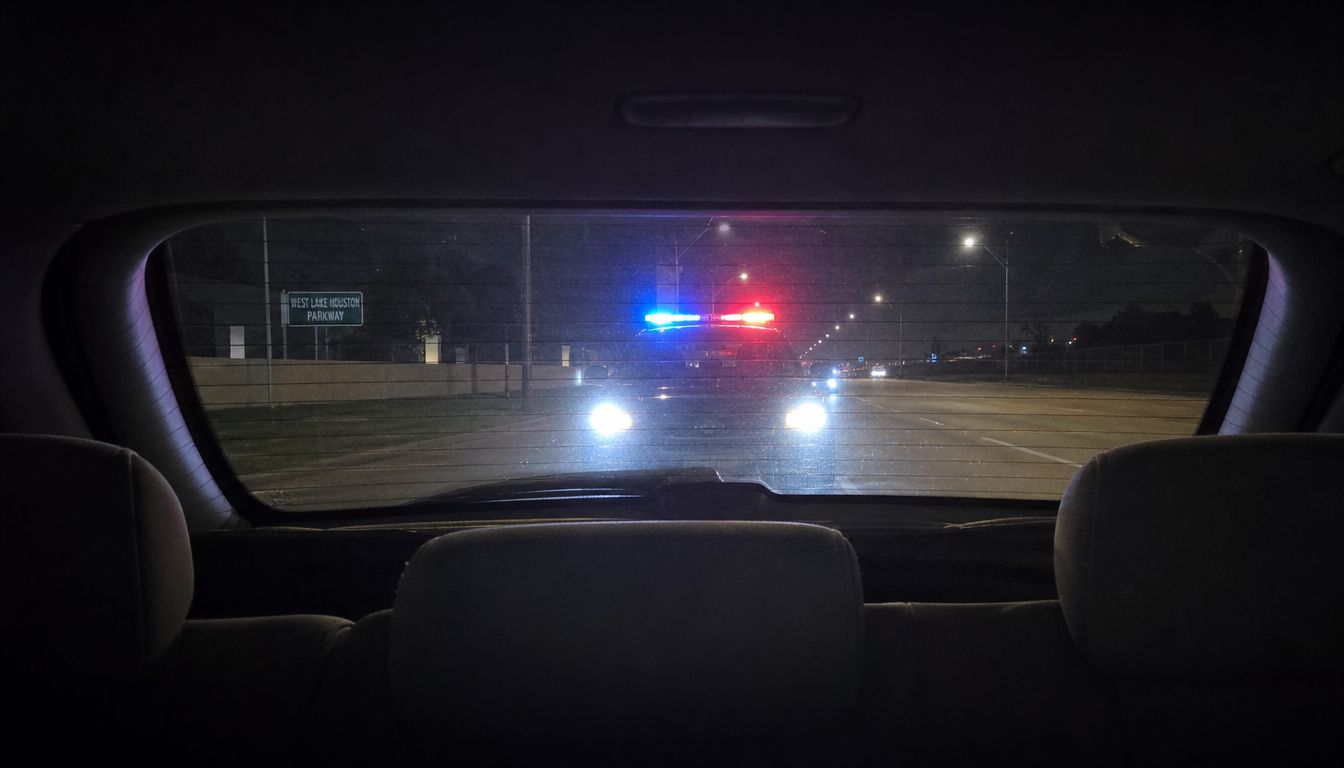
A lot of people make the same mistake in those first hours. They assume the only thing that matters is the criminal court date. In reality, the first days after a DWI arrest affect your driver's license, your defense strategy, and the evidence your lawyer may need to preserve.
What to do first
Start simple. Gather every paper you received at the jail or upon release. Save any bond paperwork, temporary driving permit, tow information, and court notices in one folder. If your phone has notes, write down everything you remember while it's still fresh, including where you were stopped, what the officer said, whether there was dash cam or body cam, and whether you were asked to take tests.
Then keep your case off social media. Don't post about the stop, don't joke about it in texts, and don't assume deleting messages solves anything.
A DWI case can also raise questions about police questioning and when you should stop talking. If you're unsure about that part, this plain-English explanation of your Miranda rights in Texas can help you understand what protections may apply.
Practical rule: The first goal isn't to explain your side to everyone. It's to protect your rights, preserve details, and avoid making the case harder to defend.
Why local context matters
Someone arrested in Atascocita isn't dealing with “Texas law” in the abstract. You're dealing with how a Harris County case moves in real life. That means local prosecutors, local court settings, local scheduling practices, and local expectations about bond conditions and appearances.
That's why a neighbor in this situation often needs more than a giant, out-of-area firm with a call center. A local lawyer can explain the process in terms that fit your actual route through the Harris County system, not a generic statewide script.
Your First 15 Days The Critical ALR Hearing Deadline
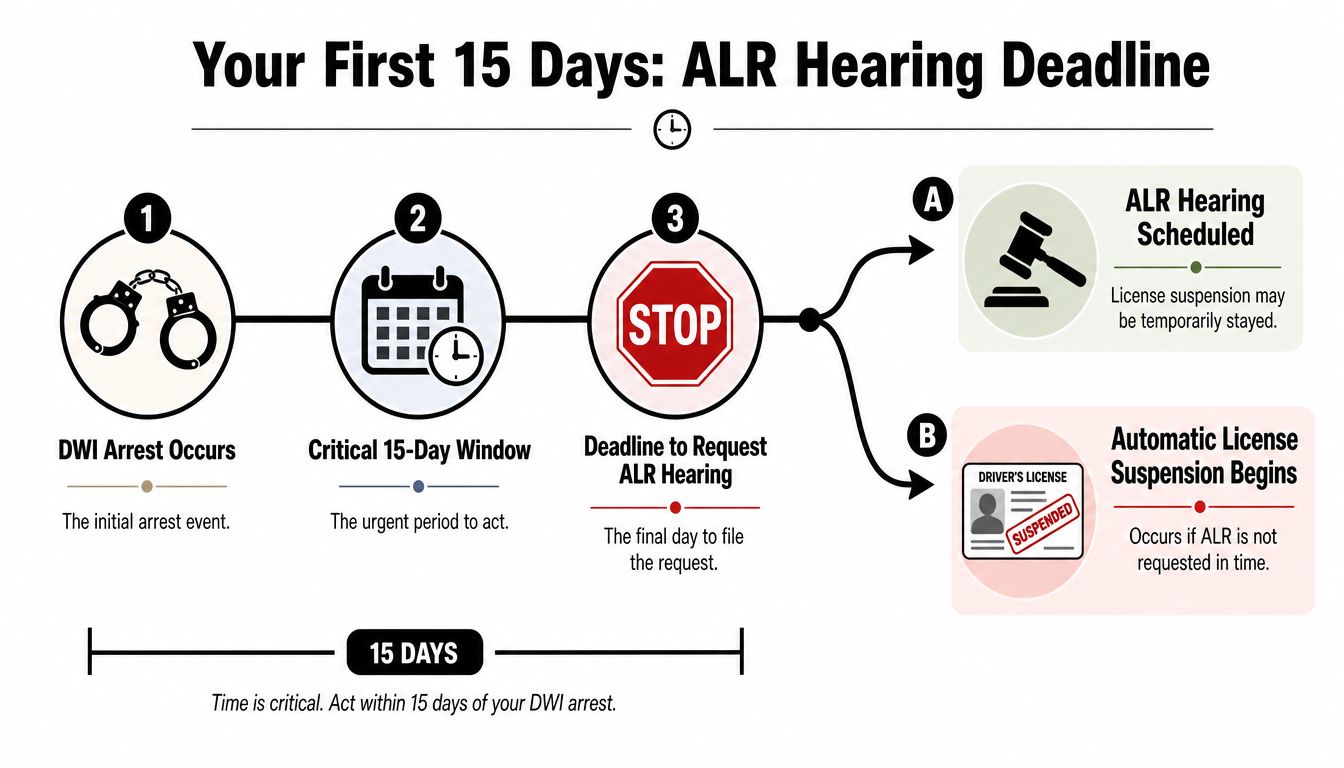
You get home after the arrest, lay the papers on the kitchen table, and assume the court date is the next deadline that matters. In many Harris County DWI cases, that is not the first deadline that can change your daily life. Your driver's license issue often starts first, and it moves fast.
After a DWI arrest, you are usually dealing with two separate tracks at the same time. One is the criminal case in court. The other is the Administrative License Revocation process, usually called ALR. The ALR case focuses on your driving privileges, not whether you will be convicted of DWI.
Why these first 15 days matter
The short version is simple. If you do not request an ALR hearing on time, you can lose the chance to challenge the license suspension early.
That catches many Atascocita drivers off guard because the criminal court process in Harris County often feels like the main event. But for work, school, child pickup, medical appointments, and basic family life, the license problem can hit first and hit hardest.
The ALR deadline is also where local help starts to matter in a practical way. A lawyer who regularly handles Harris County DWI cases can tell you what papers to look for, how the request is made, and how this separate process fits into the local court path your case is likely to follow. A larger out-of-area firm may know Texas DWI law in general. A local lawyer is more likely to explain how this deadline affects someone driving from Atascocita into the rest of Harris County every day.
Texas also treats a breath test refusal seriously. A refusal can lead to a license suspension through the ALR process even before the criminal case is resolved. The Texas Department of Public Safety explains the administrative license suspension process and implied consent rules on its driver license suspension hearings page.
What an ALR hearing actually does
An ALR hearing is a separate civil hearing. It is narrower than the criminal case, but it still gives your lawyer an early chance to examine part of the state's story.
That can help in several ways:
- Challenge the suspension so you have a chance to keep driving privileges longer or avoid a suspension in some cases
- Question the basis for the stop or arrest before the criminal case is further along
- Review reports and testimony early to spot inconsistencies, missing details, or procedural problems
- Protect your routine because driving limits can affect work, treatment, and court compliance
That last point matters more than people expect. In some cases, a DWI arrest leads to alcohol evaluation, treatment recommendations, or court-ordered programs. If that becomes part of your situation, this Dallas-Fort Worth guide to court-mandated rehab gives a useful plain-English overview of how treatment requirements can intersect with a legal case.
A point that often causes confusion
Winning the ALR hearing does not mean the criminal charge disappears. Losing the ALR hearing does not mean the criminal case is over either.
They are connected, but they are not the same case.
A good way to view it is this: one track is about your right to drive, and the other is about the DWI accusation itself. Both matter. Each has its own deadlines, rules, and opportunities to challenge what happened.
What to do right now
If your arrest happened in Atascocita, Humble, or nearby northeast Harris County, treat these first two weeks as action time, not waiting time.
Start here:
- Pull out every paper from the arrest
- Confirm the exact arrest date
- Ask a lawyer whether the ALR hearing has been requested
- Make sure the lawyer understands Harris County DWI practice, not just Texas law in the abstract
A missed ALR deadline can create problems long before your criminal case is ready to be fought in court. Acting early gives you more room to protect your license, examine the stop, and make clear decisions instead of reacting after options have narrowed.
Understanding Texas DWI Penalties in Harris County
After the scramble of the first few days, many people in Atascocita ask the same hard question: what could this do to my life?
That question matters because a Harris County DWI case is rarely just about one court date. The charge level affects jail exposure, fines, license consequences, court conditions, and sometimes your job or professional license. A local lawyer helps you see how those pieces tend to play out here, in the courts that handle cases from the Atascocita area, instead of giving you a generic summary of Texas law.
How Texas classifies DWI charges
Texas sorts DWI cases into levels. The level usually depends on facts such as prior convictions and, in some cases, the alcohol concentration alleged by the state.
A first DWI is often charged as a misdemeanor. If the state alleges a very high alcohol concentration, the punishment range can increase. Repeated DWI allegations can push a case into felony territory, which carries much heavier long-term consequences.
Here is the basic framework people are usually trying to understand:
| Charge level | Classification | Possible fine | Possible jail or prison | License impact |
|---|---|---|---|---|
| First DWI | Class B misdemeanor | Up to $2,000 | Up to 180 days | Possible suspension |
| First DWI with BAC 0.15 or higher | Class A misdemeanor | Up to $4,000 | Up to one year | Possible suspension and stricter conditions |
| Third DWI | Felony | Up to $10,000 | Up to 10 years in prison | Serious long-term consequences |
Those ranges are the outside boundaries of punishment. They are not a prediction of what will happen in your case.
That distinction helps. People often hear the maximum penalty and assume it is automatic. It is not. The facts, the evidence, your history, the court handling the case, and the quality of the defense all matter.
A common misunderstanding about BAC
A lot of drivers focus only on 0.08. That number matters, but it is not the whole case.
In Texas, the prosecution can try to prove intoxication through test results, officer observations, driving behavior, and other evidence. In plain terms, a DWI case can become a fight about reliability and proof, not just a single number on a printout. If you want a clearer sense of how defense lawyers examine whether the state's proof may fall apart, this explanation of how DWI charges may be challenged or dropped gives helpful context.
A courtroom works a lot like a chain. If one link is weak, the whole argument can weaken.
Penalties outside the written statute
The part people often underestimate is everything that happens around the case. A judge may require classes, supervision, ignition interlock conditions, alcohol monitoring, or treatment-related steps depending on the facts and the outcome. If your case touches substance-related conditions, this Dallas-Fort Worth guide to court-mandated rehab explains how treatment requirements can fit into a criminal case.
For someone living in Atascocita, those added conditions can hit daily life fast. Getting to work in Houston, taking kids to school, caring for an older parent, or keeping a commercial schedule becomes harder when driving restrictions and court requirements start stacking up.
That is why local knowledge matters here. A lawyer who regularly handles Harris County DWI cases can often give you a more realistic picture of what these penalties mean in practice, not just on paper.
How an Atascocita DWI Lawyer Builds Your Defense
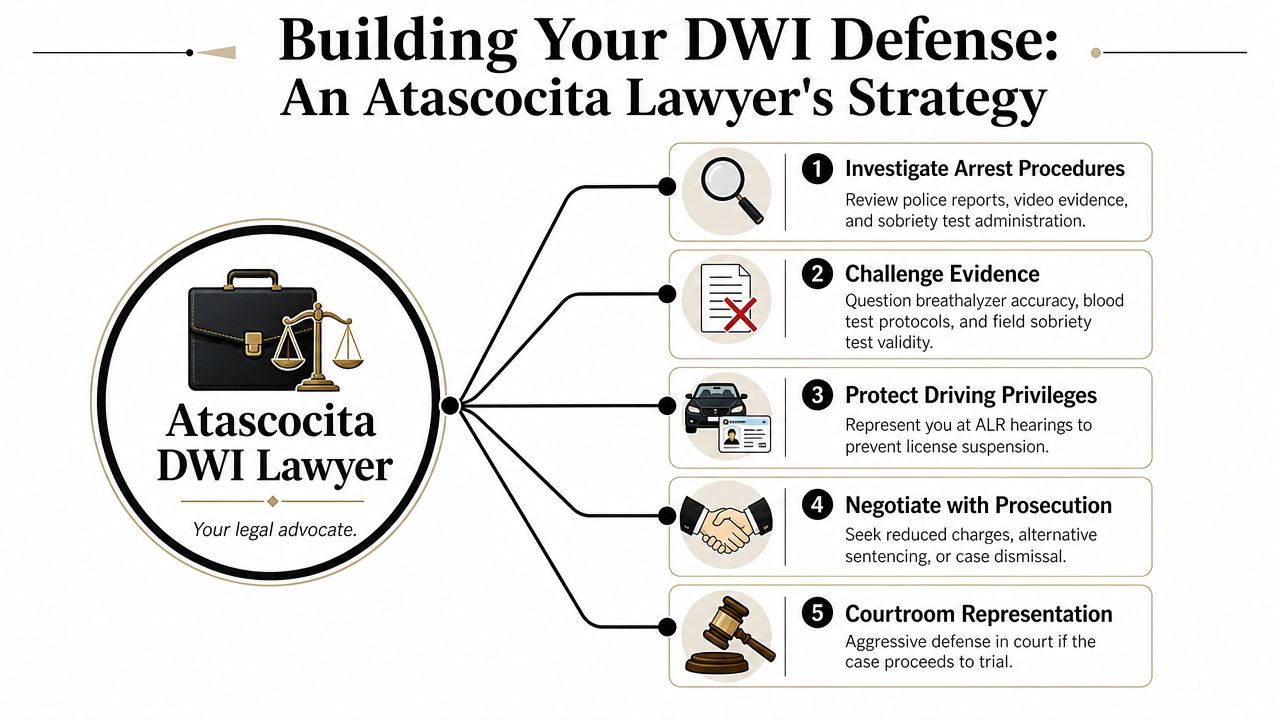
By the time you reach this stage, the case can feel like a machine already in motion. Police reports are written, court dates are set, and the state may act as if the story is settled. A defense lawyer's job is to slow that machine down, inspect each part, and test whether it works.
That matters in Harris County, where the result often turns on details, timing, and how well your lawyer knows the local court process. A lawyer who regularly handles DWI cases for Atascocita residents is not just reading the file. That lawyer is asking where the state's proof is weak, what procedures were skipped, and which issues deserve early pressure.
What local defense work usually involves
A strong DWI defense usually starts with the timeline.
Lawyers look closely at what happened before the stop, during the roadside investigation, at the arrest, and afterward. Small gaps can matter. If an officer says one thing in a report, but the body cam shows something different, that inconsistency can affect how reliable the state's case appears. If testing rules were not followed, the prosecution may have a harder time treating a breath or blood result as clean, unquestioned proof.
That review often includes:
- The reason for the stop. The officer must have had a lawful basis to pull you over.
- The roadside investigation. Field sobriety tests are not magic. They depend on clear instructions, proper conditions, and accurate scoring.
- The video and paperwork. Dash cam, body cam, dispatch logs, and written reports should fit together. Sometimes they do not.
- The chemical testing process. A lawyer examines how the sample was requested, collected, stored, and reported.
- The license case and criminal case together. These are separate tracks, but they affect each other in real life because both can shape your ability to drive, work, and plan ahead.
A DWI defense works a lot like checking a chain link by link. If one link is weak, the state's argument may be weaker than it first appears. If you want a plain-English explanation of how lawyers look for those weak points, this guide on how DWI charges may be challenged or dropped gives useful background.
Why an Atascocita lawyer can bring a different advantage
Local experience is not just about having an office nearby. It is about knowing how Harris County courts operate in practice.
A lawyer who often appears in this system will usually have a better sense of local filing habits, courtroom expectations, negotiation patterns, and how certain issues tend to be received. That does not guarantee an outcome. It does mean your lawyer is less likely to treat your case like a generic Texas DWI pulled from a template.
That distinction matters for Atascocita residents. Your case may be filed in Harris County, but your daily life is here. Driving to work, keeping a professional license, picking up children, or staying available for family obligations all shape what a practical defense strategy should look like. A large firm may talk about volume. You need to know who is reading your videos, preparing your motions, answering your questions, and standing beside you in court.
Board certification in criminal law can also be one sign of added experience, but families should focus on the full picture. Ask how often the lawyer handles DWI cases in Harris County, whether that lawyer is prepared to challenge evidence, and whether the person you meet is the person who will handle the case.
For readers comparing options, Law Office of Bryan Fagan – Atascocita TX Lawyers handles criminal defense matters alongside family law, estate planning, and civil cases for residents in Atascocita, Humble, and nearby Harris County communities.
Ask who will personally build your defense, not just whose name is on the billboard.
The DWI Process Timeline and Expected Costs
You get home from the jail, sit at the kitchen table, and the same two questions keep coming up. How long will this follow me, and what is this going to cost?
In Harris County, a DWI case usually moves more like a series of checkpoints than one long straight road. That helps to know, because the process feels less overwhelming when you can see the next turn coming. For someone living in Atascocita, the practical concern is not just the court date itself. It is also how court settings, license issues, work schedules, and family routines fit together while the case is pending.
A typical case timeline
Many DWI cases follow a familiar sequence, even though the exact timing can vary:
Release and bond conditions
Right after arrest, the court may place rules on travel, alcohol use, testing, reporting, or driving. Those rules start early and can affect daily life right away.The driver's license track
Your criminal case and your license problem are separate matters. They run on parallel tracks, which is why quick action matters in the first days after arrest.Initial court settings
Early appearances often focus on scheduling, paperwork, and making sure the case is in the right posture for review.Evidence gathering and legal review
At this stage, much of the crucial case-building occurs. Your lawyer requests videos, police reports, testing records, maintenance logs, and other evidence, then looks for weak points, legal issues, and missing pieces.Negotiation, motions, or trial preparation
Some cases resolve through negotiated outcomes. Others require hearings on evidence or more detailed preparation for trial.
A local lawyer helps here in a very practical way. If you live in Atascocita, you are likely balancing a Harris County court process with a job, school pickups, and family obligations closer to home. A lawyer who regularly handles DWI cases in this county can often give you a clearer sense of what tends to happen first, what can wait, and where delay may create problems.
The financial side is wider than one attorney bill
The cost of a DWI usually comes in layers. There may be court fines, reinstatement fees, ignition interlock costs, higher insurance premiums, missed work, and the expense of complying with bond conditions.
According to this breakdown of the true cost of a Texas DWI arrest, a first-time DWI in Texas can lead to total costs of $5,000 to $24,000. The same source also states that lawyer fees for a first offense typically range from $5,000 to $10,000. That range is not a quote for every case. It is a reminder that the legal fee is only one part of the full financial picture.
For many families, the better question is how the fee is structured. A flat fee, a retainer, and later case expenses can mean different things, and confusion there creates stress fast. This explanation of a criminal defense attorney retainer fee can help you understand how payment arrangements may work.
A DWI often feels expensive because the costs arrive in pieces over months, not all at once.
Why family concerns often become part of the timeline
A pending DWI can spill into everyday family logistics. One missed ability to drive can affect daycare runs, custody exchanges, elder care, or who gets children home from school.
That does not turn every DWI into a family law dispute. It does mean real households in Atascocita often have overlapping legal and caregiving concerns at the same time. If grandparents are helping cover transportation or caregiving, Grandparents' Rights in Atascocita explains how custody and visitation issues can arise in Harris County families.
Key Questions to Ask Your DWI Lawyer
A consultation should help you evaluate the lawyer, not just the other way around. Many people are nervous in that first meeting, so they forget to ask the questions that matter most.
That's a problem because marketing can blur the difference between a firm's total volume and a specific attorney's real courtroom experience. One source reports that 70% of DWI clients in Harris County don't verify how many cases their specific attorney has personally handled in trial settings, which can affect outcomes. The same source emphasizes asking direct questions about trial experience versus plea-bargain volume, as discussed in these questions to ask before hiring a DWI lawyer.
Questions worth asking in the first meeting
Bring a written list. A good consultation should leave room for direct answers.
- Who will handle my case? Ask whether the lawyer you're meeting will appear in court or hand the file to someone else.
- How often do you handle DWI cases in Harris County? Local repetition matters because procedures and courtroom expectations can differ.
- What do you see as the main issues in my case right now? This shows whether the lawyer is thinking strategically or speaking in generalities.
- What is your plan for my license problem? You want a concrete answer, not a vague promise.
- How do you prepare a DWI case for trial if negotiation fails? Trial readiness changes influence even when a case doesn't go to trial.
- What should I do and avoid doing while the case is pending? This can help protect both your defense and your bond compliance.
What to listen for
You're not looking for guarantees. No honest lawyer can promise dismissal or acquittal.
You are listening for clarity, local knowledge, and whether the lawyer explains your case in plain language. If the answers sound scripted, rushed, or evasive, keep looking.
Take the First Step to Protect Your Future in Atascocita
It is late, your phone is still buzzing, and one arrest has suddenly turned next week into a fog of questions. How do you get to work. What happens to your license. Which Harris County court will handle the case. How much of this follows you around Atascocita before you have even had a chance to respond.
This is why quick, informed action matters. Start with the basics. Save every paper you were given. Write down what you remember while it is still fresh. Do not talk about the stop or arrest casually with friends, coworkers, or on social media.
A DWI case can feel like a knot of separate problems, but it usually gets easier once you sort it into parts. One part is your driver's license. Another is the criminal charge. Another is the practical side of daily life in Atascocita, Humble, and northeast Harris County, where school, work, and family often depend on being able to drive and plan ahead.
The local piece matters more than many people realize. A lawyer who regularly handles DWI cases in Harris County is not just closer to home. That lawyer can often explain how your case is likely to move through the local court system, what procedures may come up early, and what issues need attention first. Large firms can miss that neighborhood-level focus. For many families here, clear guidance and direct access to the lawyer matter as much as legal knowledge.

You may also have other legal concerns pulling at your attention, such as parenting issues, property questions, or another dispute that did not pause just because this charge appeared. That is common. Real life does not separate legal problems into tidy boxes, and your lawyer should be able to see the full picture.
You do not need to solve the whole case tonight. You need to take the next smart step.
If you are weighing your options for a DWI lawyer in Atascocita, TX, look for urgency, clarity, and real Harris County experience. A prompt, confidential consultation with Law Office of Bryan Fagan – Atascocita TX Lawyers can help you understand your deadlines, your immediate risks, and the next decisions that can protect your license, your record, and your future.


