Skip to content

Adoption often starts in a quiet, ordinary moment. You're driving home through Atascocita, talking about school schedules, work, and dinner, and then the conversation comes back to the same hope your family has carried for months or years. You want to make your family whole through adoption. That hope is exciting, but it can also bring real questions about court forms, home studies, hearings, and what Harris County judges will expect from you.
For many families in Atascocita and Humble, adoption doesn't feel like a legal project. It feels personal. A stepparent wants the child they've raised to be legally theirs. A grandparent wants stability for a child already living in their home. A foster parent wants to move from daily care to permanent family. The love is already there. The law still has to catch up.
That's where careful guidance matters. Texas adoption law is structured, detailed, and focused on the child's best interests. If you're also comparing adoption with related options such as guardianship, it helps to understand how guardianship of a minor works in Texas because the right path depends on whether you need temporary authority or a permanent legal parent-child relationship.
Starting Your Adoption Journey in Atascocita
A lot of families come into this process with the same concern. They're afraid of making a mistake that slows everything down. That concern is understandable, especially when the child is already part of your daily life and you want the legal side to reflect what your family already knows.
What families in Atascocita are often feeling
In northeast Harris County, adoption cases usually begin with a mix of joy and caution. You may be thrilled about the future while also wondering:
- Which type of adoption fits your family: A stepparent case looks very different from a foster care adoption.
- Whether another parent's rights must be addressed: In many cases, that issue shapes the whole timeline.
- How local courts handle the process: Filing in the right place and preparing properly matters from day one.
A hopeful family in Humble might already be raising a child full-time and assume adoption is mostly paperwork. Then they learn the court wants far more than signatures. Judges want to know whether the placement is stable, lawful, and in the child's best interests.
Practical rule: Adoption is emotional, but courts decide it through procedure. A clear plan usually lowers stress.
Why local guidance makes a difference
Families in Atascocita often don't need more information from the internet. They need help applying Texas law to their actual home, schedule, and family history. That includes practical questions like where to file, what documents to gather, and whether your case may involve termination of parental rights, court-appointed professionals, or extra review because of the child's background.
Adoption is one part of a broader family law picture, too. Questions about custody orders, prior support obligations, or even related planning for a child's future can affect the path ahead. In the same way a family might need step-by-step guidance in divorce, custody, estate planning, or even criminal defense matters, adoption works best when someone is helping you through each requirement one at a time.
If you're searching for an adoption attorney in Atascocita, Texas, the most helpful starting point is simple. Learn which adoption path you're on, understand what Harris County will require, and prepare your case with care before you ever walk into court.
Understanding the Pathways to Adoption in Texas
Not every adoption case follows the same path. Texas law recognizes several common adoption situations, and the right legal approach depends on your relationship to the child, the child's current placement, and whether another parent's rights still need to be resolved.
The most common adoption routes
Some Atascocita families pursue stepparent adoption. This usually happens when a child lives with one biological parent and that parent's spouse wants to become the child's legal parent too. These cases often raise questions about consent, termination of parental rights, and whether existing support obligations will change. Families dealing with that issue often also need to understand parental termination of rights in Texas.
Other families seek grandparent or relative adoption after stepping into a caregiving role. That can happen after a long period of informal care or after child welfare involvement. Some families adopt through the foster care system, and others explore private infant adoption, which has its own set of matching, placement, and consent issues.
Texas adoption patterns show how common family-based adoptions are. In Texas adoption cases, 55% of children are adopted by their foster parents, while 34% are adopted by relatives. The average age of adoption across Texas is six years old, which shows that both younger and older children are finding permanent homes, according to Texas adoption data summarized here.
For families looking for direct legal help, Adoption Attorney in Atascocita, TX provides adoption representation for families in Atascocita.
Comparing Adoption Types in Texas
| Adoption Type | Typical Process | Key Consideration |
|---|---|---|
| Stepparent adoption | Petition, possible termination of other parent's rights, court review, final hearing | Existing parent-child relationships must be addressed carefully |
| Grandparent or relative adoption | Review of family history, legal filings, court evaluation of stability and best interests | Prior caregiving history often matters |
| Foster care adoption | Placement through the child welfare process, additional court oversight, finalization | Prior state involvement can add procedural layers |
| Private infant adoption | Placement planning, consent requirements, legal filings, final approval | Matching and consent issues can shape timing |
How to choose the right path
Start with the child's current legal status, not just the child's living situation. A child may live with you every day and still have unresolved legal ties that the court must address before adoption can be finalized.
Then think about the practical effects. In some stepparent cases, support arrangements may need to be reviewed or updated once legal parentage changes. That's one reason some families also look into services involving child support in Harris County when planning the bigger picture.
The right adoption pathway isn't the one that sounds easiest. It's the one that matches the child's legal reality.
The Role of Your Atascocita Adoption Attorney
An adoption lawyer doesn't just file forms. In a good case, your attorney acts as the person who keeps the process organized, lawful, and focused on the child from beginning to end.
What your lawyer is actually doing
When families hear “adoption attorney,” they sometimes picture a court hearing and little else. In reality, much of the legal value comes before the hearing ever happens.
Your attorney typically helps by:
- Identifying the legal issues early: That includes whether consent is required, whether rights must be terminated, and whether the case belongs in Harris County.
- Preparing and reviewing filings: Adoption paperwork has to match the family's situation and the court's requirements.
- Coordinating with other professionals: Some cases involve agencies, background checks, social studies, or court-appointed representatives.
- Protecting against procedural mistakes: Small filing errors can create avoidable delays.
Why this matters so much in family cases
Family law is interconnected. An adoption case can overlap with old custody orders, support obligations, prior court findings, or child welfare concerns. If CPS has been involved at any point, families may also need information about a CPS Defense Attorney in Atascocita, which addresses defense against CPS investigations for Atascocita families.
That local, practical overlap is one reason adoption work shouldn't be treated as isolated paperwork. A lawyer has to read the whole family history and then build a legal plan that fits it.
The attorney's role in court
Your lawyer also prepares you for what the judge will want to know. That often includes the stability of the home, the child's adjustment, the legal status of the current parents, and whether every statutory requirement has been completed.
A good adoption attorney in Atascocita, Texas, helps translate legal requirements into plain language. You should know what's happening, why it matters, and what comes next. Families are often calmer when they know who is handling the filings, tracking the deadlines, and speaking for them in court if questions come up.
Navigating the Texas Adoption Process Step by Step
Once you know your adoption path, the next question is usually practical. What happens first, and what comes after that? Texas adoption is easier to handle when you break it into stages.
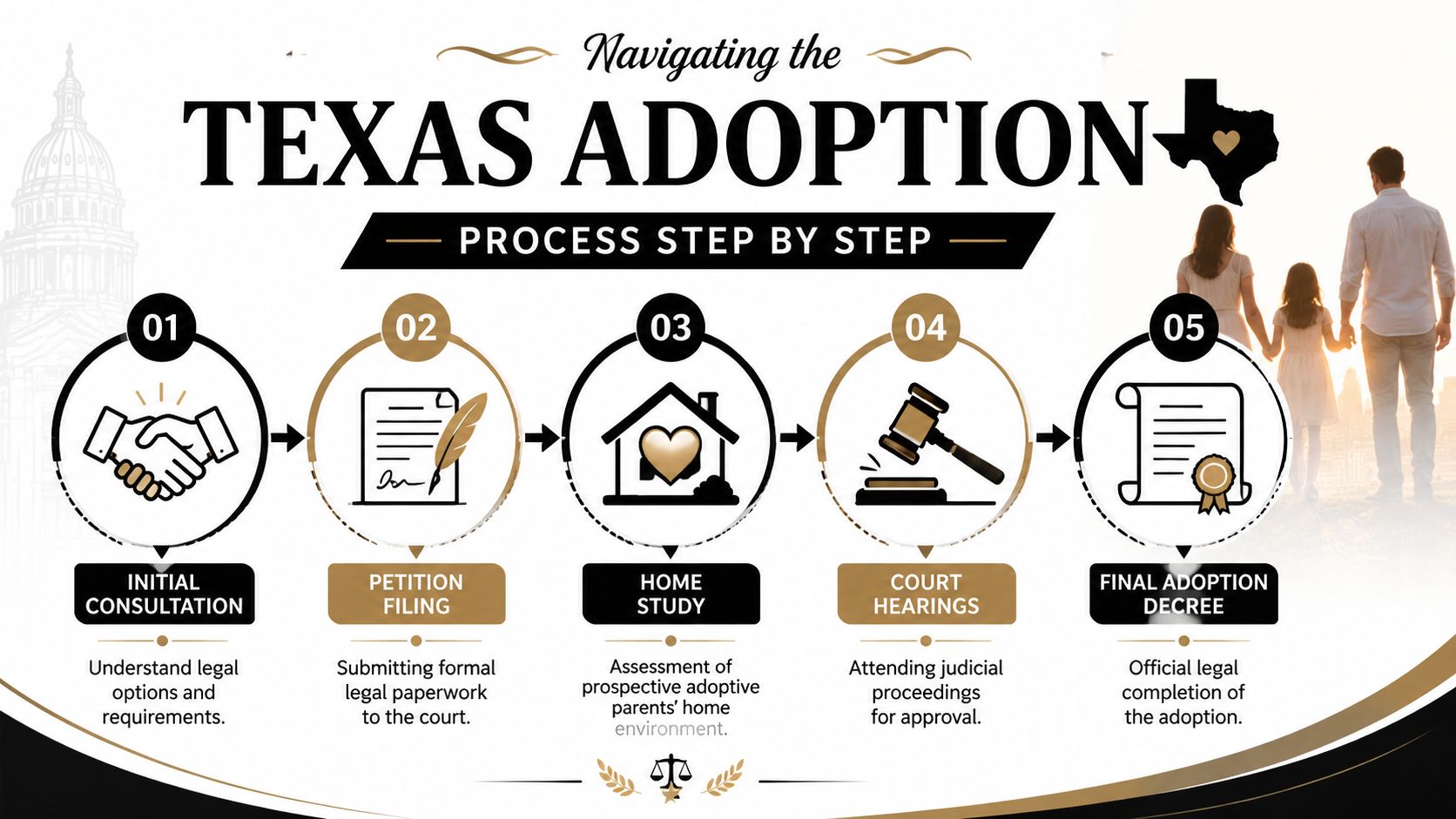
The usual sequence in a Texas adoption
Initial legal review
You and your attorney identify the type of adoption, the child's current legal status, and whether another court order must be addressed first.Petition filing
The case begins with formal court filings. These documents tell the court who is seeking adoption, who the child is, and what legal changes are requested.Screening and evaluation
Texas requires careful review before final approval. Under the Texas Family Code, a thorough home study and criminal background check are mandatory before a court can approve an adoption. The court must also verify that the child has lived in the new home for at least six months before finalization, unless a waiver is granted, as explained in this summary of Texas adoption requirements under Chapter 162.Court review and hearings
Depending on the case, the court may need additional information, supporting documents, or appearances from the parties involved.Final adoption decree
If the judge approves the case, the court signs the final order creating the legal parent-child relationship.
Where families often get tripped up
The home study requirement causes a lot of confusion. Families sometimes hear “home study” and assume it's a surprise inspection or a judgment about whether their home is perfect. It isn't about perfection. It's a structured review of whether the home is appropriate, stable, and safe for the child.
The six-month residence requirement also surprises people. Some families assume that once everyone agrees, the court can finalize right away. In many cases, that's not how it works. The court wants to see a real period of living together before entering the final order, unless a waiver is granted.
A steady home, organized records, and prompt responses usually help the process move more smoothly than families expect.
What you can do now
You don't need to solve every issue before speaking with a lawyer. You do need to gather the basics.
- Collect existing court orders: Prior custody, support, or conservatorship orders matter.
- Write down the family timeline: When the child moved in, who has cared for the child, and what legal events have already happened.
- Flag any unusual issue early: Interstate placement, missing parent issues, or prior CPS involvement should never be left for later.
For families in Atascocita and Humble, that step-by-step approach makes the process feel manageable. One requirement leads to the next. The key is doing them in the right order.
The Harris County Court System and Your Adoption Case
Where your adoption is filed matters. Atascocita and Humble families usually work within the Harris County court system, and local procedure can shape how efficiently your case moves.
Why the local court process matters
A Harris County judge won't look only at whether forms were filed. The court will also pay attention to whether your case is procedurally ready, whether any related parent-child issues have been resolved, and whether the child's interests have been properly protected.
For families who want a broader picture of local courtroom procedure, what happens at a family court hearing in Harris County, Texas can help you understand the setting in which these cases are heard.
Local knowledge helps with practical details, too. Court staff expectations, filing habits, scheduling realities, and hearing preparation all affect how adoption cases unfold in real life.
Court-appointed professionals you may see
Texas adoption proceedings often involve an amicus attorney appointed by the court to make an independent recommendation on the child's best interests, according to this discussion of Texas adoption procedure and the Voluntary Central Adoption Registry. That same source notes that after turning 18, adoptees may use the Texas Vital Statistics Unit's Voluntary Central Adoption Registry to potentially connect with birth families.
That's important because many families assume the court only hears from the parents and the lawyer. In some cases, the judge wants independent input focused on the child rather than on either adult's goals.
Courts treat adoption as a permanent legal decision. Independent review is part of what gives the final order weight and legitimacy.
A separate resource, Harris County Family Courts: A Atascocita Resident's Guide, explains how family law cases proceed in the Harris County courts serving Atascocita.
Here's a short overview that may help before a hearing:
- Correct jurisdiction matters: Filing in the wrong court or with incomplete documents can slow progress.
- Child-focused review is central: Judges and court-appointed professionals are looking at the child's welfare, not just adult agreement.
- Preparation changes the experience: Families usually feel less anxious when they know what documents, testimony, and timeline issues may come up.
A quick visual overview can also help families understand the courtroom environment and process:
Choosing the Right Adoption Attorney in Atascocita
Not every family needs the same kind of legal help. Some need a straightforward stepparent adoption. Others need someone who can sort through old orders, missing paperwork, or an interstate placement. That difference should shape how you choose your lawyer.

What to look for in a local attorney
A strong local fit usually includes more than family law knowledge. It includes familiarity with Harris County procedure, experience explaining legal steps in plain English, and the ability to spot issues before they become delays.
When you're comparing lawyers, ask practical questions:
- How often do they handle adoption matters locally: You want someone comfortable with the county where your case will move.
- Can they explain your exact path clearly: If the answer stays vague, that's a warning sign.
- Do they see the related issues too: Adoption can overlap with support, conservatorship, CPS history, and prior court orders.
One option families may review is the Law Office of Bryan Fagan – Atascocita TX Lawyers, which provides legal services for family and related matters in the Atascocita area.
Why interstate issues deserve special attention
Some of the most frustrating adoption delays happen when the child's placement crosses state lines. A significant portion of Texas adoptions involve interstate components under ICPC, which can create weeks of delay. According to this summary of ICPC coordination in Texas adoptions, hiring a local Atascocita attorney with direct coordination networks with state agencies can reduce placement timelines by an average of 15 to 20 days.
That doesn't mean every interstate adoption will move quickly. It does mean local coordination can matter in concrete ways.
A simple decision framework
Use this three-part test when choosing an adoption attorney in Atascocita, Texas:
Local court familiarity
The lawyer should understand how Harris County family courts operate in practice.Process clarity
You should leave the consultation knowing what the next legal step is.Issue spotting
The attorney should ask about out-of-state placements, prior orders, and unresolved parental rights early, not after paperwork is filed.
A family in Humble dealing with an interstate placement doesn't need a generic statewide answer. They need someone who can coordinate details, catch problems quickly, and keep the case moving in the right forum.
Your Next Steps and Frequently Asked Questions
Families usually reach this stage with three concerns. How long will this take? How expensive will it be? What should we do first? Those are fair questions, and the honest answer is that adoption timelines and costs vary by case type, court requirements, and whether other legal issues need to be resolved first.
Common questions families ask
How long does adoption take in Harris County?
It depends on the type of case, whether parental rights issues must be addressed, and whether all required reviews are complete. What matters most is starting with the correct legal path and complete information.
What is the court looking for besides paperwork?
Under Chapter 162 of the Texas Family Code, courts in Harris County evaluate parental stability, emotional involvement, and family structure beyond mere paperwork, making attorney guidance important when presenting your case, as noted in this discussion of Harris County adoption standards under Chapter 162.
What should we do before the first consultation?
Gather any existing court orders, basic identifying information, and a timeline of who has cared for the child. If communication has been difficult with agencies, coordinators, or other parties, it also helps to have a reliable system for messages and missed calls. Some families find practical value in resources on addressing unanswered law firm calls when they're trying to keep urgent legal communication from slipping through the cracks.
A steady first step
You don't need to have every answer before you begin. You just need a clear place to start. In many adoption matters, early legal guidance prevents confusion later, especially when your family has prior court orders, a blended family structure, or a child who has already been living in your home.
The legal process may feel formal, but the goal is deeply human. It's about giving a child permanent legal security inside a family.
If you're in Atascocita, Humble, or another part of northeast Harris County, a conversation with a local attorney can help you sort out the right path, the likely issues, and the next document or hearing you'll need to prepare for.
If you're ready to talk through your family's adoption plans, schedule a free consultation with Law Office of Bryan Fagan – Atascocita TX Lawyers. A local consultation can help you understand your options, identify the right legal path, and move forward with more confidence.