Skip to content
A simple uncontested divorce in Atascocita often costs $1,500 to $5,000, while contested cases commonly run $10,000 to $30,000 or more. There isn't one fixed price, and that's exactly why this guide matters if you're sitting at your kitchen table in Atascocita, Humble, or near Lake Houston trying to figure out how you'll afford the next step.
Individuals rarely call a divorce lawyer because they're having a calm, easy week. They call after a hard conversation, a sleepless night, or a moment when they realize the marriage probably isn't going to recover. Then the money questions hit fast. Can I afford a lawyer? Will this turn into a fight? What happens if my spouse earns more than I do?
You deserve a straight answer, not vague talk and not a fake "average" that ignores real life in Harris County. In this area, cost usually follows one thing above all else. Conflict. When spouses agree, costs stay much lower. When they fight over children, property, support, or business interests, the bill rises because the legal work rises.
That same financial anxiety shows up in other legal matters too. A custody case can involve its own attorney fee issues. A criminal charge can create pressure on a family budget overnight. Estate planning can prevent some of the financial chaos families face when relationships change. Different area of law, same principle. Early legal planning usually costs less than reacting late.
Facing Divorce in Atascocita and Worried About the Cost
You sit at your kitchen table in Atascocita after the kids go to bed, open your banking app, and ask the question that keeps people stuck for weeks. Can I afford to file for divorce without blowing up the rest of my finances?
That fear is normal. It also leads people to make expensive mistakes, especially when they wait too long, hand over records late, or fight over issues a Texas court will treat pretty predictably. Divorce costs in Harris County can stay manageable, or they can climb fast. The difference usually comes from the decisions made in the first month.
In this area, some divorces stay relatively contained. Others turn into a long fight over parenting schedules, the house, retirement accounts, reimbursement claims, or temporary support. If your case heads toward hearings, formal discovery, or trial preparation, the price changes because the work changes.
Here is the part many people do not hear early enough. Texas law gives some spouses tools that can ease the pressure. A court can award interim attorney's fees in the right case, especially when one spouse controls the money. Temporary orders can also create structure around bills, use of the home, and access to funds while the case is pending. Those are not magic fixes, but they can keep a financially stronger spouse from using the checkbook as a weapon.
What families in northeast Harris County should focus on first
Start with these three questions before you worry about every possible invoice:
- How much do we already agree on? Agreement on property, parenting, and basic timing usually cuts legal work down sharply.
- Who controls the money right now? If one spouse has blocked access to accounts or income, ask about temporary orders and a request for attorney's fees early.
- What property needs real analysis? A house, retirement plan, small business, separate property claim, or reimbursement issue can change the budget fast if you do not identify it at the start.
One more practical point matters in Texas. Community property rules do not mean every asset gets split down the middle in every case. The court looks for a just and right division, and that can affect settlement strategy. If you understand that early, you are less likely to spend thousands fighting over assumptions that do not match how Texas divorce courts operate.
The cost question is really a control question. You want to know whether you can protect your children, your home, and your future income without losing financial ground before the divorce is even final.
You can, but only if you treat cost planning as part of the legal strategy from day one.
Decoding the Bill How Atascocita Lawyers Structure Fees
You sit down for a consultation, hear the words retainer, hourly rate, and flat fee, and it feels like the meter started running before anyone explained the rules. That confusion costs people money. You should know exactly how a divorce lawyer charges before you sign anything.
Hourly billing and what you are actually buying
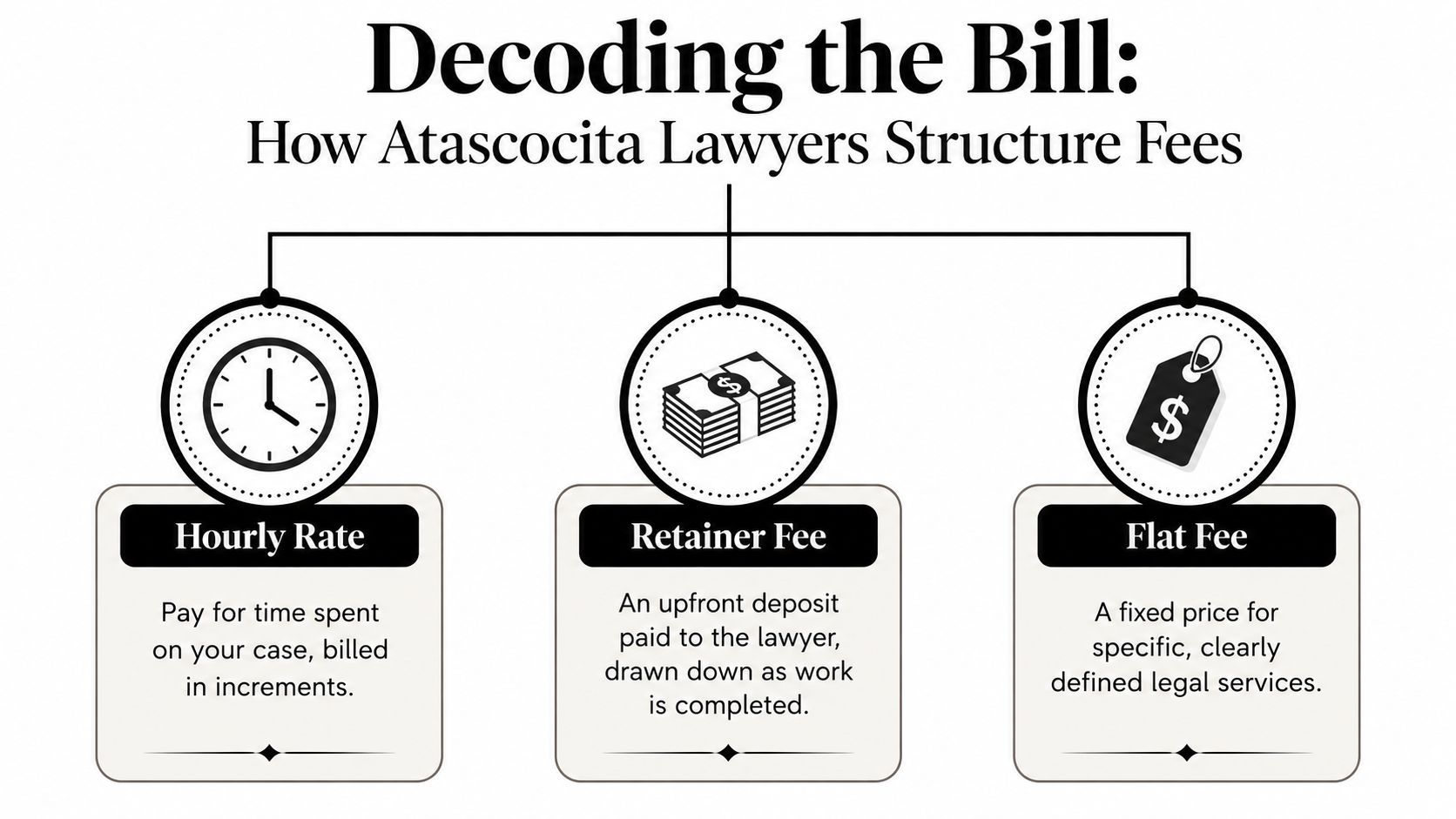
Most contested divorce cases are billed by the hour. You are paying for legal work done in real time, not just for courtroom appearances. Drafting petitions, reviewing financial records, answering your emails, preparing for mediation, and showing up at hearings all count.
That matters because small decisions affect your bill. Ten short emails usually cost more than one organized update. Scrambling for documents after your lawyer asks for them costs more than sending a complete packet at the start.
Ask for the lawyer's hourly rate, the paralegal's rate, and whether routine tasks can be handled at the lower rate. That one question can save real money over the life of a case.
What a retainer means in plain English
A retainer is usually an upfront deposit. The firm bills against it as work gets done. When the balance gets too low, the firm may ask you to replenish it.
Do not treat the retainer like the full price of the divorce. It rarely is.
Ask these questions before you sign:
- Is the retainer refundable if part of it is unused?
- What balance triggers a refill request?
- Will I receive itemized monthly billing?
- Are filing fees, service fees, and expert costs included, or billed separately?
Texas clients should ask one more question that does not get enough attention. If your spouse controls the money, can your lawyer ask the court to order interim attorney's fees or release community funds for legal expenses? In the right case, temporary orders can shift some of the pressure off the spouse who has less access to cash. That is not automatic, but it is a real cost-management tool under Texas practice, and you should discuss it early.
When flat fees make sense
Flat fees work best when the job is clearly defined and the risk of conflict is low. An agreed divorce with full cooperation is the usual example. In that setting, the lawyer can price a specific service instead of guessing how many hours the case will consume.
If you and your spouse are aligned, Uncontested Divorce Lawyer in Atascocita is one local option for efficient uncontested divorce handling for agreeing Atascocita couples.
Read the scope carefully. A flat fee may cover preparing the petition, decree, and basic filing steps, but not a dispute over retirement accounts, a last-minute custody disagreement, or a hearing that becomes necessary after one spouse stops cooperating. If the scope changes, the billing structure often changes too.
My advice is simple. Do not choose a lawyer based only on the lowest starting number. Choose the billing structure that fits the facts of your case, and ask how the firm handles fee requests, community fund access, and scope changes before the first invoice ever arrives.
Why Divorce Costs Vary So Much in Harris County
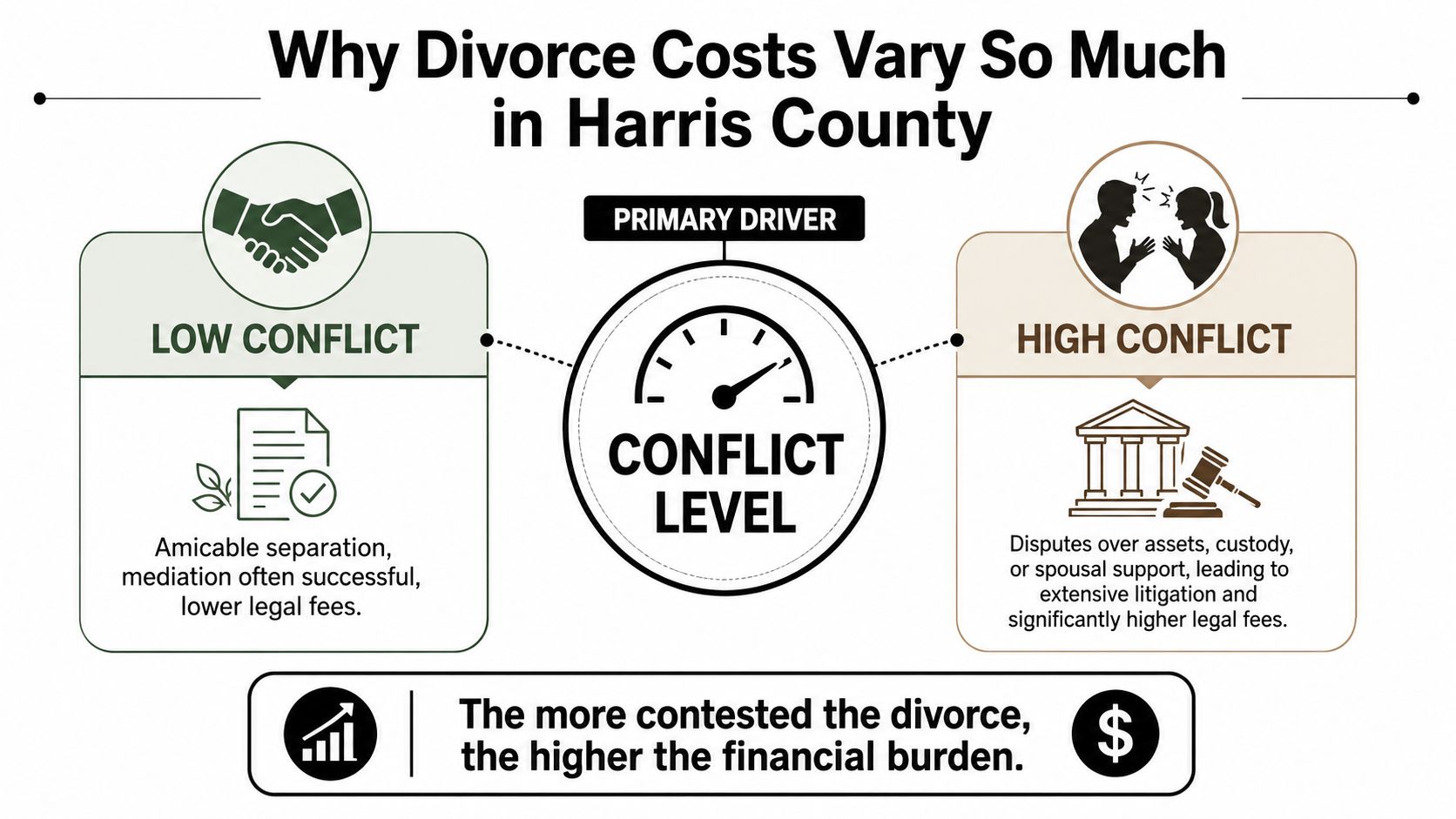
The biggest driver of divorce cost isn't geography, and it isn't some mystery fee hidden in fine print. It's whether the case stays cooperative or turns into a fight.
Low conflict keeps the process lean
When both spouses agree on the major issues, the lawyer's job is mainly to confirm the terms, prepare proper paperwork, and move the case through the court process correctly. That is legal work, but it's controlled legal work.
This is why the lower end of the cost range exists at all. Cooperation saves attorney time. It also reduces hearings, document disputes, and emergency filings that burn through retainers.
High conflict changes everything
Many articles mislead people by quoting a simple average and stopping there. Existing coverage often cites $4,100 for uncontested divorces but leaves out the reality that high-conflict cases with children in Harris County commonly exceed $27,000 to $33,000 because of custody evaluators and amicus fees, and cases requiring 100 to 200 attorney hours can reach $25,000 to $75,000, as noted in this Harris County divorce cost discussion.
That jump isn't arbitrary. It usually comes from real work tied to real disputes, such as:
- Formal discovery: One side requests financial documents, records, and sworn answers.
- Custody conflict: Parents disagree over conservatorship, possession, or decision-making.
- Major asset issues: Real estate, business interests, or retirement questions need more review.
- Trial preparation: Lawyers spend substantial time building evidence, witnesses, and arguments.
Children and complex property raise the stakes
Divorces involving children or substantial property are more expensive because there is more to resolve and more risk if mistakes are made. Parents in Atascocita often aren't fighting because they enjoy conflict. They're scared about time with their children, child support, or whether they'll be able to keep the house.
The more disputed the issues, the more hours your lawyer must spend protecting you.
That's also why broad statewide figures don't tell the full story for families in northeast Harris County. A case with no children, no property fight, and full agreement is one thing. A case with custody allegations, hidden financial concerns, or contested assets is a different machine entirely.
Comparing Your Options Mediation vs Litigation Costs
You sit at your kitchen table in Atascocita, trying to decide whether to pay for one hard conversation in mediation or months of court filings, hearings, and attorney prep. That choice can change your divorce budget fast.
Mediation usually costs less because it narrows the work. Instead of paying lawyers to fight through every dispute in formal court steps, you pay a mediator to help both spouses reach an agreement on the issues they can still control. The Texas mediation process also gives families a practical advantage many people miss. If you reach a mediated settlement agreement that meets Texas Family Code requirements, it can become binding and very hard to undo. That often saves money because it reduces later fights over whether a deal should stick.
Texas mediation fees vary by mediator, county, and case complexity. The Texas Association of Mediators is a better place to start than generic cost roundups because it helps you identify trained mediators and understand how the process is structured. Your total cost still depends on how prepared you are before the session. Organized financial records and a clear list of parenting priorities usually cut billable time.
Litigation costs more for a simple reason. Every unresolved issue creates more lawyer work. Discovery requests. Temporary orders. Hearings. Trial exhibits. Witness prep. Waiting for a crowded Harris County court setting also adds delay, and delay increases fees.
If you want a process built around settlement instead of escalation, read more about divorce mediation in Atascocita, Texas.
Divorce Path Cost Comparison in Atascocita 2026 Estimates
| Divorce Path | Estimated Cost Range | Typical Timeline |
|---|---|---|
| Uncontested divorce | $1,500 to $5,000 | Usually shorter because fewer issues require formal dispute resolution |
| Mediated divorce | Often lower than full litigation because the spouses resolve more issues outside court | Often faster if both spouses arrive prepared and willing to compromise |
| Fully litigated contested divorce | $10,000 to $30,000 or more | Often longer because of hearings, discovery, and possible trial |
Which path makes sense for most families
Choose mediation if both spouses can exchange information openly, discuss property division, and make parenting decisions without intimidation. In Texas, you can also use mediation strategically after a temporary orders hearing or after limited discovery. That is a smart cost-control move. You do not have to litigate every issue just because the case started out tense.
Choose litigation sooner if there is family violence, coercive control, hidden income, missing records, or a spouse who refuses to follow temporary agreements. In those cases, paying for court intervention early can prevent a worse financial outcome later.
One more practical point. Good preparation lowers costs in either path. Clean timelines, organized records, and accurate written summaries reduce attorney hours. Even support work like legal transcription exists because clear records save time, and saved time usually means saved money.
The Hidden Expenses Beyond Your Lawyers Bill
Attorney fees get the most attention, but they aren't the whole budget. If you want a realistic picture of divorce costs in Atascocita, you need to account for court costs and third-party expenses too.

Fixed costs most people will face
In Texas, court filing fees for a divorce petition typically range from $250 to $350. Additional costs can include service of process of $50 to $100 and mandatory parent education courses costing $25 to $50, according to Texas divorce filing and court fee information.
Those expenses may sound modest compared with attorney fees, but they still matter when you're trying to budget during a family transition.
A simple checklist helps:
- Court filing fee: Paid to start the case.
- Service cost: Paid if your spouse must be formally served.
- Parent course fee: Paid in cases where the court requires parenting education.
Variable expenses can surprise people
The larger surprise usually comes from third-party professionals. A judge or a case's facts may require outside help, especially in disputes over children or finances. That can include evaluators, appraisers, or other specialized professionals.
If your case involves lots of recorded conversations, lengthy hearings, or detailed sworn testimony, understanding how legal transcription works can help you make sense of why the record itself can become part of the cost picture in complex litigation.
Budget for the case you have, not the case you wish you had.
Why these costs matter in family, civil, and custody matters
This isn't unique to divorce. Child custody cases can bring in court-appointed professionals. Civil cases sometimes need document-heavy review. Estate disputes can involve valuation issues too. Whenever a court needs clearer evidence, somebody usually has to do the work, and that work is rarely free.
The smart move is to ask early which third-party expenses are likely in your case. That one question can spare you a lot of financial shock later.
Practical Ways to Manage and Reduce Your Legal Fees
You sit down at the kitchen table, open your lawyer's invoice, and wonder how a few weeks of divorce work turned into a number that makes your stomach drop. That feeling is common. The good news is that legal fees are not random, and Texas law gives you more cost-control tools than many people realize.
Ask about attorney fee awards early
One of the most overlooked cost questions in a Texas divorce is whether the court can order one spouse to pay some of the other spouse's attorney fees. That issue matters in real life, especially when one spouse controls the income, has access to community funds, or has created extra legal work through delay or misconduct.
Do not wait for your lawyer to raise it. Ask in the first meeting whether your facts support a request for interim attorney fees, reimbursement from community property, or a final fee award. In the right case, that changes who carries the financial pressure during the divorce.
Five habits that lower bills without hurting your case
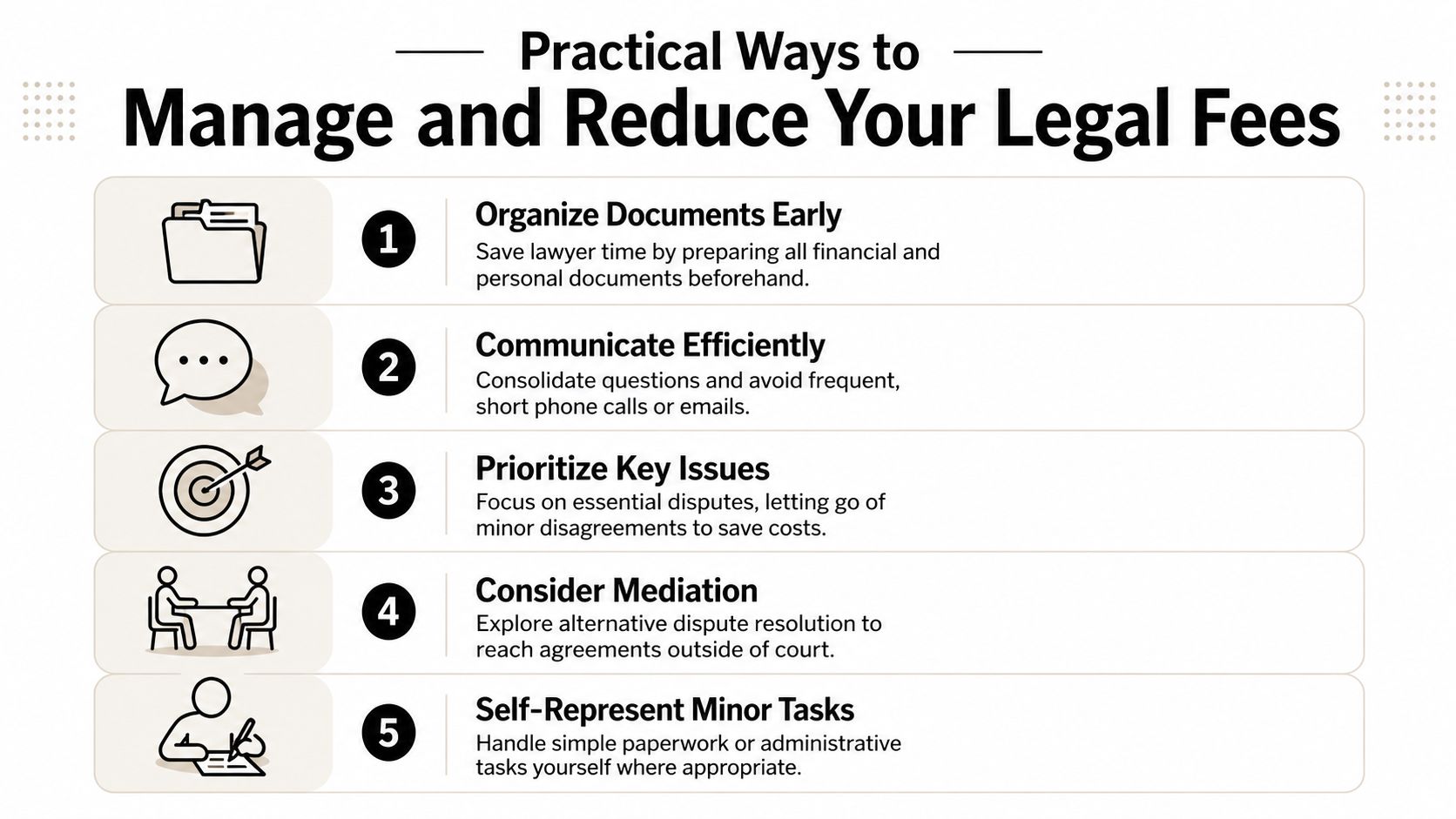
- Walk in organized: Bring tax returns, pay stubs, bank records, retirement statements, mortgage documents, and a simple timeline of major events.
- Send one clear update instead of scattered messages: A concise email with bullet points costs less than a chain of back-and-forth calls.
- Use your lawyer for legal judgment, not emotional processing: Vent to a counselor or trusted friend. Save attorney time for strategy, deadlines, negotiation, and court issues.
- Stop fighting over low-value property: If the legal fee to argue the point is close to the item's value, let it go.
- Do your financial homework early: This guide on how to prepare for divorce financially helps you sort documents and accounts before disorganization starts costing you money.
Use procedure to keep the case from getting expensive
A lot of fees come from preventable messes. Missing documents leads to repeated requests. Vague proposals create longer negotiations. Angry texts and social media posts turn small disputes into hearings.
Good preparation cuts that off early. If you own a business, receive irregular income, or suspect your spouse is hiding money, say so right away. Your lawyer can then target discovery instead of chasing every possible issue. That is cheaper and smarter.
As advisors, lawyers should also steer clients away from performative conflict. For instance, the Law Office of Bryan Fagan, Atascocita TX Lawyers, handles family law matters for local families and, like any sound family practice, should be evaluating whether a case can be narrowed before it becomes a drain on the household budget. Law firms also work hard to explain these issues clearly online. Digital Skyrocket's law firm SEO guide shows how firms structure educational content so people can understand legal services before they ever make a call.
Your First Step Questions to Ask in a Free Consultation
A consultation should leave you clearer, not more confused. The right questions help you judge not just whether a lawyer can handle the case, but whether the cost structure makes sense for your budget and goals.
Questions worth asking right away
Bring a written list. That keeps the meeting focused and keeps you from forgetting the important parts once emotions take over.
- What type of divorce do you think this is right now: Uncontested, contested, or likely somewhere in between?
- How do you bill: Hourly, flat fee, or a mix depending on how the case develops?
- What is the retainer and how is it used: Is it a deposit against future work?
- How do you charge for calls and emails: Small communication habits can affect the final bill.
- What facts in my case are likely to increase cost: Children, property issues, hidden records, or potential hearings?
- Can mediation work here: If not, why not?
- Are there likely to be experts or outside professionals involved: This matters a lot in property-heavy or custody-heavy cases.
- Could the court order my spouse to contribute to attorney fees: Especially important if incomes are unequal.
- What can I do personally to reduce legal spend: A good lawyer should answer this clearly.
Ask hard questions if assets are substantial
If your case involves major property, business interests, or complicated finances, don't let anyone minimize the cost risk. High-asset divorces in Texas can exceed $30,000 and often reach $100,000 or more when litigation expands through depositions, expert fees, and prolonged court activity, according to Texas contested divorce cost guidance for high-asset cases.
If you're researching firms online before booking a meeting, resources like Digital Skyrocket's law firm SEO guide can help you understand why some firms are easy to find online, though visibility alone shouldn't replace careful vetting.
A consultation isn't just for the lawyer to evaluate your case. It's also for you to evaluate how that lawyer thinks about cost, risk, and practical resolution.
Go in prepared, not intimidated
A free consultation works best when you show up with a short timeline, a list of assets and debts, and your top concerns about children or finances. If you want a solid checklist to start with, these questions to ask a divorce lawyer in Atascocita can help you prepare.
Divorce is personal. So are custody disputes, criminal charges, and estate planning decisions. But the first step is usually the same in every legal problem. Get clear facts early, ask better questions, and don't wait until the situation becomes more expensive to fix.
If you're worried about divorce costs in Atascocita, Humble, or northeast Harris County, schedule a free consultation with Law Office of Bryan Fagan – Atascocita TX Lawyers. You'll get a direct conversation about your situation, the likely cost drivers in your case, and practical options for moving forward with more clarity and less fear.