When a child you love is in a tough spot, that feeling of helplessness can be overwhelming. As caring members of the Atascocita community, our first instinct is to protect them. Stepping up to seek guardianship is a significant legal move, one that provides a child with the safety and stability they desperately need. It’s more than just an informal agreement; it’s a formal court process, guided by the Texas Estates Code, that officially gives you the authority to care for them when their parents can't.
At The Law Office of Bryan Fagan, we understand that this decision comes from a place of love and concern. Our goal is to provide clear, compassionate guidance to our neighbors in Atascocita, Humble, and northeast Harris County as they navigate this important journey.
Understanding When Guardianship Becomes Necessary
For many families right here in Atascocita and Humble, the road to guardianship starts with a heartbreaking situation. It’s never about punishing a parent; it's always about protecting a child.
Maybe you're a grandparent watching your own child battle addiction, leaving your grandchild's life in chaos. Or you could be an aunt or uncle who suddenly needs to care for a niece or nephew after a tragic accident. These aren't just hypotheticals; they are real-life scenarios we see every day in our local communities.
The first instinct is often to make an informal arrangement—just bringing the child into your home. While that comes from a place of love, it leaves you without any legal authority. That's where the real problems begin.
Why Informal Care Is Not Enough
Imagine this: you try to enroll your nephew in a Humble ISD school, but the front office turns you away because you aren't his legal guardian. Or picture the panic of being in an emergency room at a local hospital, unable to consent to a vital medical procedure for your grandchild.
These are the real-world hurdles that a formal guardianship clears. It gives you the legal power to:
- Enroll the child in school and access their records.
- Make crucial medical and dental decisions for them.
- Apply for health insurance or other benefits on the child's behalf.
- Provide a stable home that is legally recognized.
This legal recognition is an indispensable safety net. Data shows that about 1 in 20 U.S. children are raised by someone other than a parent, but a much smaller number have a formal court-ordered guardianship in place. This gap leaves both the child and the caregiver in a legally precarious position.
Securing guardianship in a Harris County court solidifies your role. It ensures the child's needs can be met without legal roadblocks or questions. You can learn more about these nationwide trends from the National Conference of State Legislatures.
Common Situations Leading to Guardianship
Guardianship usually comes into play when a child's parents simply cannot perform their duties. This isn't a single story; it happens for many reasons right here in our community.
- Parental Incapacity: A parent might be dealing with a severe physical or mental illness that makes proper care impossible.
- Abandonment or Neglect: Sometimes, a parent has left the child or the home environment has become unsafe.
- Incarceration or Death: If a single parent is incarcerated or passes away, or if both parents are gone, a guardian becomes absolutely essential.
- Substance Abuse: A parent's addiction can unfortunately make it impossible for them to be a safe and reliable caregiver.
In Texas, the court has one guiding principle: the best interest of the child. A judge will only grant a guardianship when it's clear that appointing a responsible adult is necessary to protect a child's physical and emotional well-being.
While guardianship is often a long-term solution, some situations demand immediate action. If a child is in imminent danger, you can't wait. It's possible to seek emergency intervention from the court. For anyone facing an urgent crisis, understanding the process for getting temporary custody orders in Texas can provide the immediate protection needed while you work toward a more permanent solution. Taking this step is, at its core, an act of love to give a child the foundation they deserve.
Navigating the Harris County Guardianship Process
Trying to figure out the legal roadmap for guardianship can feel overwhelming, but breaking it down makes it much more manageable. For families here in Atascocita and across northeast Harris County, the system is designed with one goal in mind: protecting the child's best interests. This journey doesn't just start at the courthouse steps; it begins with the decision to get solid legal advice from a local attorney who knows the process.
Your first move is usually a candid conversation with an attorney to see if you're eligible to be a guardian and, just as importantly, if guardianship is the right solution for your family's situation. We'll talk through the specifics of your case and map out what's ahead, so you're prepared for the formal process.
Filing the Application with the Court
Once you're ready to proceed, it's time to prepare and file the formal Application for Appointment of Permanent Guardian. This is a critical legal document that gets submitted to the Harris County Probate Courts, which are the specific courts that oversee all guardianship cases.
This application needs to be incredibly detailed. You'll have to provide:
- Complete information about the child (who the court calls the "proposed ward").
- Details about the child's parents, including where they are.
- The specific reasons why a guardian is necessary right now.
- Your own information as the person asking to be the guardian (the "applicant").
Getting this application right from the start is non-negotiable. Even small errors or missing information can cause major delays, which is the last thing you need during an already stressful time. This is truly where having a local Atascocita attorney who knows the ins and outs of the Harris County courts can be a game-changer.
The journey often starts with a problem, leads to a discussion, and then requires formal action in court.
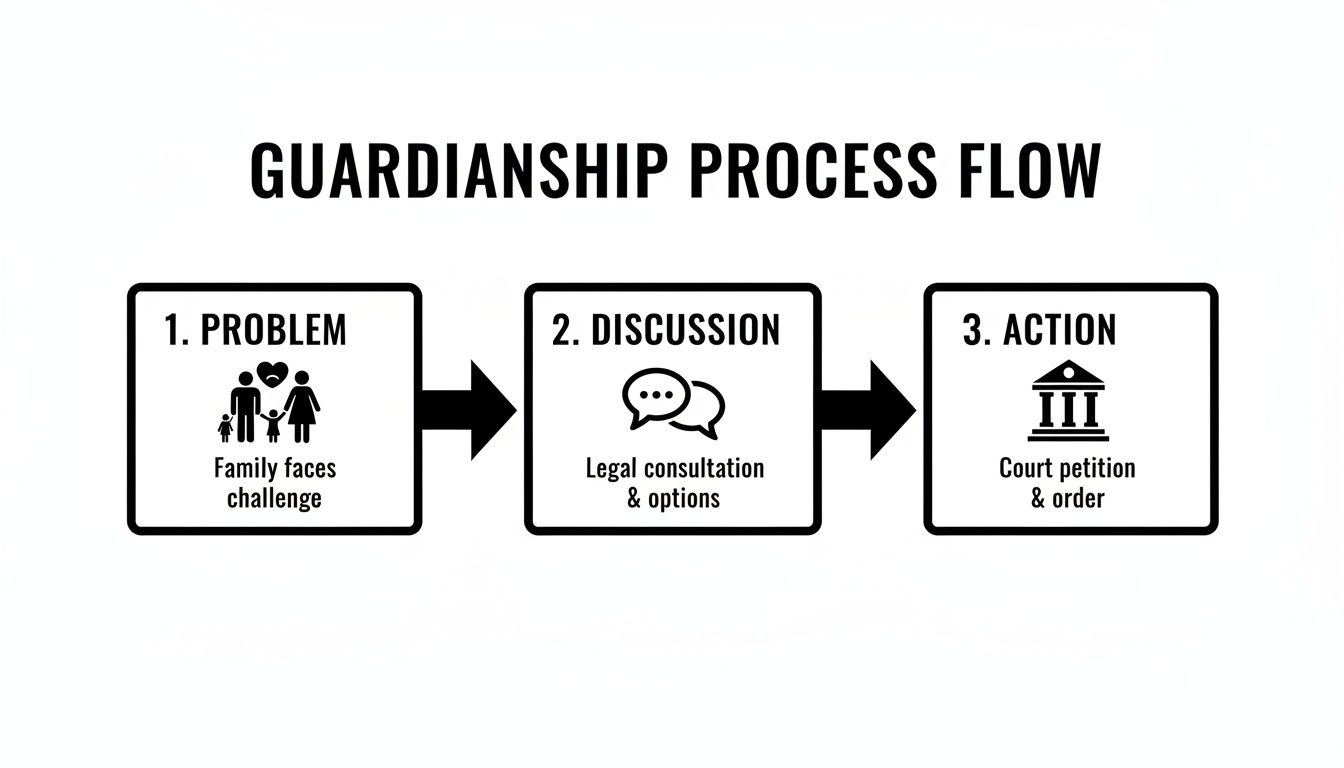
As you can see, the process flows from identifying a real concern to taking decisive legal action. That's when these formal steps really kick into gear.
The Role of Court-Appointed Professionals
After your application is on file, the court steps in to protect the child. A judge will appoint two independent professionals to dig into the facts of your case.
First up is the court investigator. This person is a neutral party who works for the court. They will schedule a visit to your home in Atascocita or Humble, interview you, the child (if they're old enough to talk about it), and maybe even others like teachers or neighbors. Their entire job is to give the judge an unbiased report on whether the guardianship is actually needed and if you’re the right person for the job.
Next, the court appoints an attorney ad litem. This is an independent lawyer whose only client is the child. Their sole duty is to represent what's best for that child. The ad litem will meet with the child, review the case from top to bottom, and then give the judge their professional recommendation on the best possible outcome.
The reports from both the court investigator and the attorney ad litem are incredibly influential. The judge relies heavily on their objective findings to get a full, impartial picture of the family’s situation before making a final decision.
Getting Ready for the Court Hearing
Everything leads up to the court hearing. This is where you'll present your case directly to the judge. It's completely normal to be nervous, but being well-prepared is the best way to walk in with confidence.
During the hearing, the judge will have all the paperwork in front of them, including the reports from the investigator and the ad litem. They'll almost certainly want to hear from you directly and will ask questions to understand why you're there and if you're truly ready for this responsibility.
You can expect the judge to ask things like:
- Why do you believe the child's parents can't care for them?
- Can you describe your relationship with the child?
- How will you provide for the child's financial, educational, and emotional well-being?
- Do you fully understand the long-term commitment of being a guardian?
Your answers, along with any other evidence you present, will help the judge make the final call. While guardianship has a different legal standard than a custody suit, seeing what judges look for can be insightful. For a broader look at family law cases, you can read more about what it takes to win child custody in Texas.
To help you visualize the entire process, here's a breakdown of the key stages you can expect.
Step-by-Step Guide: Key Stages of the Texas Guardianship Process
| Phase | Key Actions | Estimated Timeline |
|---|---|---|
| Initial Filing | Prepare and file the Application for Guardianship with the Harris County Probate Court. | 1-2 weeks |
| Investigation | A Court Investigator and Attorney Ad Litem are appointed to conduct interviews and assess the situation. | 4-8 weeks |
| Court Hearing | You present your case to the judge, who reviews all reports and testimony. | Scheduled 2-4 months after filing |
| Finalization | If approved, you take an oath, post a bond (if needed), and receive Letters of Guardianship. | 1-2 weeks after hearing |
This table provides a general timeline, but keep in mind that every case is unique and complexities can affect how long each phase takes.
After the Judge Makes a Decision
If the judge approves the guardianship, you're almost at the finish line. You'll have to take a formal oath, post a financial bond (if the court requires one), and file the paperwork. Once that's done, the court issues the Letters of Guardianship.
This official document is your legal proof of authority. You'll use it to do everything from enrolling the child in school and authorizing medical care to managing their finances. Remember, the court's involvement doesn't end there. It will continue to supervise the guardianship, and you'll have to file annual reports on the child’s status. This ongoing oversight is just another way the system works to ensure you're always acting in the child's best interest.
Guardianship of the Person vs. the Estate Explained
When you're first looking into guardianship for a minor, it's natural to think of it as one single, all-encompassing role. But Texas law is more nuanced than that. The courts actually recognize two distinct types of guardianship to protect a child: Guardian of the Person and Guardian of the Estate.
Figuring out the difference is the first critical step for families in places like Atascocita and Humble. It helps you pinpoint exactly what kind of support the child in your life truly needs. One role is all about the child's daily life and personal care, while the other is strictly about managing their money.

Sometimes, one trusted person can handle both jobs. In other situations, especially when significant assets are involved, a court might appoint two different people to ensure the child is fully protected on all fronts. Let's break down what each role really means in plain English.
The Guardian of the Person: Nurturing Daily Life
The Guardian of the Person is what comes to most people's minds when they hear the word "guardian." This is the person who steps in to handle the day-to-day decisions that a parent would normally make, becoming legally responsible for the child's physical and emotional well-being.
The entire focus is on creating a stable, caring environment. As a Guardian of the Person, you would be responsible for:
- Providing Shelter: You decide where the child lives, making sure they have a safe and loving home, whether that's in Atascocita, Kingwood, or somewhere nearby.
- Making Educational Decisions: You gain the authority to enroll the child in a Humble ISD school, go to parent-teacher meetings, and review their report cards.
- Consenting to Medical Care: You're the one who can authorize medical procedures, take the child to the doctor, and make important healthcare decisions on their behalf.
- Supervising Daily Activities: From day-to-day guidance to overall supervision, you're in charge of the child's general welfare.
Simply put, you step into the parental role for all non-financial matters, ensuring the child's personal needs are always the top priority.
The Guardian of the Estate: Protecting Financial Assets
A Guardian of the Estate, on the other hand, is appointed for a very specific job: to manage a child's property and financial assets. This role isn't about daily care—it's about acting as a responsible financial steward until the child is legally an adult.
This type of guardianship becomes necessary when a child owns or inherits significant assets. We often see this happen when a child:
- Receives a substantial inheritance from a grandparent's will.
- Is named as the beneficiary of a life insurance policy.
- Gets a large settlement from a personal injury lawsuit, maybe from a car accident on FM 1960.
This person has a fiduciary duty, a high legal standard that requires them to manage the child's money with extreme care, always putting the child’s best financial interests first. They are fully accountable to the court and typically have to file detailed financial reports every year.
While our focus here is local, the idea of appointing a legal guardian to protect a child is a worldwide practice. It's a critical tool for protecting unaccompanied minors during global crises, not just in family disputes. For instance, EU law now mandates that member states appoint a representative for unaccompanied minors during asylum procedures. This shows just how vital this legal protection is on a global scale. You can read more about the global role of guardianship to see how this fundamental concept protects children everywhere.
The Harris County probate courts are incredibly strict about how a child's estate is managed to prevent any misuse of funds.
When Does a Child Need Both?
So, how can you tell if a child needs both types of guardians? Imagine a tragic situation where an Atascocita family is in a serious car accident. The parents don't survive, leaving their 10-year-old child an orphan. The child now needs a loving home but is also the beneficiary of a large life insurance policy.
In a case like this, a grandparent might be appointed as the Guardian of the Person to provide daily care, love, and stability. But because managing a large sum of money is a complex and demanding job, the court might appoint a different family member with a financial background—or even a professional or a bank—as the Guardian of the Estate. This separation of duties ensures both the child's personal and financial needs are handled by the most qualified people.
Knowing whether you need to seek guardianship of the person, the estate, or both is a crucial first step. At The Law Office of Bryan Fagan, we can help you evaluate your unique circumstances during a free consultation and guide you toward the right legal path for the child you want to protect.
Are There Alternatives to Guardianship in Texas?
Guardianship is a serious legal step. When a Harris County court grants it, they are effectively stripping a parent of their fundamental rights to raise their child. While it’s absolutely necessary in some situations, it's not always the only answer. For many families we work with here in Atascocita and Humble, exploring less restrictive options first is not just a good idea—it’s often what’s best for everyone involved.
Before you dive into a formal court process that can be both lengthy and emotionally taxing, it's smart to look at other legal avenues. You might find that another route can give a child the stability they need without the finality of a full guardianship.
Using a Suit Affecting the Parent-Child Relationship (SAPCR)
One of the most common alternatives we use is filing what's called a Suit Affecting the Parent-Child Relationship, or SAPCR for short. Think of it as a custody case, but one that can be started by someone other than a parent. This type of lawsuit happens in a family court, not a probate court, and the whole point is to get clear, court-ordered custody arrangements in place.
So, who can file one? A non-parent, like a grandparent, aunt, or close family friend, can file a SAPCR if they’ve had "actual care, control, and possession of the child for at least six months." If you've been the one getting the child to school, feeding them, and putting them to bed every night in your Humble home, a SAPCR lets you ask a judge to formally recognize that role by naming you a conservator. To get a better handle on what that means, check out our guide on conservatorship in Texas.
With a successful SAPCR, a judge can give you the legal authority to:
- Decide where the child lives (usually with you).
- Make decisions about their schooling.
- Consent to medical and dental care.
The key difference here is that a SAPCR usually keeps the parents' rights intact, even if they're limited. This makes it a much more flexible solution when the goal is to create a stable home for a child while leaving the door open for a parent to get back on their feet and resume their role down the road.
Temporary Authorization with a Power of Attorney
What if the situation is only temporary? A Power of Attorney for a Minor Child can be a straightforward and powerful tool. It’s a legal document a parent signs that temporarily gives another adult the power to make decisions for their child.
Let’s say a single mom in Atascocita needs to enter a three-month treatment program out of state. She could sign a Power of Attorney giving her sister the ability to enroll her son in school and take him to the doctor. This approach avoids court altogether, which is a huge plus. The catch? It only works if the parents sign it willingly, and they can revoke it at any time.
It's important to remember that these alternatives are best suited for situations where parental rights are not being terminated. Guardianship becomes the necessary path when parental unfitness is a long-term issue, often seen in child protection cases. In FY 2024, of the 176,730 children who exited the U.S. foster care system, 11% went into a legal guardianship. This shows how frequently courts turn to guardianship when reunification is not feasible. You can discover more insights about these foster care and adoption statistics and see why guardianship is a critical permanency tool.
The Risks of Informal Kinship Care
We see this all the time. A family member steps up in a crisis and takes a child in without any legal paperwork. This is called informal kinship care, and while it comes from a place of love, it's incredibly risky.
Without legal authority, you can't enroll the child in school. You can't add them to your health insurance. You can't even authorize medical care if there’s an emergency. This informal "handshake" agreement leaves both you and the child in a legally vulnerable position.
Choosing the right path—whether it's a SAPCR, a Power of Attorney, or formal guardianship—depends entirely on your family's specific circumstances. Getting advice from an attorney who understands these nuances can help you make a smart decision that truly protects the child you care so much about.
Working with an Atascocita Guardianship Lawyer
The path to becoming a legal guardian for a child can feel like an uphill battle, tangled in legal tape, court appearances, and a whole lot of stress. Trying to figure it all out on your own often just adds more pressure to an already emotional situation. This is precisely where having an experienced local attorney from The Law Office of Bryan Fagan in your corner can change everything.

Our job is to take that legal weight off your shoulders. We want you to be able to focus on what truly matters: the child’s well-being. We’ve spent years in the Harris County Probate Courts and know what it takes to build a strong case and get it in front of the right people.
Your Advocate in the Courtroom and Beyond
A good guardianship lawyer does far more than just fill out paperwork. We become your dedicated advocate, making sure every single detail is handled correctly and efficiently from start to finish.
Here's a snapshot of what we handle for you:
- Flawless Filing: We'll meticulously prepare and file your Application for Guardianship, catching those small but common errors that can derail a case and cause frustrating delays.
- Navigating Investigations: We prepare you for the crucial meetings with the court investigator and the attorney ad litem. You'll walk in knowing exactly what to expect, ready to present your case with confidence.
- Powerful Court Representation: When your day in court arrives, we're the ones presenting your story to the judge, clearly and persuasively explaining why making you the guardian is in the absolute best interest of the child.
Partnering with a local attorney means you're not just hiring a legal expert. You're getting a compassionate guide who truly gets what your family is going through. Our deep familiarity with the local court system helps us see potential roadblocks before they become major problems, allowing us to craft a case that stands out.
Personalized Guidance for Your Family's Unique Story
No two family situations are ever the same. You might be a grandparent in Humble needing to step in, or an aunt from Kingwood making a tough but necessary decision. The specific details of your circumstances are what matter most. We take the time to sit down, listen to your story, and develop a legal strategy that fits your family's needs.
At the end of the day, seeking guardianship is an act of profound love and responsibility. You shouldn’t have to carry the legal load all by yourself.
The compassionate team at The Law Office of Bryan Fagan – Atascocita TX Lawyers is here to stand with you. We invite you to reach out to our Atascocita office for a free, no-obligation consultation. Let’s talk about your situation and get you the clear, practical answers you need to move forward. We can help you provide the stability and protection this child deserves.
Answering Your Top Questions About Texas Minor Guardianship
Taking the step to become a child's guardian is a massive commitment, so it's only natural to have a lot of questions. As lawyers working with families right here in Atascocita and Humble, we’ve found that getting straightforward answers can make a world of difference. It helps dial down the stress and empowers you to make the best decisions.
We've pulled together the questions we hear most often to give you a clearer picture of what to expect.
How Much Does Guardianship Cost in Harris County?
This is usually the first thing people ask, and the honest answer is: it really depends. No two guardianship cases are exactly alike, and the specific circumstances will shape the final cost. Still, we can break down the typical expenses you'll run into in the Harris County court system.
Your costs will generally fall into a few main buckets:
- Court Filing Fees: You can't start a case without paying the Harris County Clerk's Office. There’s a fee to file the initial Application for Guardianship, and other small fees may pop up along the way. These are standard and unavoidable.
- Attorney Fees: This is what you pay the lawyer representing you. Most guardianship attorneys, including our firm, bill on an hourly basis. The total bill hinges on how complex your case is. A straightforward, uncontested case will cost significantly less than one where you have to fight it out in court.
- Attorney Ad Litem Fees: The court will appoint an independent attorney to represent the child’s best interests. If the child has an estate (like an inheritance), this attorney is typically paid from those funds. If not, the judge may order you, the applicant, to cover their fees.
- Bond Premiums: It’s very common for a Guardian of the Estate to be required to post a bond. This involves paying an annual premium to a surety company to insure the child's assets.
The single biggest factor that drives up the cost is conflict. An uncontested guardianship, where everyone is on the same page, is always going to be a simpler and more affordable process than a contested one, where a parent or another relative fights the appointment.
Do the Child's Parents Have to Agree to It?
Having the parents on board definitely makes things easier, but their consent is not always a deal-breaker. At the end of the day, the court’s number one priority is the child's safety and well-being.
An uncontested guardianship is the ideal scenario. This is where the child's living parents acknowledge that a guardian is needed and agree to your appointment. They can sign a legal document called a waiver, which greatly simplifies the court process.
Life isn't always that neat, though. A contested guardianship is what happens when a parent objects. In that situation, the burden is on you to prove to the judge that the parent is unfit. This could be due to serious issues like neglect, substance abuse, abandonment, or incarceration.
But what if you can't even find one of the parents? If you've done your due diligence to locate a missing parent and come up empty, the court can move forward without them. This involves a formal process of giving public notice, like posting a citation at the courthouse or publishing it in a local newspaper. If the parent doesn't show up or respond, the judge can proceed with the hearing, focusing solely on what's best for the child.
Can I Get Temporary Guardianship in an Emergency?
Yes, absolutely. Texas law has a mechanism for emergency situations called a temporary guardianship. If a child is in immediate physical or emotional danger and you can't wait for the full process to play out, you can ask the court to step in right away.
To get a temporary guardianship, you have to show the judge clear and convincing evidence of imminent danger to the child. This is a tough legal standard to meet—it has to be a true emergency.
Think of situations like these:
- A parent is suddenly arrested and jailed, leaving the child with no one.
- You discover clear evidence of immediate physical abuse or severe neglect.
- A parent has a sudden medical or mental health crisis and is completely unable to care for the child.
If the judge is convinced of the emergency, they can grant a temporary guardianship for up to 60 days. This puts immediate protections in place for the child and buys you the time you need to file for permanent guardianship. Even in these fast-tracked cases, the court will still appoint an attorney ad litem to protect the child’s rights from the very start.
Trying to figure all this out on your own can feel overwhelming. At The Law Office of Bryan Fagan – Atascocita TX Lawyers, we believe you shouldn't have to. Our team is here to offer compassionate, expert guidance to families in our community. If you’re thinking about how to get guardianship of a minor, we invite you to schedule a free consultation at our Atascocita office. Let us help you take the right steps to protect the child you love. Find out more by visiting us at https://www.atascocitaattorneys.com.