
When you’re facing a divorce in Atascocita, one of the first questions on your mind is probably, "How long is this going to take?" In Texas, the process has a built-in pause button: a mandatory 60-day waiting period. We understand this can be frustrating when you're ready to move forward, but our goal is to help you see this time as an opportunity for preparation.
This countdown officially kicks off the day after your Original Petition for Divorce is filed with the court. It’s not just a random delay; it’s a legally required “cooling-off” period designed to give families a moment to reflect before a judge can make the divorce final.
Understanding the 60-Day Divorce Waiting Period in Texas

Navigating a divorce is already an emotional journey, and legal timelines can add another layer of confusion. For families in Atascocita, Humble, and across northeast Harris County, understanding this 60-day rule is the first step toward gaining clarity and control over the process.
The Texas legislature put this rule in place for a good reason. It’s designed to prevent people from making irreversible decisions in a moment of anger and to give couples a moment to breathe and truly consider the gravity of ending their marriage. Think of it as a state-mandated pause for reflection, ensuring the decision is made with a clear head.
Key Things for Our Community to Know About This Period
This isn't just a passive waiting game. It's an active, and often critical, window for preparation. Here’s what every family in the Atascocita community should understand:
- The Clock Starts When You File: The 60-day countdown doesn't start when you and your spouse decide to separate. It begins the day after the Original Petition for Divorce is officially filed with the Harris County District Clerk's office.
- It’s a Minimum, Not a Guarantee: The absolute earliest your divorce can be finalized is on the 61st day. For most couples in our area, especially when there are children or complex property to divide, the process will take significantly longer.
- It Applies to Everyone: This rule is non-negotiable. Even if you and your spouse have a completely amicable, uncontested divorce and agree on every single detail, you still must wait the full 60 days.
This requirement is a cornerstone of Texas family law, specifically outlined in Texas Family Code § 6.702. A common mistake is assuming the clock starts ticking when the other person gets served. Remember, it's tied to the initial filing date, which is why the earliest a judge can sign that Final Decree of Divorce is on day 61. For a deeper dive into the legal specifics, this comprehensive guide on the Texas divorce waiting period is a fantastic resource.
The 60-day waiting period is best viewed not as a frustrating delay, but as an opportunity. It gives you and your attorney crucial time to get organized, gather financial documents, and map out a clear strategy for the next chapter of your life.
At The Law Office of Bryan Fagan, we guide Atascocita residents on how to make this time work for them. Instead of feeling like your life is on hold, you can use these two months to build the foundation for a fair settlement and a stable future for your family.
Kicking Things Off: How to Start the Divorce Process in Harris County
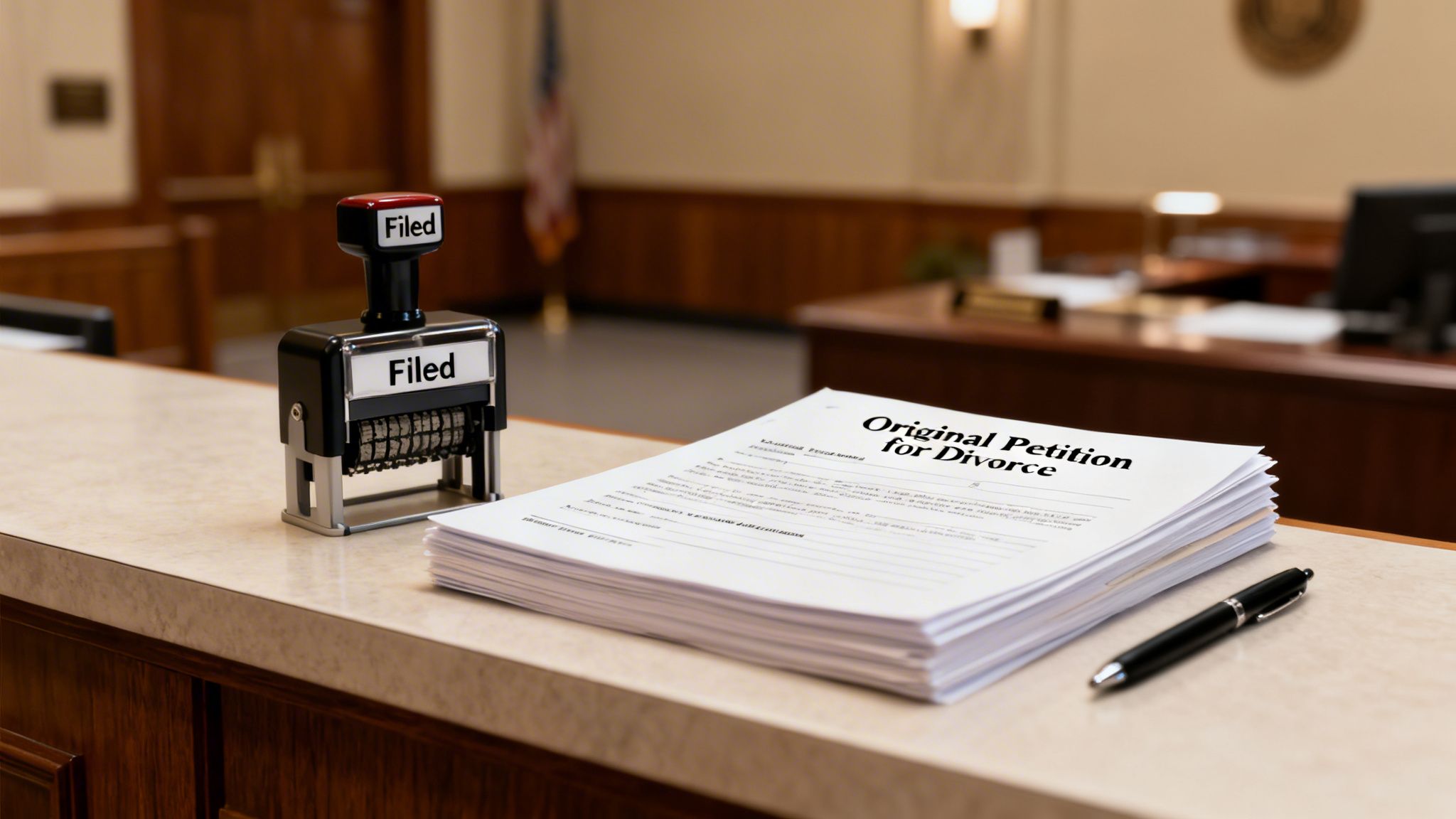
Before that 60-day clock can even start ticking, you have to formally begin the legal process. Taking that first step can feel overwhelming, but once you understand the roadmap, the journey becomes much less intimidating for families here in Atascocita and Humble.
First, you must meet Texas's residency rules. The state has strict requirements to make sure your case is filed in the right place. To file for divorce in Harris County, one of you must have:
- Lived in Texas for at least the last six months.
- Lived specifically in Harris County for at least the last 90 days.
If you meet these timeframes, the court has proper jurisdiction to hear your case. If you've just moved to the Humble area, you will need to wait until you meet these minimums before you can file.
Step-by-Step: Filing the Official Paperwork
Once you've cleared the residency hurdle, the next move is filing a document called the Original Petition for Divorce. Think of this as the official starting whistle for your divorce case. The moment it's filed with the Harris County District Clerk, the 60-day waiting period begins.
This petition gives the court essential details: when you were married, whether you have children, and the legal reason for the split. Most people in Texas file on "no-fault" grounds, citing "insupportability," which is simply a formal way of saying the marriage has broken down beyond repair.
Getting this step right is crucial. Simple mistakes in the paperwork can cause frustrating delays, adding stress you don’t need. We cover the nuts and bolts of this in our guide to filing a divorce in Harris County.
Notifying Your Spouse
After you file, the law requires that your spouse be officially notified that a divorce lawsuit has started. This is known as "service of process," and it’s a non-negotiable step that ensures both parties are aware of the legal proceedings.
There are a couple of common ways to handle this in our community:
- Formal Service: A sheriff, constable, or private process server physically hands a copy of the divorce petition to your spouse.
- Waiver of Service: If you're on relatively good terms, your spouse can sign a "Waiver of Service." This document simply states they've received the papers and agree to skip the formal delivery process, which can make things feel less confrontational.
This isn't just a courtesy; it's a legal requirement. Once your spouse has been properly served (or has signed the waiver), your case is truly underway. From there, you can begin to navigate the waiting period and work toward a final resolution.
Exceptions to the 60-Day Waiting Period
While the 60-day cooling-off period is a firm rule in almost every Texas divorce, the law does carve out specific exceptions for extreme situations. For our neighbors in Atascocita or Humble, it's critical to understand that getting a judge to waive this period is rare and requires a high level of proof.
The purpose of an exception is to protect a spouse or child from immediate harm. This isn't a loophole for getting a faster divorce; it’s a safeguard for situations where staying married, even for two more months, presents a real and provable danger.
The Family Violence Exception
The most critical exception to the Texas waiting period for divorce is centered around family violence. If there's a documented history of domestic abuse, the court has the power to finalize the divorce much sooner than 60 days.
However, an allegation of abuse isn't enough on its own. A Harris County judge needs to see concrete, official proof to grant this kind of waiver. The law generally looks for one of two things:
- A Criminal Conviction: Your spouse has been officially convicted of (or received deferred adjudication for) a crime involving family violence against you or someone in your household.
- An Active Protective Order: You already have an active protective order in place against your spouse, which was issued because a court found that family violence had occurred.
Bringing this kind of evidence before a judge is a delicate process. It involves filing the right motions and making a strong, clear case that the circumstances are severe enough to justify bypassing the standard timeline.
It is so important for anyone in our Atascocita community facing these harrowing situations to know that the legal system has built-in protections. Waiving the 60-day period isn't just a legal maneuver; it's a powerful tool designed to prioritize the safety of abuse survivors and their children.
Understanding the High Bar for a Waiver
Even with the right evidence, the final decision rests with the judge. They will scrutinize the proof to ensure it meets the strict standard laid out in the Texas Family Code. This is why having a local attorney who knows the Harris County court system is invaluable.
An experienced lawyer can guide you in gathering the essential documents, like police reports and court orders, and then present a compelling argument for why the waiting period puts you at risk. For families in danger, this exception is a lifeline. If you believe your situation qualifies, please speak with an attorney right away to explore your options for protecting yourself and expediting your divorce.
What Happens During the 60-Day Waiting Period?
That 60-day waiting period in a Texas divorce can feel like an eternity, especially when you're ready to move on. But for folks here in Atascocita and Humble, we always advise them to see it differently. This isn't just dead time; it’s prep time.
Think of it as a crucial window to get your ducks in a row. The work you and your attorney put in now can set the entire tone for your divorce, paving the way for a smoother process and a much better outcome for your family's future.
Creating Stability with Temporary Orders
Right after a divorce is filed, life can feel chaotic. Who's staying in the house? How will the bills get paid? What will the kids' schedule look like? This is where Temporary Orders come in.
These are court-ordered ground rules designed to create stability while the divorce is ongoing. A judge can put temporary orders in place to address urgent issues like:
- A temporary parenting schedule and child custody arrangement.
- Who pays child support or temporary spousal support.
- Who gets to live in the family home or use the primary car.
- Rules that stop either spouse from selling assets or emptying bank accounts.
Getting these orders sorted out during the waiting period is a huge priority. They provide a predictable routine for your family and protect your financial standing right from the start.
Gathering the Facts: The Discovery Process
The other major task during this time is kicking off the discovery process. This is the formal legal process where you and your spouse exchange all relevant financial information. It’s all about making sure everyone has a complete and honest picture of the marital estate.
Think of discovery as putting all the cards on the table. You can't negotiate a fair deal if you don't know what you’re working with. This process is designed to prevent financial games and ensure total transparency.
Once you have the facts, you can start talking about a settlement. With the information gathered during discovery, your attorney can begin negotiating with the other side. Many cases find common ground here, which is the first step toward a successful resolution in mediation. To learn more about this critical stage, see our guide on how to prepare for divorce mediation.
Making real progress during this window is more important than ever. Divorce filings in Texas have surged, jumping from 71,121 to 111,202 annually over nine years. That's a 43.8% increase in the per capita rate, which has put a serious strain on court dockets across the state. You can read more about these trends in Texas divorce rates and why getting ahead of the curve is so critical.
Why Your Divorce Will Likely Take Longer Than 60 Days
One of the biggest misconceptions we hear from families here in Atascocita is the idea that their divorce will be done and dusted the moment that 60-day clock runs out. In reality, it’s much healthier to think of that 60-day mark as the starting line, not the finish line. For the vast majority of couples, the actual process of getting divorced stretches well beyond this initial two-month window.
The main reason for the delay boils down to one simple thing: disagreement. Even couples who start out on friendly terms can quickly find themselves hitting a wall when it comes to the big decisions. This is what turns a straightforward uncontested divorce (where you agree on everything) into a contested divorce (where you disagree on at least one key issue).
What Pushes the Timeline Back?
Any point of friction, no matter how small it seems at first, can add weeks or even months to your case. The more intertwined your lives are, the more there is to untangle.
- Child Custody and Visitation: Hammering out a possession schedule that truly works for everyone is often the most emotional and time-consuming part of any divorce.
- Dividing Property and Debt: Figuring out what happens with the family home in Humble, how to split retirement accounts, or who is responsible for the credit card debt all require careful negotiation.
- Complex Financial Assets: If you own a small business in the Atascocita area, have investment properties, or other unique assets, getting a proper valuation takes time and often calls for bringing in financial experts.
This timeline gives you a good visual of the key stages that happen during the waiting period and beyond, all of which contribute to the total length of the process.
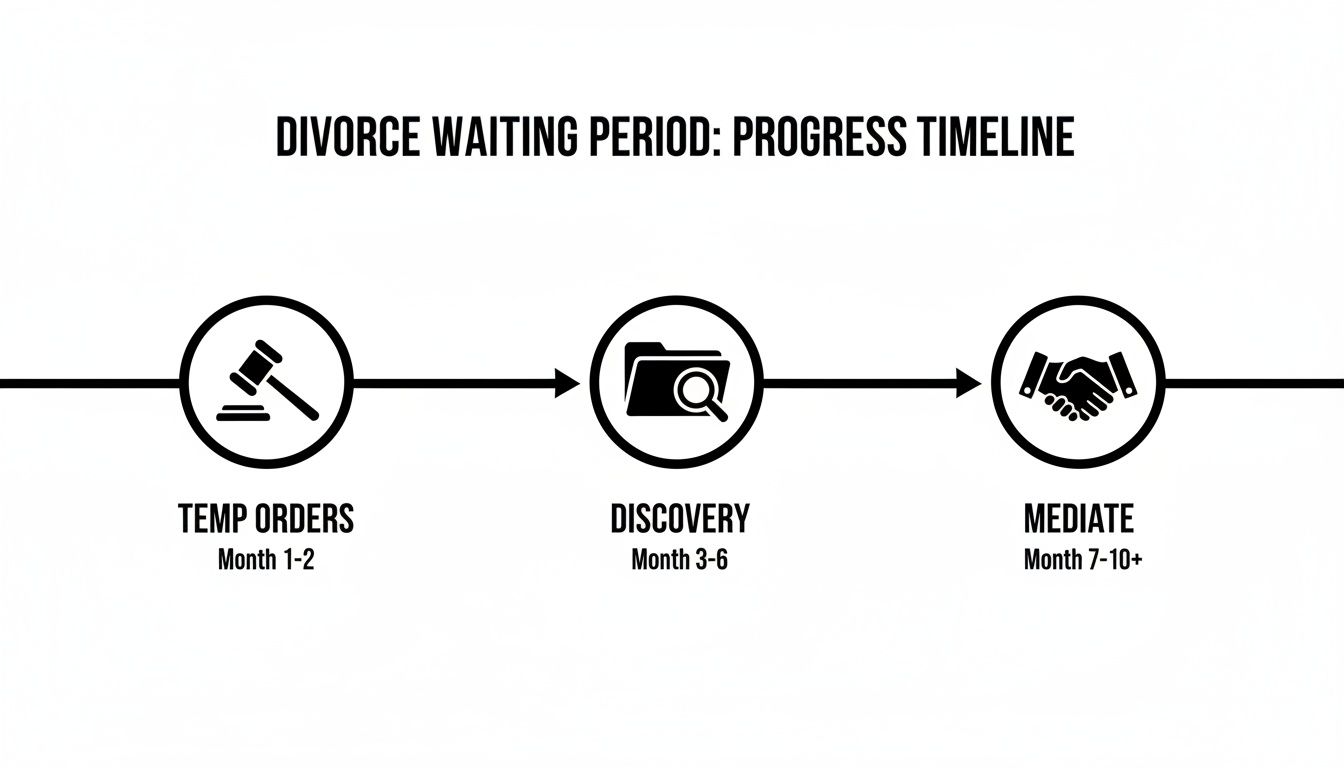
As you can see, essential steps like getting temporary orders in place, going through the discovery process, and attending mediation all have to happen before you can even think about finalizing the divorce.
Key Takeaway: The 60-day mark is simply the earliest a judge is legally allowed to sign your divorce decree. It is not a deadline they are required to meet. A court will not finalize your case until every single issue is resolved, either through your own agreement or by a judge’s ruling after a trial.
Most divorces in Texas take somewhere between six months to one year from the day of filing to the final decree. A simple, truly uncontested case with no children and minimal property might wrap up closer to the 90-day mark. But if you have any contested issues, you can expect the timeline to stretch out significantly.
The table below breaks down the typical timeline differences between an uncontested and contested case.
Timeline Comparison: Uncontested vs. Contested Divorce in Texas
| Factor | Uncontested Divorce | Contested Divorce |
|---|---|---|
| Typical Timeline | 2-4 months (including 60-day wait) | 6-12+ months |
| Agreement Level | Full agreement on all issues (custody, property, support) | Disagreement on one or more major issues |
| Key Activities | Drafting and signing final decree | Temporary orders hearings, discovery, mediation, depositions, potential trial |
| Attorney Role | Reviews and drafts agreed-upon documents | Advocates, negotiates, represents you in court |
| Overall Cost | Lower and more predictable | Higher and variable, depending on complexity and conflict |
Ultimately, understanding these timelines is crucial for having a realistic financial and emotional plan for the months ahead. You can get a deeper look into the factors that influence divorce timelines and costs to better prepare for your own unique situation.
How an Atascocita Lawyer Can Guide You
Trying to handle a Harris County divorce by yourself can feel overwhelming, like you've been dropped into a maze without a map. Between the mountain of legal paperwork, the strict court deadlines, and the sheer emotional weight of it all, it's a heavy load to carry alone. This is where having a dedicated, local advocate from The Law Office of Bryan Fagan in your corner truly matters.
We live and work here, so we understand the specific challenges families in Atascocita, Humble, and the surrounding areas face. Our job goes far beyond just filing documents. We're here to offer you clarity, steady support, and a solid strategy from the very beginning.
Your Advocate From Start to Finish
A seasoned family law attorney doesn't just tell you about the Texas waiting period for divorce; they actively defend your rights during that time and every day after. We make sure every petition and motion is filed correctly with the Harris County District Clerk, sidestepping the common mistakes that can needlessly drag out your case for months.
Throughout the 60-day period and beyond, we are your negotiators and your voice. We work diligently to secure favorable Temporary Orders that protect your stability and handle the often-tedious discovery process, ensuring every financial detail is brought to light for a fair property division.
A skilled attorney turns the waiting period from a frustrating delay into a strategic advantage, using that time to build a strong foundation for your case and negotiate from a position of strength.
Take the First Step with Confidence
The path through divorce is naturally filled with questions and unknowns. You absolutely do not have to walk it by yourself. Our team at The Law Office of Bryan Fagan is here to give you the answers and peace of mind you need right now.
We invite you to schedule a free, no-pressure consultation at our Atascocita office. Let's sit down together, go over your specific situation, and map out a clear plan for your future. To get a better idea of what you should be looking for in legal representation, take a look at our guide on how to choose a divorce attorney.
Frequently Asked Questions About the Waiting Period
Even when you understand the basics, real-life questions always pop up as families in Atascocita and Humble start down the path of divorce. Here are some straightforward answers to the things we hear most often in our practice.
Can my spouse and I waive the 60-day period if we both agree?
This is probably the most common question we get, and the answer is a firm no. Texas law makes the 60-day waiting period mandatory. It's a non-negotiable "cooling-off" period.
Even if you and your spouse have a perfectly amicable, uncontested divorce and agree on every last detail, a judge simply does not have the authority to waive it. You have to wait the full 60 days.
What if my spouse intentionally delays the divorce?
It’s incredibly frustrating when it feels like your spouse is dragging their feet. While they can't stop the divorce from happening entirely, they can definitely slow things down by refusing to sign papers, missing key deadlines, or creating conflict over small things.
This is exactly where having an experienced attorney makes a difference. We can file motions with the Harris County court to compel your spouse to respond to requests for information or to set a firm deadline for mediation. A judge can enforce these orders and keep the ball rolling, preventing one person from holding the whole process hostage.
Does Texas have legal separation?
No, Texas is one of the few states that does not formally recognize "legal separation." You can certainly live apart and even draw up a separation agreement contract, but in the eyes of the law, you are still married until a judge signs that Final Decree of Divorce.
If you need legally enforceable orders for things like property division or child custody, you must file for divorce to get them.
Beyond the legal timelines, the emotional journey of recovery is a whole separate process. For some compassionate guidance, you can find helpful resources on how to heal after divorce to support you during this time.
Getting through the Texas divorce waiting period requires clear, dependable legal advice. At The Law Office of Bryan Fagan – Atascocita TX Lawyers, we provide the guidance you need to protect your interests and move forward with confidence. Schedule your free consultation with our Atascocita team today by visiting https://www.atascocitaattorneys.com.