Skip to content
When a marriage isn't working, most people in Texas think of divorce as the only option. However, there's another legal path called an annulment, and understanding its timeline is crucial. There isn't a single deadline. Instead, the Texas marriage annulment time limit depends entirely on the specific reason—or “ground”—you're using to argue the marriage was invalid from the start.
For our neighbors here in Atascocita and Humble, it's vital to know that these deadlines are incredibly strict. They can be as short as 30 days from your wedding day or as long as a year. For some grounds, there’s no hard deadline, but you are still required to act as soon as you discover the problem. Missing this window can mean losing your chance for an annulment forever.
Is an Annulment Possible for Your Marriage in Texas?
For folks here in Atascocita, Humble, and across northeast Harris County, the concept of annulment can be confusing. It's often mistaken for a quick, no-fuss divorce, but it's a completely different legal action. A divorce dissolves a marriage that was legally valid. An annulment, on the other hand, is a court order that declares your marriage was never valid in the first place because of a specific issue that existed from the moment you said, "I do."
Think of it this way: a divorce is like ending a legally sound contract. An annulment is like proving that the contract was fundamentally flawed and never should have been recognized as legitimate. This distinction is critical because it impacts everything from property division to your legal status moving forward. The first step is figuring out if your situation fits one of the specific grounds recognized by Texas law.
Grounds and Deadlines At a Glance
Time is the most critical factor in any potential annulment case. If you miss the deadline by even a single day, a Harris County court will almost certainly deny your request, leaving divorce as your only option to end the marriage.
To give our Atascocita community a clear, straightforward overview, we’ve put together a table summarizing the legal grounds for annulment and the strict time limits that come with each one.
This table is a great starting point to see if your circumstances might fall within the Texas marriage annulment time limit. Keep in mind, every case has its own unique details that matter. For a deeper dive into these legal options, you can learn more about marriage annulment in Texas in our comprehensive guide.
Texas Annulment Grounds and Filing Deadlines at a Glance
This quick-reference table breaks down the legal reasons for an annulment in Texas and the strict time limit for filing a petition based on each one.
| Grounds for Annulment | Time Limit to File | Key Condition |
|---|---|---|
| Underage Marriage (16-17) | Must be filed by a parent or guardian within 90 days of the marriage. | The right to annul is lost if the couple lives together after the underage spouse turns 18. |
| Intoxication/Narcotics | No specific deadline, but you must file promptly after becoming sober. | You must not have voluntarily lived with your spouse after the influence wore off. |
| Permanent Impotence | No specific deadline, but you must file promptly after discovering the condition. | You must not have known about the impotence at the time of marriage. |
| Fraud, Duress, or Force | No specific deadline, but you must act quickly after discovering the fraud or escaping the duress. | Voluntarily living together after the fact can invalidate your claim. |
| Mental Incapacity | No specific deadline, but must be filed soon after regaining capacity or after a guardian is appointed. | Continuing to live together after regaining mental capacity can prevent an annulment. |
| Concealed Recent Divorce | Must be filed within one year of the marriage date. | The petitioner must prove they were unaware their spouse had been divorced within 30 days prior to the marriage. |
| 72-Hour Waiting Period Violation | The petition must be filed within 30 days of the marriage date. | This is one of the strictest and shortest deadlines in Texas family law. |
Remember, these deadlines are absolute. Once the window closes, it closes for good, so understanding where you stand is the first, most important step you can take.
Annulment vs. Divorce: A Critical Distinction in Harris County
It's a question we hear all the time from folks here in Atascocita and Humble: what’s the real difference between an annulment and a divorce? They both end a relationship, but how they get you there—and what happens after—are worlds apart. Getting this right from the start is absolutely crucial to protecting your future.
Think of it this way. A divorce is like hitting the "cancel" button on a contract you both legitimately signed. The agreement was real and valid, but now you're ending it. An annulment, on the other hand, is a legal declaration that the contract was invalid from the moment you signed it. It was based on a fundamental flaw, so the law essentially says, "This marriage never legally existed."
That's not just a fancy legal term; it has huge, real-world consequences for your life.
The Impact on Your Legal Status
One of the biggest differences is what the law says about you once it's all over. This isn't just about paperwork; it affects how you move forward with a sense of clarity and closure.
- After a Divorce: The court finalizes the divorce, and your legal status officially changes from "married" to "divorced." That's a permanent part of your record.
- After an Annulment: If a judge grants an annulment, the law treats the marriage as if it never happened. Your legal status goes back to "single," which for many people, offers a profound sense of a clean slate.
How Property and Debts Are Handled
This is where things get really different. In a Texas divorce, our community property laws kick in. That means everything you and your spouse acquired while married is considered joint property and must be divided in a way that’s “just and right.” An annulment throws that rulebook out the window.
With an annulment, the court isn't trying to split up a marital estate. Its main job is to put each person back in the financial position they were in before the flawed marriage ever started. It's about untangling your finances, not dividing them.
This can get tricky fast. Let's say you bought a house together in Kingwood while you were married. In an annulment, the judge has to figure out how to separate that asset without using the standard community property playbook. This is exactly why you need an experienced Atascocita family law attorney in your corner—to make sure your financial future is protected.
Why This Distinction Matters for You
Deciding between an annulment and a divorce is about more than just the final piece of paper. The entire legal process is different. A no-fault divorce is fairly straightforward, but an annulment requires you to prove your case to a judge. You have to present solid evidence showing why the marriage was invalid from the very beginning, which is a much tougher hill to climb.
And then there's the clock. The Texas marriage annulment time limit is strict and unforgiving. As we've covered, some grounds for annulment give you as little as 30 days to act. If you miss that deadline, divorce might be your only path forward, no matter how compelling your reasons are.
Understanding these key differences right away is the only way to avoid wasting time, money, and emotional energy on the wrong legal path—or worse, losing your opportunity to get an annulment for good.
Understanding Annulment Grounds and Their Strict Time Limits
In Texas, getting an annulment isn’t just about having a good reason—it's about acting fast. The Texas marriage annulment time limit isn't a suggestion; it's a hard legal deadline. If you miss that window, the door to annulment slams shut for good, and divorce becomes your only way out.
For families here in Atascocita and Humble, knowing these deadlines is the most critical piece of the puzzle. Each reason, or "ground," for an annulment has its own unique clock that starts ticking from the moment you say "I do." Let's walk through each one so you know exactly what you're up against.
This chart can help you see the fork in the road: ending a valid marriage (divorce) versus proving it was never valid to begin with (annulment).
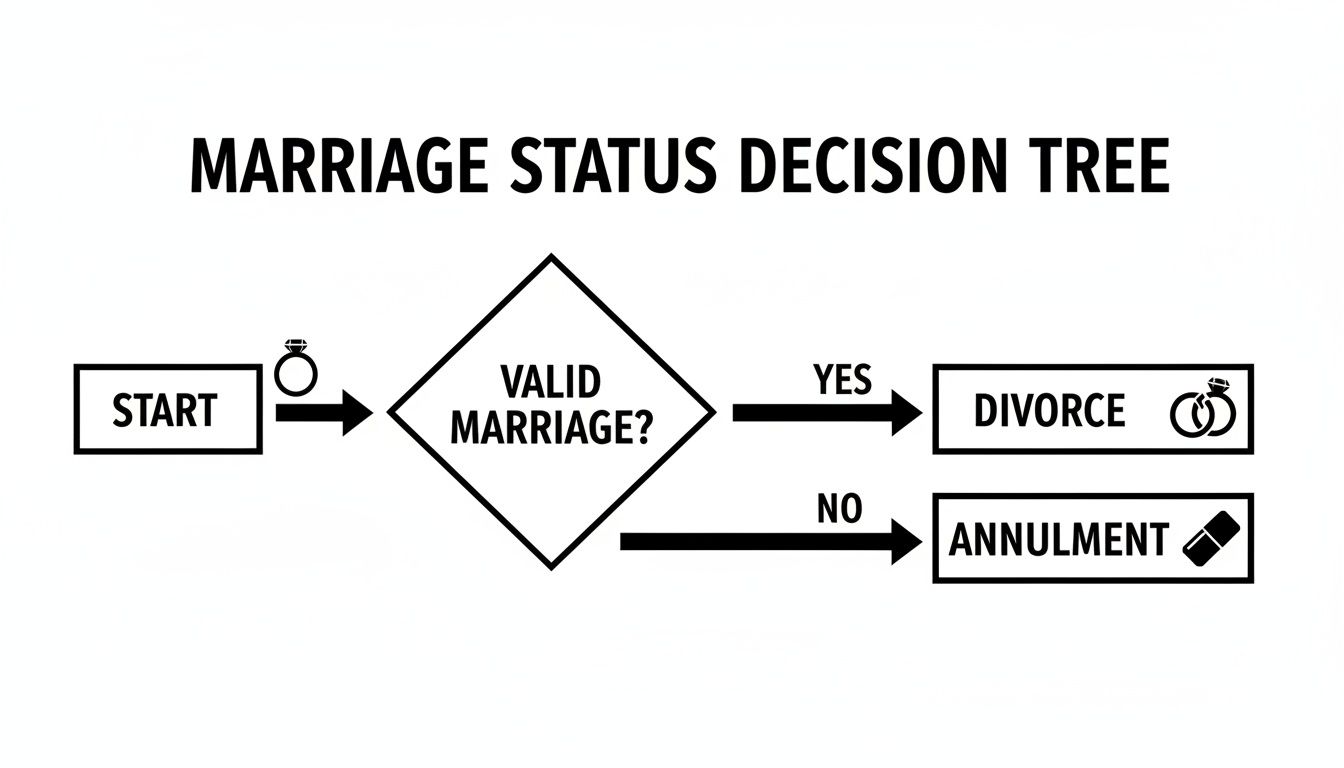
The main takeaway here is that your options depend entirely on whether a major legal defect existed when the marriage ceremony happened.
Marriage of an Underage Person
If someone was between 16 and 18 years old and got married without parental consent or a court order, you might have grounds for an annulment. But that clock is ticking loud and clear from the wedding day.
A parent, guardian, or even a "next friend" of the underage spouse must file the annulment petition within 90 days of the marriage. It’s an incredibly firm deadline. Worse yet, if the couple stays together after the underage partner turns 18, the right to an annulment is lost completely.
Influence of Alcohol or Narcotics
This is sometimes called the "Vegas wedding" scenario. If you or your spouse were so intoxicated that you genuinely couldn't consent to the marriage, the law recognizes that a valid marriage needs a clear mind.
There isn't a specific number of days, but you have to act immediately. The key is that you did not voluntarily live together after sobering up. The moment you become clear-headed and decide to stay, you've legally accepted (or "ratified") the marriage, and the chance for an annulment vanishes.
Permanent Impotence
If, at the time of the marriage, one spouse was permanently impotent and the other didn't know about it, this can be a basis for annulment. This is about a physical inability to have sexual relations, not an issue of fertility.
Just like with intoxication, the law doesn't give a hard deadline. The catch is that you have to file as soon as you discover the condition. If you find out and continue living together as a married couple, the court will assume you've accepted the marriage as is, closing the door on an annulment.
Fraud, Duress, or Force
This is one of the more complicated grounds. It applies when you were tricked, threatened, or literally forced into a marriage you didn't want.
- Fraud: This isn't just any lie. It has to be a deception that strikes at the very core of the marriage agreement, like someone marrying you only for a green card while promising a future together.
- Duress or Force: This means you were coerced into the marriage, perhaps under the threat of physical or emotional harm to you or a loved one.
Again, there’s no set deadline, but you must act the moment you discover the fraud or escape the threat. Voluntarily living with your spouse after the truth is out or the danger is gone will sink your claim. If you're wondering how this affects the overall process, our guide on how long it takes for an annulment offers more context.
Mental Incapacity
If one person lacked the mental capacity to truly understand the act of getting married at the time of the ceremony, the marriage can be undone. This could be due to a significant mental illness or another cognitive impairment.
The petition can be filed by the person themselves if they regain capacity, or by a guardian acting for them. Like some other grounds, there isn't a fixed timeline, but you can't delay. The right to annul is lost if the couple voluntarily lives together after the person's mental capacity is restored.
Concealed Divorce and 72-Hour Waiting Period Violations
These two grounds have some of the most unforgiving and urgent deadlines in Texas family law. You have to move incredibly fast.
Concealed Divorce: Let's say your spouse got divorced just days before marrying you but never mentioned it. If that divorce happened within the 30 days before your wedding, you have grounds for an annulment. But you absolutely must file your petition within one year of your wedding date.
72-Hour Waiting Period Violation: Texas law requires couples to wait 72 hours after getting a marriage license before they can legally marry. If you get married before that window is up, the marriage is voidable. The time limit here is razor-thin: you must file for an annulment within 30 days of the wedding. For a local Humble couple who gets a license on a Friday and marries on Saturday, they have exactly one month to act if they have second thoughts. Miss that 30-day window, and the marriage is locked in, forcing a full divorce instead.
Navigating these deadlines is not something you want to do alone. At The Law Office of Bryan Fagan – Atascocita TX Lawyers, we understand how time-sensitive these matters are. We're here to help our neighbors in northeast Harris County understand their options before it's too late.
The Harris County Annulment Process Step-by-Step
Walking into any legal process can feel overwhelming. For residents here in Atascocita, the path to an annulment follows a clear set of rules, but every single step demands care and precision. Let's walk through the roadmap from your first meeting with an attorney to the final judge's order so you know exactly what to expect.

Your very first move—and the most important one—is to sit down with a local family law attorney who understands our community. This consultation is where we confirm if your situation actually fits one of the specific grounds for annulment and, just as critically, if you're still inside the strict Texas marriage annulment time limit. A good lawyer will give you an honest, compassionate assessment of your case’s strengths and potential hurdles.
Step 1: Filing the Petition and Notifying Your Spouse
Once you and your attorney decide to proceed, the official legal process kicks off. This isn't just one step, but a series of formal actions that have to be done right to prevent frustrating delays.
- Drafting the Petition: Your attorney will draft a legal document called the "Original Petition for Annulment." This is the formal request to the court, clearly stating the specific legal grounds you're claiming—like fraud or mental incapacity—to have the marriage declared void.
- Filing with the Court: Next, we file that petition at the Harris County Civil Courthouse in downtown Houston. This is the central hub for all family law cases in Harris County, whether you live in Humble, Atascocita, or anywhere else in the area. Filing officially puts your case on the court's radar.
- Serving Your Spouse: The law requires that your spouse be formally notified of the lawsuit. This is called "service of process." A constable, sheriff, or private process server will hand-deliver a copy of the petition to them, ensuring they know about the legal action and have a chance to respond.
Step 2: Gathering Evidence to Support Your Claim
Unlike a no-fault divorce, an annulment is never automatic. You carry the burden of proof, which means it’s your job to convince the judge that your reasons for the annulment are valid. This is where your evidence becomes the star of the show.
The success of an annulment case almost always hinges on the quality and strength of the evidence you present. A Harris County judge won't grant an annulment just on your word; you need to bring concrete proof that backs up your claims and meets the strict legal standards of Texas law.
Your attorney is your partner in identifying and collecting everything you'll need. For instance, if you're claiming fraud, that could mean digging up emails, text messages, or financial records that expose the deception. If the ground is mental incapacity, medical records or testimony from an expert witness will be essential. We offer more detailed guidance on how to file for an annulment and the specific documents you might need.
Step 3: The Final Hearing and Judge's Order
The final stage is the court hearing. This is where you and your attorney will present your case to a judge. If your spouse decides to contest the annulment, they’ll also have the opportunity to present their side of the story.
During the hearing, you'll likely need to testify under oath, answering questions from your attorney and maybe even the judge. Your lawyer will present all the evidence you’ve gathered. If the judge is convinced you’ve successfully proven your grounds, they will sign a "Final Decree of Annulment."
This legally binding document officially declares the marriage void. It restores your status to "single" as if the marriage never happened and finalizes any related decisions about children or property. Getting through this process, especially in a busy system like Harris County's, really shows why having a supportive, local attorney from The Law Office of Bryan Fagan – Atascocita TX Lawyers in your corner is so important.
What Kind of Proof Do I Need for an Annulment?
Unlike a no-fault divorce where you just need to state the marriage is broken, an annulment is a different beast entirely. You can't just tell a Harris County judge you want one; you have to prove it. The legal standard is high—you need clear and convincing evidence that your marriage was invalid from the moment it began.
This means the burden falls squarely on your shoulders to build a persuasive case, and the specific proof you'll need hinges directly on the reason (or "grounds") you're using for the annulment.

For families here in Atascocita and Humble, figuring out what evidence to gather can be the most stressful part of the entire process. This is where a seasoned family law attorney really makes a difference. We know what judges in our local courts are looking for and can help you collect and organize the right documents and testimony to give your case the best possible chance of success.
Proving Fraud, Duress, or Force
If you were tricked or forced into marriage, you need to show the judge what was happening behind closed doors. Your personal testimony is a start, but it's rarely enough on its own. You need concrete proof to back up your story.
- Evidence of Fraud: Think digital trails. This could be text messages, emails, or even social media posts where your spouse admitted to lying or revealed their true motives. Financial records can also be incredibly powerful, especially if they uncover a hidden agenda, like marrying purely for a green card.
- Evidence of Duress or Force: Here, witnesses are your most powerful asset. Testimony from friends, family members, or even a therapist who saw the coercion or heard the threats can be crucial. If you ever filed police reports or obtained a restraining order, those documents serve as potent, official evidence of the pressure you were under.
Proving Incapacity or Intoxication
When the grounds are that one person couldn't consent due to mental state or intoxication, your evidence has to zero in on their condition at the specific time of the wedding ceremony.
It’s not enough to say someone was having a bad day or made a poor choice. The court needs to see objective proof that the person was fundamentally unable to comprehend the lifelong commitment they were making.
This type of proof often involves:
- Medical Records: A formal diagnosis from a doctor or psychiatrist detailing a relevant mental illness or cognitive impairment is a cornerstone of these cases.
- Expert Testimony: You may need a medical expert to explain to the court how the person's condition would have prevented them from giving meaningful consent.
- Witnesses: Anyone who was with the person before, during, or right after the ceremony can testify about their erratic behavior, confusion, or level of intoxication.
To help you get started, here's a checklist of potential evidence you might need, organized by the most common grounds for annulment in Texas.
Evidence Checklist for Common Annulment Grounds
| Annulment Ground | Potential Evidence to Collect |
|---|---|
| Under the Influence | Witness testimony (friends, family, officiant), photos/videos from the ceremony, receipts from bars or liquor stores. |
| Fraud or Duress | Emails, text messages, voicemails, financial records, witness testimony from people who knew about the deception or threats. |
| Mental Incapacity | Medical records, psychiatric evaluations, testimony from doctors or therapists, witness accounts of behavior. |
| Impotence | Medical records and expert testimony from a physician. |
| Concealed Divorce | A copy of the spouse's divorce decree showing it was finalized within 30 days before your marriage. |
| Underage (16-17) | Birth certificates for both parties, witness testimony regarding parental consent (or lack thereof). |
This table is a starting point, not an exhaustive list. Every situation is unique, and the best evidence for your case will depend on the specific details.
An Atascocita Attorney Can Help Build Your Case
No matter what grounds you're claiming, the standard of proof is high, and the strict Texas marriage annulment time limit adds another layer of urgency. A good local attorney does much more than file paperwork. We work with you to craft a compelling narrative, issue subpoenas for critical records, prepare your witnesses to testify effectively, and present your evidence to a Harris County judge in the clearest, most persuasive way.
At The Law Office of Bryan Fagan – Atascocita TX Lawyers, we’re here to help our neighbors navigate these tough situations. We understand that this is a deeply personal matter, and we provide the compassionate, expert guidance you need to move forward.
Taking the Next Step with Our Atascocita Law Office
If there's one thing to take away from all this, it's that the Texas marriage annulment time limit is absolute. It's not a suggestion; it's a hard deadline that the courts take very seriously.
We created this guide to help our neighbors right here in Atascocita, Humble, and the greater northeast Harris County area. But let's be honest—reading about the law is one thing, and facing it on your own is another. It can feel completely overwhelming, and missing a deadline could mean losing your chance for an annulment for good.
That's why our best advice is simple: don't wait. As you get ready to speak with a lawyer, it can be helpful to know how law firms handle things like legal client intake documents. This little bit of preparation can make your first meeting much more productive.
A free, no-risk consultation at our Atascocita office is the smartest first step you can take. It’s your chance to sit down with a local attorney who knows this community and get straight answers about your specific situation.
Going through a potential annulment can be a lonely road, but you don't have to walk it by yourself. The team here at The Law Office of Bryan Fagan – Atascocita TX Lawyers is ready to offer the clear, compassionate guidance you need.
Schedule your free consultation today. Let's figure out your best options and give you the peace of mind that comes from having a dedicated local team in your corner.
Got Questions? We’ve Got Answers About Texas Annulments
Even after you understand the basics, real-life questions always pop up. For our neighbors here in Atascocita and Humble, we hear a lot of the same worries when someone is considering having their marriage declared void. Getting straight answers can bring a sense of calm during a very confusing time.
What About Our Kids if the Marriage is Annulled?
This is usually the first and most important question for any parent, and the answer should put your mind at ease. In Texas, an annulment does not make your children illegitimate. The law is crystal clear on this: it protects the rights and well-being of any child born during the marriage.
A judge will handle custody, visitation, and child support just like they would in a standard divorce case. The court’s number one priority is, and always will be, the best interest of the children. They will make sure your kids have the financial support and stability they need, no matter what happens with the marriage.
How Do We Split Up Our Property?
This is one of the biggest ways an annulment differs from a divorce. The standard community property rules—where you split everything acquired during the marriage—don't automatically apply. The goal of an annulment is to restore each person to the financial position they were in before the marriage ever happened.
That said, a judge still has the power to order a “just and right” division of property that you both acquired while you were living as a married couple. This can get tricky, and it’s an area where having a good lawyer is crucial. You need someone who can protect your assets and fight for a fair outcome, especially if you’ve built up significant assets together, like a house in Humble or a small business in the Atascocita area.
An annulment might erase the marriage from a legal standpoint, but it can't magically undo the financial life you built together. The court's job is to carefully and fairly untangle those finances, which requires strong legal arguments and solid evidence.
What if My Spouse Won't Agree to the Annulment?
If your spouse decides to fight the annulment, your case becomes "contested." This isn't just about filing some papers and getting a signature anymore; you'll have to go to court and prove your case.
In a contested annulment, both you and your spouse will present evidence and argue your sides before a Harris County judge. Your spouse might claim the grounds you've cited aren't valid, or that you lost your right to an annulment by continuing to live together after you found out about the problem. This is exactly where having an experienced attorney becomes non-negotiable. We'll build a strong case, counter the other side’s arguments, and fight for you in front of the judge to get the right outcome.
At The Law Office of Bryan Fagan – Atascocita TX Lawyers, we know the ins and outs of annulments, including the strict deadlines and unique legal challenges they present. If you have more questions or think you might have grounds to annul your marriage, don't put it off. Reach out to our Atascocita office for a free, confidential consultation to protect your rights and your future.
Schedule Your Free Consultation at Our Atascocita Office Today