Skip to content

Losing a family member is one of life's most painful experiences. The last thing you want to deal with while grieving is a complicated legal process. For families in our community, a probate attorney in Atascocita, Texas, can be an invaluable local guide, helping you navigate the court system to validate a will, handle debts, and ensure assets are passed to their rightful heirs. Their support is crucial for getting through the specific legal maze of Harris County with compassion and clarity.
Dealing with Probate After a Loss in Atascocita
When a loved one passes away, their estate—everything from their house in Eagle Springs and car to their bank accounts—doesn't just magically transfer to the family. Instead, it usually has to go through a formal court process known as probate.
In simple terms, probate is the official system for winding down a person's financial affairs in a legal and orderly way. For most families here in Atascocita and Humble, it’s a completely new and often intimidating world to step into. The main purpose of the Texas probate system is to make sure everything is done by the book. The court confirms the will is legitimate, appoints an executor to manage the estate, and oversees the process to protect everyone involved. This oversight helps prevent painful family disputes and ensures your loved one's final wishes are carried out exactly as they intended.
When Is a Probate Attorney Necessary?
You might wonder if you can just handle this yourself to save money, but the reality is that Texas probate law is complex and full of potential pitfalls. Bringing in an experienced, local attorney is almost always the right call, especially in these situations:
- Validating the Will: Before anything can happen, a Harris County court must legally validate the will. An attorney handles this crucial first step, ensuring all paperwork is correct.
- Paying Off Debts and Taxes: The executor is responsible for paying the estate's legitimate debts and filing final taxes. An attorney ensures this is done correctly, protecting the executor from being held personally liable.
- Keeping the Peace: Grief and money can be a volatile mix. A lawyer acts as a neutral third party, helping to head off disagreements before they turn into full-blown family fights that can damage relationships permanently.
- When There Is No Will: If a loved one died "intestate" (without a will), Texas law has its own rigid rules for who gets what. This process is far more complicated and absolutely requires legal expertise to manage properly and identify the correct heirs.
The good news for local families is that there's plenty of specialized help available. A recent search showed 119 top-rated wills and probate attorneys serving the Atascocita area, and many, like our firm, provide free consultations and virtual meetings to make things easier. You can learn more about Atascocita probate lawyers on Justia.com to see the range of professionals in our community.
Ultimately, hiring a probate attorney means you can hand off the legal heavy lifting and focus on what truly matters—your family. They manage the mountain of paperwork, court filings, and creditor notices, making sure every detail is handled correctly and efficiently. A great place to start is by understanding what assets go through probate so you know what to expect.
The Texas Probate Process for Harris County Residents
Losing a loved one is hard enough. Navigating the legal system afterward can feel overwhelming, especially if you're unfamiliar with the probate process. For families in Atascocita, Humble, and across Harris County, having a clear picture of the road ahead can provide immense relief.
Think of probate as the formal process of closing out someone's financial affairs. It's the court-supervised way to make sure their debts are paid, their assets are accounted for, and their property is passed on to the right people according to their will. It brings order and legal finality to a difficult time.
When you're grieving, the last thing you want to do is decipher legal paperwork. That's where a probate attorney in Atascocita, Texas, can step in and turn confusion into a clear, manageable plan.
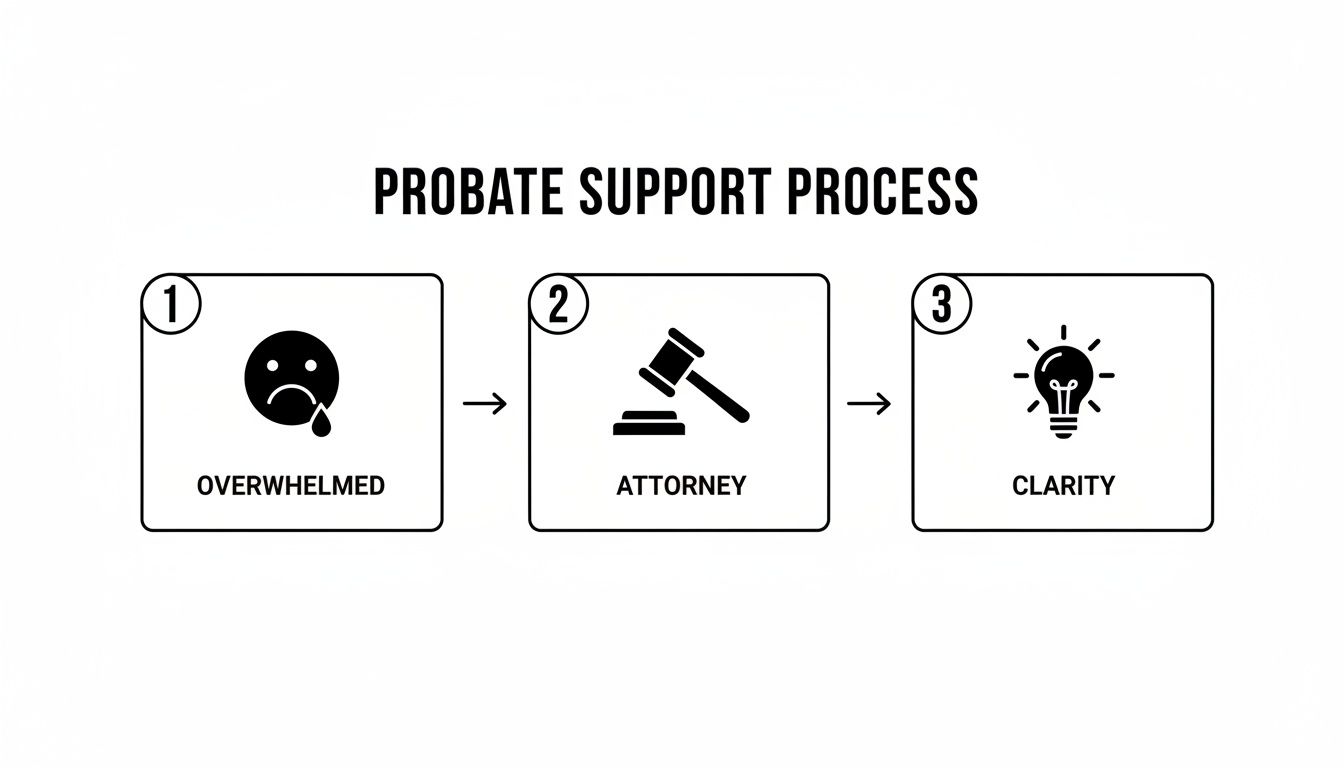
As you can see, an attorney’s job is to bridge the gap between the emotional weight of your loss and the strict requirements of the Harris County probate courts. We provide the map and guide you every step of the way, so you never feel lost.
Not every probate is the same. Texas law offers several paths, and the right one depends on factors like the size of the estate and whether a valid will exists. Here’s a quick overview of the main types of probate administration you might encounter.
Types of Probate Administration in Texas
| Type of Probate | Description | Best For |
|---|---|---|
| Independent Administration | The most common and efficient type in Texas. The executor can manage the estate with minimal court supervision. | Estates with a valid will that specifically requests independent administration or when all heirs agree to it. |
| Dependent Administration | A more formal process where the executor must get court approval for most actions, like selling property or paying debts. | Situations with intense family disputes, when there is no will, or where beneficiaries need the court's protection. |
| Muniment of Title | A simplified process used only to transfer title of property when there are no outstanding estate debts (except for liens on real estate). | Estates with a valid will but no unpaid debts. It's essentially a way to prove the will is valid and record the property transfer. |
| Small Estate Affidavit | A non-court procedure for very small estates (under $75,000, not including the homestead) where the person died without a will. | Very simple estates where the value of assets is low and there's no need for a formal administration. |
Understanding these options is the first step, and a local attorney can help you determine the most appropriate and cost-effective path for your family's specific situation.
The First Step: Filing the Will and Application
The probate process officially kicks off when the original will and an "Application to Probate Will" are filed in the correct Harris County Probate Court. It’s important to know that Harris County has specialized courts dedicated exclusively to these matters, so you can't just file at any courthouse.
There's a deadline here, and it's a big one. The application must be filed within four years of the person's death. If you miss this window, probating the will becomes incredibly complicated and, in some cases, impossible.
An experienced local attorney makes sure every T is crossed and every I is dotted on the initial paperwork, filing it in the right court to avoid any frustrating delays right out of the gate.
The Executor and Notice Requirements
After the application is filed, the court will schedule a hearing. At this hearing, a judge will confirm the will is valid and officially appoint the executor—the person named in the will to manage the estate.
Once appointed, the executor has immediate legal duties. One of the first is to send a formal, written notice to every beneficiary listed in the will. This isn't just a friendly heads-up; it's a legal requirement that has to be completed within 60 days after the will is admitted to probate.
The executor must also publish a "Notice to Creditors" in a local newspaper that circulates in the Atascocita area. This gives anyone the deceased owed money to a chance to come forward and make a claim. Handling these notices correctly is crucial for protecting the executor from personal liability for the estate's debts down the road.
Gathering and Managing Estate Assets
With the court's legal authority in hand, the executor's real work begins: finding, securing, and cataloging everything the person owned. This can be the most time-consuming part of the job.
This stage involves several key tasks:
- Creating a Detailed Inventory: The executor must compile an exhaustive list of all estate property. This includes everything from the family home in a neighborhood like Eagle Springs or Walden on Lake Houston to bank accounts, retirement funds, cars, and personal heirlooms.
- Appraising Property: Some assets, especially real estate or valuable collectibles, will likely need a professional appraisal to determine their exact fair market value for the court inventory.
- Securing Assets: The executor has a duty to protect the estate's assets from being lost, stolen, or damaged. This could mean changing the locks on the house, managing investment accounts to prevent losses, or simply making sure the insurance policies don't lapse.
A probate attorney is an invaluable partner during this phase, helping the executor track down assets and ensure everything is valued and reported correctly. For a more detailed look at these duties, you can explore our guide on how to probate a will in Texas.
How a Local Probate Attorney Protects Your Family
When you lose a loved one, the last thing you want to deal with is a mountain of paperwork and looming court deadlines. It can feel overwhelming, if not downright impossible. This is precisely when a dedicated probate attorney in Atascocita, Texas, becomes the steady hand your family needs to navigate the complexities ahead.
Their role isn't just about filling out forms. Think of them as your personal guide, charting a clear course through the legal waters of settling an estate. They manage all the moving parts, make sure every requirement is met, and protect your loved one's legacy from the kinds of costly mistakes that can easily happen during such a stressful time.

An Advocate for Your Family's Best Interests
More than anything, a probate lawyer's job is to stand up for your family. They act as a buffer between you and the often-impersonal legal system, ensuring your rights are protected from start to finish. This brings an incredible sense of relief when you need it most.
A local attorney’s core duties include:
- Ensuring Accurate and Timely Filings: The Harris County Probate Courts operate on a strict schedule. We make sure every document is filed correctly and on time, which is critical for preventing expensive delays or even having your case thrown out.
- Navigating Complex Assets: Estates are rarely simple. Whether it’s real estate in Humble, a family-owned business in Atascocita, or a confusing investment portfolio, an experienced attorney knows how to properly value, manage, and distribute these assets according to Texas law.
- Addressing Creditor Claims: Your attorney will take over all communication with creditors. They'll vet every claim to confirm it's legitimate and negotiate to settle debts, protecting the estate from being unfairly drained.
By taking on these critical legal and financial tasks, your attorney frees up your family to focus on what truly matters: healing. They lift the administrative weight from your shoulders, providing stability during an emotional storm.
Resolving Disputes and Keeping the Peace
Unfortunately, grief and money can be a combustible mix, sometimes leading to disagreements among family members. A good probate attorney is also a skilled mediator who can defuse conflicts before they explode into painful and costly court fights.
For example, if siblings can't agree on selling the family home in Atascocita or how to divide personal belongings, an attorney can step in. By offering a neutral, objective perspective grounded in Texas law, they can guide everyone toward a fair outcome that still honors the deceased's wishes. This is especially vital when family tensions are already running high.
This kind of skilled negotiation is increasingly necessary. In contested probate cases, legal costs can skyrocket. As a major population center, the Houston area sees a significant number of high-value estates, making it a hub for these legal services. You can discover more insights about probate lawyer salaries and market trends in Texas to get a sense of the field's demands.
Identifying Cost-Saving Opportunities
A truly experienced probate attorney does more than just follow the standard procedure; they actively hunt for ways to make the process faster and more affordable for you. Texas law offers several shortcuts, but you need legal expertise to know if you qualify and how to use them.
For instance, your attorney might recognize that the estate is a candidate for a Muniment of Title. This is a much simpler process that transfers property without requiring a full, formal administration, saving a tremendous amount of time and money. For smaller estates, they might recommend a Small Estate Affidavit, which bypasses the probate court entirely.
Hiring a knowledgeable probate attorney in Atascocita, Texas, is an investment in your family's well-being and peace of mind. You’re not just hiring a lawyer; you’re gaining a partner who will protect your family, honor your loved one's final wishes, and guide you with compassion and expertise through one of life's most difficult chapters.
Costs and Timelines for Probate in Atascocita
When your family is grieving, the last things you want to worry about are legal bills and endless court dates. Understandably, two of the first questions we hear from our Atascocita neighbors are, "How much is probate going to cost?" and "How long will this take?"
There’s no simple, single answer. The real timeline and total expense hinge on the specifics of your loved one's estate. A straightforward case with a clear will and few assets might be resolved fairly quickly. But if the estate involves business assets, multiple properties, or family disagreements, the process can stretch out considerably. Knowing what to expect in Harris County can help you plan and reduce stress during an already difficult time.

Understanding the Typical Probate Timeline
For a clean, uncontested estate in Harris County—where there’s a valid will and no one is fighting over it—the probate process usually takes about six to twelve months. This window gives enough time for filing the application, attending the hearing, notifying creditors, and putting together the final inventory for the court.
Of course, some things can really slow the process down.
- Contested Wills: If a family member challenges the will's validity, the case shifts into litigation. This can easily add months, or even years, to the timeline.
- Complex Assets: Valuing and managing assets like a family business or real estate in communities like Fall Creek often requires extra legwork, like professional appraisals and tough negotiations.
- Court Backlogs: The Harris County Probate Courts are incredibly busy. The court's own schedule can affect how quickly your initial hearing is set and how other matters get handled.
- No Will (Intestate Cases): When someone dies without a will, the court has to legally identify every single heir. This usually means appointing a second attorney (an "ad litem") to investigate the family tree, which adds extra steps, time, and cost.
While these timelines can feel overwhelming, working with a knowledgeable probate attorney in Atascocita, Texas, can help keep things moving. We make sure paperwork is filed correctly and deadlines are hit, avoiding unnecessary delays. For a closer look at what impacts these timelines, you can learn more about how long probate takes in Texas in our detailed guide.
A Realistic Look at Probate Costs
Just like the timeline, the cost of probate can vary quite a bit. Several different expenses make up the total bill, and it helps to know what they are so you can budget for them.
A key thing for families to remember is that investing in experienced legal help upfront often saves a great deal of money later by preventing costly mistakes, delays, and family fights.
Here’s a breakdown of the typical expenses:
- Attorney's Fees: This is usually the biggest cost. For simple cases, many attorneys charge a flat fee. For more complex situations, an hourly rate is more common.
- Court Filing Fees: Harris County charges for everything from filing the first application to issuing legal notices. These court costs typically add up to several hundred dollars.
- Executor Compensation: The person managing the estate (the executor) is entitled to a fee for their work, which is usually a percentage of the estate's value.
- Appraisal and Bond Costs: You might need to pay for professional appraisals of property or other valuable assets. In some situations, the court may require the executor to purchase a bond, which is a type of insurance policy to protect the estate.
Recent data for Texas shows that attorney rates can range from $150 to $400 per hour. Flat fees for simple, undisputed cases might be between $1,500 and $3,000. When there's no will, costs can be higher, often from $2,500 to over $10,000, and hotly contested cases can go much higher. Given the property values and court system in Harris County, costs for Atascocita families often fall within these state averages. You can read the full research about Texas probate costs to get a better handle on the financial side of things.
Common Probate Pitfalls and How to Avoid Them
When you're grieving, the last thing you want is to get bogged down in legal mistakes. Unfortunately, the probate process has a few common tripwires that can cause serious headaches for families in Atascocita and Humble, turning what should be a straightforward matter into a long, expensive ordeal. Knowing what these issues are ahead of time is your best defense.
Honestly, the surest way to sidestep these problems is by having an experienced probate attorney in Atascocita, Texas, in your corner from the very beginning. A seasoned guide can help you anticipate challenges, meet every legal requirement, and shield your family from the fallout of what might seem like minor missteps.
Missing Critical Filing Deadlines
The probate courts in Harris County don't wait. They operate on a strict schedule, and the biggest deadline of all is the four-year statute of limitations to file a will for probate after someone passes away. Miss that window, and getting the will recognized becomes an incredibly difficult, expensive, and sometimes impossible task.
And it doesn't stop there. Other deadlines pop up constantly. For example, once a will is probated, the executor has only 60 days to send formal notice to all the beneficiaries. If you fall behind on these dates, you could face penalties or even have to restart the entire process, burning through time and the estate’s money.
Mismanaging Estate Assets and Debts
When you're named executor, you’re stepping into a role with serious legal responsibilities—what's known as a fiduciary duty. This means you are legally obligated to manage the estate's finances with the utmost care. It's a heavy responsibility, and a few common errors can land you in hot water.
- Inaccurate Asset Valuation: Simply guessing the value of a home in Kingwood or a classic car isn't good enough. Failing to get a proper appraisal can cause big problems down the line—undervaluing assets can spark fights among heirs, while overvaluing them could create a bigger tax bill than necessary.
- Improperly Handling Debts: It’s natural to want to start paying off bills, but hold on. An executor’s first job is to figure out which creditor claims are actually legitimate. If you pay a bogus claim, you've wasted estate funds. But if you fail to pay a valid debt, you could be held personally responsible for it.
- Co-mingling Funds: This one is a cardinal sin of estate management. You must open a separate bank account for the estate and keep its money completely isolated from your own. Mixing personal and estate funds, even by mistake, is a major breach of your duty and can lead to serious legal consequences.
Think of the estate as a temporary business you are responsible for managing. Every financial decision must be documented and handled with professional care to protect both the estate and yourself.
Failing to Properly Notify Heirs and Creditors
Texas law has very specific rules about who needs to be told about a probate case and exactly how it must be done. A simple phone call to family or a casual post in the local paper won't cut it. You have to send formal, legal notice to every beneficiary listed in the will and also publish a specific notice for any potential creditors.
Just imagine a distant cousin is named in the will but gets overlooked during the notification process. That small mistake could give them legal grounds to challenge the entire probate months or even years later, long after the assets have been distributed. Working with an attorney ensures every "t" is crossed and every "i" is dotted on these notices, preventing future legal battles.
The best way to steer clear of these landmines is with proactive legal advice. A knowledgeable probate lawyer is your safety net, catching these issues before they can spiral out of control. They’ll track the deadlines, guide the financial decisions, and handle all the official notices correctly. This frees your family to focus on what truly matters—healing, knowing that your loved one’s final wishes are being carried out properly and with compassion.
Your Atascocita Partner in Estate Administration
When you lose a family member, the last thing you want to deal with is a complex legal process. But that's often what happens. The court-supervised process for settling an estate, called probate, can be confusing and stressful, especially while you're grieving. This guide is written specifically for families here in Atascocita, Humble, and the surrounding northeast Harris County area.
At The Law Office of Bryan Fagan, we're not just lawyers; we're your neighbors. We see our role as helping local families like yours navigate these difficult waters with confidence and support.
Compassionate and Local Legal Guidance
You're not just closing out an account or transferring property; you're carrying out a loved one's final wishes and protecting their legacy. We get that. It's why our approach is built on providing clear, practical guidance with a personal touch. The probate courts in Harris County have their own specific procedures, and you shouldn’t have to figure them out on your own.
Our team has deep roots in this community. We understand the local court system inside and out, which allows us to guide you through each step efficiently. We are here to lift the legal weight from your shoulders so you can focus on what’s truly important: your family.
We believe our job is to be a source of stability when your world feels anything but stable. Our family is here to help your family, making sure your loved one's legacy is honored and you can begin to find closure.
This isn't just a business slogan; it’s how we operate every day. We take the time to listen to you, understand your unique situation, and explain everything in plain English. No confusing jargon. Whether you've been named the executor of a will or you're an heir who isn't sure what to do next, we can provide the straightforward advice you need.
We invite you to come in for a free, no-obligation consultation at our Atascocita office. Let's sit down together, talk through your concerns, and show you how having a dedicated probate attorney in Atascocita, Texas on your side can make all the difference.
Your Top Probate Questions Answered for Atascocita Families
When you're dealing with the loss of a loved one, the last thing you want to worry about is a complex legal process. It's only natural to have a lot of questions about what comes next. We've worked with countless families in Atascocita, and these are the questions that come up time and time again.
If My Loved One Had a Will, Do We Still Need to Go Through Probate?
This is probably the biggest point of confusion we see. Many people believe that a will is like a magic key that automatically transfers everything to the right people. In reality, a will is more like a detailed set of instructions for the court.
For those instructions to become legally binding, the will almost always has to be submitted to a Harris County Probate Court. The court's job is to formally validate the will, officially appoint the executor named in the document, and give them the authority to start gathering assets and paying debts. Think of it as the court giving its official stamp of approval, turning the will's instructions into an enforceable plan.
There is one key exception worth knowing about: a process called Muniment of Title. If the only major debt your loved one had was a mortgage on their home, this simplified route might be an option. It allows the will to be recognized as the official document transferring property titles without requiring a full, drawn-out administration. It's a real time and money saver when it fits the situation.
What Happens if Someone Dies Without a Will in Atascocita?
When someone passes away without leaving a will, they are considered to have died "intestate." This is where things can get complicated, because it means the State of Texas—not your family—gets to decide who inherits the property. The law lays out a very rigid, one-size-fits-all formula based on family relationships.
Because there’s no will to name the rightful heirs, the court has to step in and make that determination. This usually requires appointing a special attorney, known as an "attorney ad litem," whose sole job is to investigate the family tree and track down every single potential heir. As you can imagine, this adds significant time and cost to the entire process.
For families in Atascocita, this means that personal wishes and verbal promises hold no legal weight. An experienced probate attorney in Atascocita, Texas, becomes absolutely critical in these cases to guide everyone through the heirship proceedings and ensure every legal box is checked.
How Long Does the Probate Process Usually Take in Harris County?
The timeline really depends on the specifics of the estate. If you have a straightforward situation with a valid will and no family disagreements, you can generally expect the probate process in Harris County to take somewhere between six and twelve months. This gives everyone enough time to handle the necessary court filings, creditor notifications, and final inventory.
However, a number of issues can easily stretch that timeline out:
- Family conflicts or someone contesting the will can bring everything to a grinding halt, adding months or even years of litigation.
- Complex assets, like a family business, commercial real estate, or extensive investment portfolios, require careful valuation and management.
- Court backlogs are just a fact of life in a busy jurisdiction like Harris County, and sometimes delays are simply unavoidable.
Can I Just Handle the Probate Process Myself?
Technically, for very small estates (under $75,000, excluding the homestead), you might be able to use a simplified process like a Small Estate Affidavit on your own. But for a standard probate, going it alone is a risky path. Probate is packed with procedural rules, strict deadlines, and legal jargon that can trip up even the most organized person.
The real danger of DIY probate is the personal liability you take on as an executor. If you miss a deadline, fail to notify a creditor correctly, or distribute assets improperly, you could be held personally responsible for the estate's debts or for losses incurred by the beneficiaries.
Hiring a local probate attorney isn't just about convenience; it's about protection. It ensures the process is handled correctly and efficiently, shielding the executor from liability and giving the entire family peace of mind during a difficult time.
At The Law Office of Bryan Fagan – Atascocita TX Lawyers, we understand that you're going through a lot. Our goal is to lift the legal burden off your shoulders with compassionate and professional guidance right here in our community. We invite you to schedule a free, no-obligation consultation at our Atascocita office to talk about your family's situation. Let our family help yours protect your loved one's legacy. Find out more at https://www.atascocitaattorneys.com.