Skip to content
A loved one passes away, and before the funeral flowers are gone, the family starts arguing. One sibling says the will was changed at the last minute. Another insists the executor isn’t being honest about bank accounts. Someone wants to sell the house near Lake Houston right away. Someone else says that would go against what Mom wanted.
That’s often how probate litigation begins in Atascocita. Not with a dramatic courtroom scene, but with grief, uncertainty, and a growing sense that something isn’t right.
If you’re searching for a probate litigation attorney Atascocita families can turn to, you may already be in that moment. You may be an executor trying to do the right thing. You may be a beneficiary who feels shut out. Or you may want to know whether a disagreement is serious enough to involve a lawyer.
Probate litigation is the formal court process used when people can’t agree about a will, trust, estate property, or the person handling the estate. It’s not meant to punish families. It exists to create order, require evidence, and let a judge decide disputed issues under Texas law.
For families in Atascocita, Humble, and northeast Harris County, the process can feel intimidating at first. It doesn’t have to stay that way. Once you understand what probate litigation is, why it happens, and what the Harris County courts expect, the path becomes much clearer.
When Grieving and Legal Disputes Collide
A family member dies, and everyone expects the estate process to be straightforward. Then somebody finds a newer will. An adult child starts asking why one relative had access to the decedent’s accounts. The executor stops returning calls. Tension builds fast.
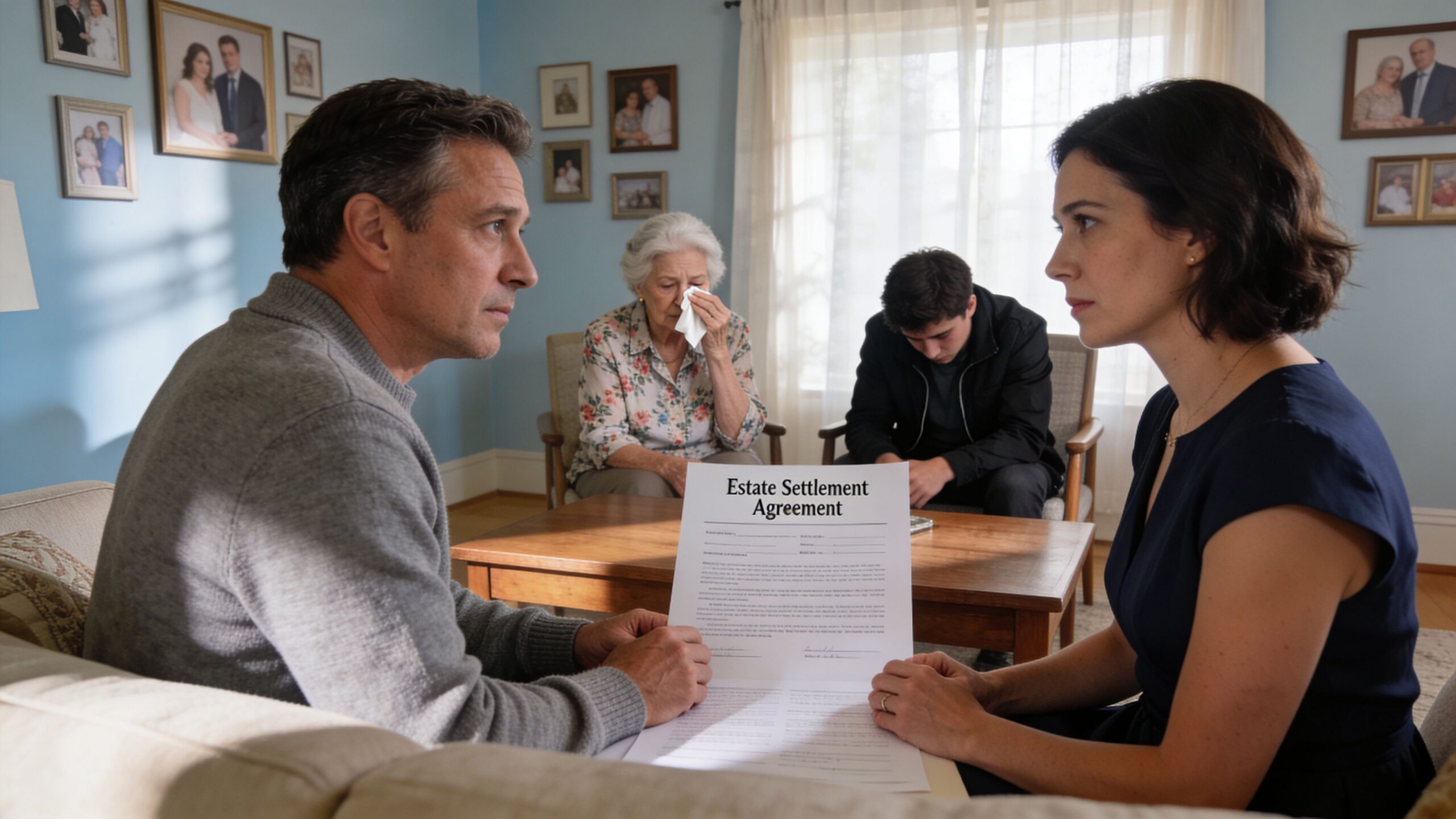
In communities like Atascocita and Humble, these disputes often center on things that carry both financial and emotional weight. It may be a longtime family home, a small business interest, or savings built over a lifetime. When people feel excluded, suspicious, or blindsided, conflict can move from the kitchen table to the courthouse.
Probate litigation is the part of probate that deals with those conflicts. Routine probate is the legal process of gathering assets, paying debts, and distributing property. Litigation begins when someone formally challenges part of that process because they believe the will is invalid, the executor is mishandling the estate, or assets aren’t being dealt with fairly.
Probate litigation doesn’t mean your family has failed. It means the disagreement needs a structured process and a neutral decision-maker.
Many people feel guilty even considering legal action after a death. They worry they’ll be seen as stirring up trouble. In reality, asking questions can be the responsible thing to do, especially when an estate includes a home, investment accounts, or property that affects several generations.
A good lawyer’s role isn’t just to argue. It’s to slow things down, gather facts, explain the rules, and help a family separate emotion from evidence. That’s often what brings the first real sense of relief.
Understanding Probate Litigation and Why It Happens
Probate litigation is best understood by envisioning a referee stepping into a game after the players stop agreeing on the rules. A normal probate case moves through paperwork, notices, inventory, and distribution. A contested probate case asks the court to resolve a dispute that the family can’t resolve on its own.
In Harris County, probate disputes aren’t unusual. The county probate court system processes approximately 5,000 new cases annually, and 25% to 35% of those cases escalate to some form of litigation due to conflicts over asset distribution or will validity, according to local probate litigation information for Atascocita.
Routine probate versus probate litigation
Routine probate administration usually involves tasks like filing the will, appointing an executor, identifying assets, notifying creditors, and distributing what remains. If everyone agrees and the documents are clear, the process is administrative.
Probate litigation starts when someone files a legal challenge. Common examples include contesting a will, seeking removal of an executor, demanding an accounting, or claiming that estate property was hidden or taken.
If you’re still trying to understand the basic court process before a dispute even starts, this guide on how to probate a will in Texas can help you see where administration ends and litigation begins.
Common triggers for probate litigation in Texas
Some disputes are about documents. Others are about conduct. Many are about both.
| Dispute Type | What It Means in Plain English | Common Red Flags |
|---|---|---|
| Will contest | Someone says the will shouldn’t control the estate | A sudden will change, conflicting versions, unusual signing circumstances |
| Undue influence claim | A person believes someone pressured the decedent into changing the will | Isolation from family, one person controlling appointments or access |
| Lack of capacity claim | Someone argues the decedent didn’t understand what they were signing | Serious cognitive decline, confusion, memory issues near signing |
| Executor dispute | Heirs question whether the executor is acting properly | Missing updates, delayed distributions, unexplained transactions |
| Accounting action | A beneficiary asks the court to require financial transparency | No records, incomplete reports, unclear handling of estate funds |
| Inheritance theft or concealment claim | A person believes assets were hidden, diverted, or taken | Missing valuables, suspicious transfers, incomplete asset lists |
| Trust dispute | Family members disagree about trust terms or administration | Confusing documents, uneven treatment, disputes over who controls assets |
Why families in Atascocita get stuck
Most probate fights don’t start because someone wants conflict. They start because a family member sees a gap between what they expected and what they’re being told.
A practical example helps. Suppose a father in Atascocita signs a new will shortly before his death, leaving most of his estate to one child who had been handling his appointments and daily care. The other children may wonder whether that change reflected his true wishes or pressure from the person closest to him. That question doesn’t answer itself. It usually requires records, witnesses, and formal court review.
Practical rule: If your concern can be stated as a factual question, not just a feeling, it may be something probate litigation can address.
The Probate Litigation Path in Our Local Harris County Courts
Atascocita probate disputes are handled through Harris County’s specialized statutory probate courts, not regular civil courts. That matters. These courts deal specifically with estate disputes and follow procedures that are familiar to lawyers who practice there regularly.
For local families, that specialized system can feel less random than people expect. The court has a structure. Cases move through recognizable stages. Once you know the sequence, the process becomes less mysterious.
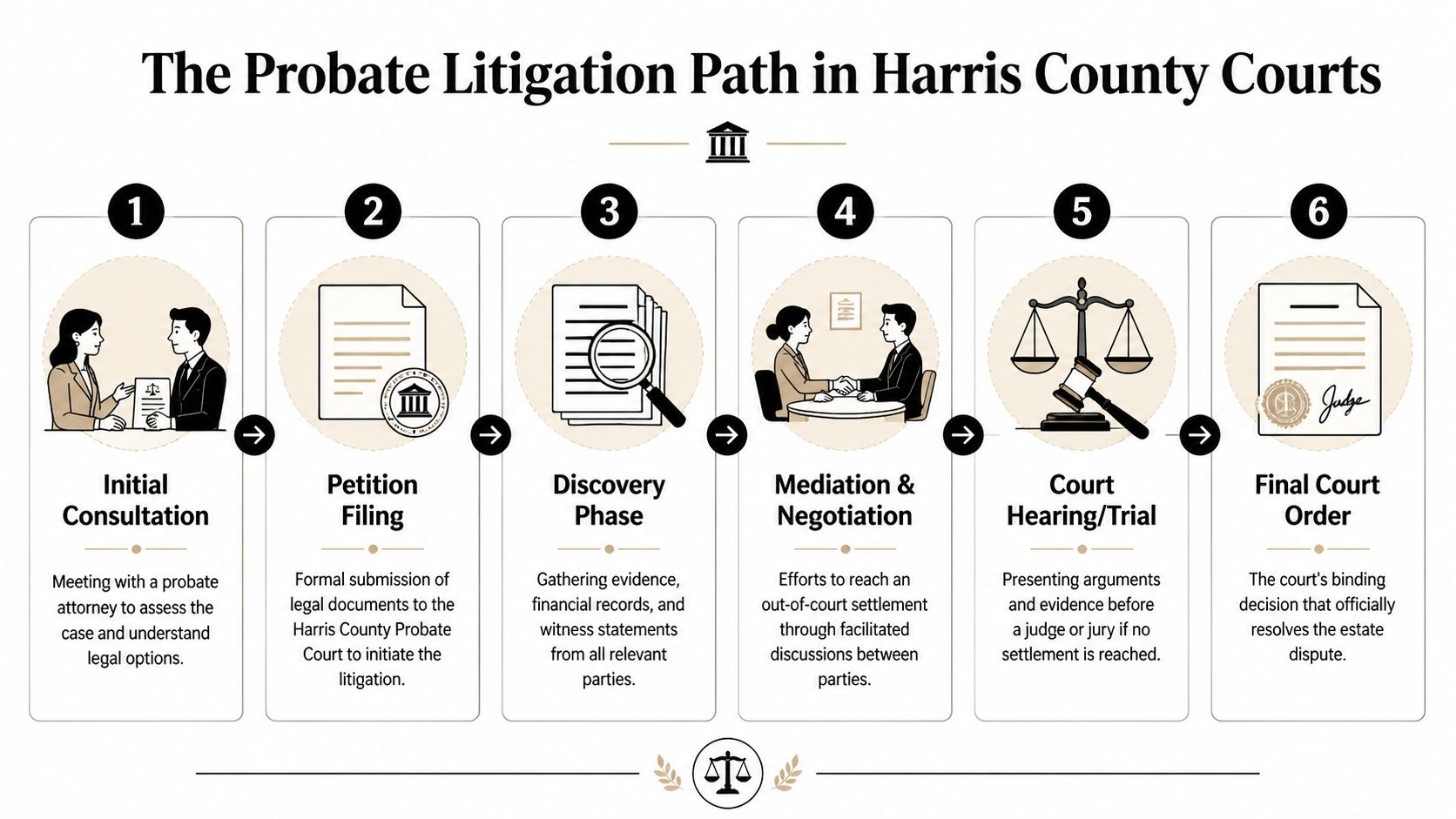
Step one through step three
The first step is usually a case review with counsel. The lawyer identifies the dispute, checks deadlines, and decides what claim needs to be filed. That might be a will contest, a request to remove an executor, or a demand for an accounting.
Then the lawsuit or contested pleading is filed in the appropriate probate court. From there, the other side receives notice and has a chance to respond.
After filing comes discovery. This is the evidence-gathering stage. Lawyers may request bank records, medical records, communications, and other estate documents. They may also take sworn testimony from witnesses.
If your concern involves a questionable will, disputes over a personal representative, or other formal challenges, an Atascocita will contest lawyer page can give you a more focused look at that kind of case.
Step four through final resolution
Many families assume every probate fight ends in a trial. Often it doesn’t. A large number of cases resolve through negotiation or mediation after the evidence becomes clearer.
If settlement doesn’t happen, the court holds hearings and, in some cases, a trial. At that stage, the judge reviews testimony, documents, legal arguments, and any credibility issues raised during the case. The court then signs a final order that decides the dispute.
Here’s the typical flow in plain language:
Consultation and case review
You bring the timeline, documents, and concerns. The lawyer identifies legal claims and urgent deadlines.Petition or contest filed
The dispute becomes a formal court matter in Harris County Probate Court.Evidence gathering
Records are collected. Witnesses may be interviewed or questioned under oath.Settlement efforts
The parties try to resolve the dispute once the facts are clearer.Hearing or trial
If no agreement is reached, the judge decides the contested issues.Court order and follow-up
The estate administration continues under the terms of the ruling.
A probate case feels less overwhelming when you stop viewing it as one giant fight and start seeing it as a series of manageable steps.
These local courts also have unique rules and expectations. That’s one reason families often benefit from lawyers who already know how Harris County probate practice works on the ground, not just in theory.
The Critical Role of an Atascocita Probate Attorney
One of the biggest misconceptions in probate is that an executor can walk into court, file forms, and handle the estate alone. In Harris County, that’s not how it works for someone acting on behalf of an estate.
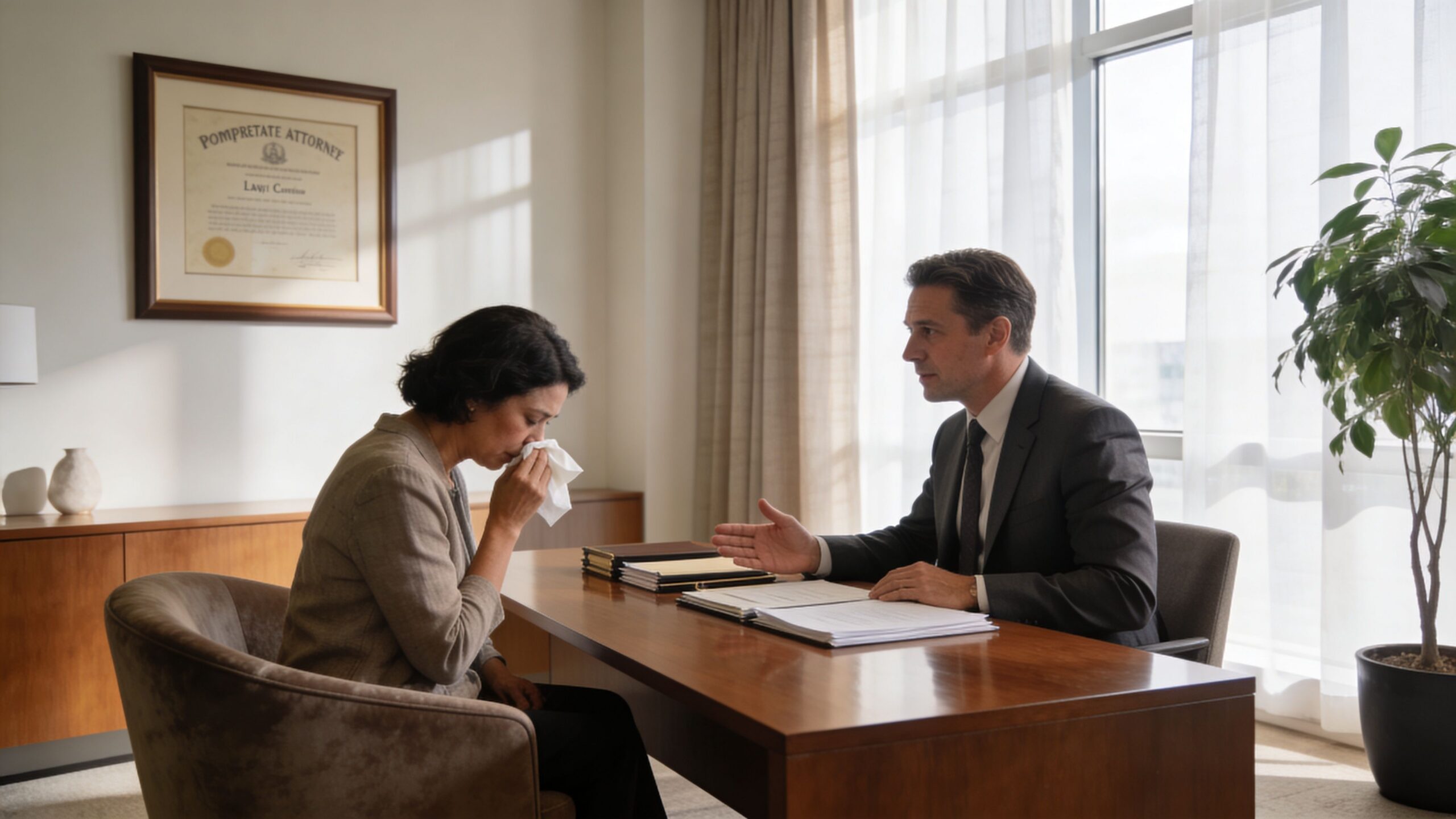
Under local probate rules, an executor or administrator cannot represent the estate pro se because they’re acting in a representative capacity. Harris County Probate Courts reportedly reject over 70% of pro se filings annually due to procedural errors, according to this discussion of Texas probate attorney requirements and Harris County practice.
That rule frustrates some people at first, but it exists for a reason. Estate cases affect other people’s rights. One filing mistake can delay the case, expose the executor to liability, or create problems with title to property.
Why legal representation matters early
Timing matters in probate. Texas law imposes strict deadlines, including a four-year deadline to probate a will after death and a two-year deadline to contest a will after it has been admitted to probate, as noted in the verified local probate data provided for this topic. Waiting too long can shut the courthouse door before the facts are fully investigated.
A local attorney also helps preserve evidence while it’s still available. Medical records can be obtained. Witness memories can be documented. Financial transfers can be traced before records become harder to access or explain.
For some families, choosing a lawyer also involves practical trust factors. If you’re comparing firms, this guide on the importance of online reputation offers a useful way to think about reviews, responsiveness, and how a law office presents itself before you ever schedule a meeting.
Local knowledge changes the experience
A probate litigator who regularly handles Harris County matters knows the procedural rhythm of these courts. That includes how contested estate matters are presented, how judges expect records to be organized, and how to frame disputes clearly rather than emotionally.
The work itself is hands-on. A lawyer may gather witness affidavits, review signing formalities, analyze financial records, and push for an accounting when an executor hasn’t been transparent. Firms serving this area, including Law Office of Bryan Fagan – Atascocita TX Lawyers, handle probate litigation as part of broader estate and civil representation for local families.
Here’s a short overview that may help if you’re deciding whether to involve counsel:
When an estate dispute affects a home, a business interest, or a child’s future support, hiring counsel isn’t about escalating conflict. It’s about protecting the process.
What to Expect Evidence, Costs, and Timelines
Once people realize a dispute may require litigation, three questions usually come next. What evidence matters? What will it cost? How long will this take?
Those are reasonable questions. They also deserve honest answers.
What evidence usually matters most
Probate cases are won and lost on proof, not family stories alone. The right evidence depends on the kind of dispute.
If the issue is capacity, lawyers often look for medical records, doctor visits, memory-related concerns, and witness observations close to the date a will was signed. If the issue is undue influence, financial records, changes in account access, caregiver involvement, and communications such as emails or text messages may matter. If the issue is executor misconduct, bank statements, sale documents, inventories, receipts, and accounting records often become central.
Useful evidence may include:
- Medical documentation that helps show whether the decedent understood what they were signing
- Financial statements that track unusual withdrawals, transfers, or title changes
- Texts, emails, and letters that reveal pressure, secrecy, or contradictory explanations
- Witness testimony from neighbors, caregivers, relatives, or the people present at signing
- Estate paperwork such as inventories, notices, deeds, and prior wills
Strong probate cases usually come from organized records collected early, not last-minute scrambling after positions have hardened.
What probate litigation costs can look like
In the Houston area, including Atascocita, probate litigation attorneys typically charge $250 to $450 per hour, according to this overview of Houston probate litigation attorney fees and case timelines. Some lawyers may also offer other fee arrangements in certain matters, depending on the claim and the estate.
The total cost often depends on factors such as how many parties are involved, how much evidence must be reviewed, whether experts are needed, and whether the case settles or goes to trial. A dispute over one bank account and one will is very different from a dispute involving real property, business interests, and years of financial records.
How long a contested case may take
That same Houston-area probate overview states that a standard contested case may resolve within 6 to 12 months, while more complex disputes can last 1 to 3 years or more. Family conflict, document-heavy discovery, and fights over significant assets often add time.
If you want a broader look at scheduling expectations, this article on how long probate takes in Texas can help you compare contested and uncontested matters.
A few factors often shape the timeline more than people expect:
The quality of records
Missing paperwork slows everything down.The number of disputed issues
A single will validity challenge moves differently than a case involving property sales, executor removal, and accounting claims.Whether the family engages in mediation
Settlement efforts can shorten the process when parties are realistic.
The hardest part for many families isn’t just the waiting. It’s the uncertainty. A clear litigation plan helps because it replaces vague fear with identifiable tasks, deadlines, and decisions.
Taking the First Step Toward Peace of Mind
When probate litigation enters a family’s life, it often feels personal, chaotic, and heavier than expected. But the process itself is more structured than it first appears. The Harris County probate courts have a framework. Texas law provides deadlines and procedures. Evidence, not volume, is what moves a case.
For Atascocita families, that matters. It means you don’t have to solve everything in one night around the dining room table. You don’t have to guess whether a will change was valid, whether an executor is crossing a line, or whether your concerns are serious enough for court. You can bring those questions into a legal process designed to answer them.
The first step is usually simple. Gather the will, any trust documents, letters from the court, account statements, deeds, and the timeline as you understand it. Then talk with a lawyer who handles these disputes locally.
Seeking legal help in this setting isn’t an act of aggression. It’s often the most responsible way to protect the estate, honor the person who died, and move your family toward closure.
Atascocita Families' Common Questions About Probate Litigation
Probate disputes raise very practical questions. Most families don’t want abstract legal theory. They want to know what happens next and what choices matter.
Quick answers to common concerns
One of the biggest questions is whether every probate dispute ends in a courtroom fight. Often, it doesn’t. Approximately 65% of probate disputes are resolved before trial through mediation, according to the Texas Office of Court Administration data discussed in this Atascocita probate resource. Mediation can be faster, less expensive, and less damaging to family relationships than a full trial.
Another common concern involves complicated assets. Estates in Atascocita may include a family house, rental property, retirement accounts, a closely held business interest, or valuable personal property. Those assets often need careful valuation and documentation before anyone can fairly negotiate or argue over distribution.
A third issue involves overlap with family law. If an estate dispute affects support for a minor child, guardianship concerns, or property issues connected to a divorce history, families may need legal advice that accounts for both probate and family-related consequences.
| Question | Answer |
|---|---|
| Do all probate disputes go to trial? | No. Many resolve through mediation or negotiated settlement before trial. |
| Can I challenge a will if something feels wrong? | Possibly, but a concern needs to be tied to a legal basis such as capacity, undue influence, or execution problems. |
| What if the executor won’t share information? | A beneficiary may be able to seek an accounting or ask the court for relief if the executor isn’t handling duties properly. |
| What if there is no will? | The estate may still go through probate, but distribution follows Texas intestacy rules and may require heirship-related proof. |
| Does a family home create special tension? | Yes. Homes often carry both financial and emotional value, which can make settlement harder. |
| Can probate issues affect children? | Yes. Delays or disputes may affect property intended for minors or raise related guardianship and support concerns. |
When should you call a lawyer
Some signs tell you not to wait:
- You found a new will unexpectedly and the circumstances around signing don’t make sense.
- The executor is silent or evasive when asked for records or updates.
- Assets seem missing from the inventory or family discussions.
- A deadline may be approaching and you aren’t sure whether to file, object, or respond.
Bring documents to the first meeting, but also bring the timeline. In probate disputes, sequence often matters as much as the paperwork itself.
Good legal advice can lower the temperature. It gives people a way to move from accusation to analysis, which is where better decisions usually begin.
If your family is dealing with a contested estate, questions about a will, or concerns about an executor in northeast Harris County, Law Office of Bryan Fagan – Atascocita TX Lawyers offers free consultations for local residents. Our Atascocita office works with families in Atascocita, Humble, and surrounding communities to explain options, evaluate deadlines, and help you decide on the next practical step.