When you're facing a criminal charge in Texas, it can feel like your entire future is on the line. But it's crucial to understand that you have options—options that can protect your record and give you a clean slate. For many people here in Atascocita and Humble, one of the most powerful tools available is something called deferred adjudication.
It’s not a get-out-of-jail-free card, but it is a critical second chance. In a nutshell, it's a special kind of probation where the judge essentially hits the "pause" button on finding you guilty, giving you a clear path to get your case dismissed completely. At The Law Office of Bryan Fagan, we believe everyone deserves to understand their rights and the paths available to them. This guide is designed to do just that.
Understanding Your Second Chance in Northeast Harris County
Navigating the legal system in Harris County, whether you're in a courtroom in Humble or downtown Houston, can be overwhelming. The language alone is confusing. But "deferred adjudication" is one term you absolutely need to grasp, because it offers a way forward without the lifelong stain of a criminal conviction.
Think of it like this: you're put on a performance improvement plan at work. Your boss agrees not to fire you, as long as you can prove you can meet every expectation for the next few months. You follow the rules, show up on time, and do your job well. At the end of the period, the "probation" is over, the issue is dropped, and it's like it never happened.
Deferred adjudication is the court’s version of that. It's a supportive, rehabilitative approach that we often advocate for our clients right here in our community.
How It Works in Simple Terms
So, how does this actually play out in court? It starts with you and your attorney negotiating with the prosecutor. You'll typically enter a plea of "guilty" or "nolo contendere" (which just means "no contest").
Here’s the key part: instead of accepting that plea and finding you guilty right then and there, the judge defers—or postpones—that final judgment. You are then placed on community supervision (what most of us just call probation) for a specific amount of time.
During this period, you have to walk a straight line and follow a list of court-ordered rules. These often include:
- Checking in regularly with a probation officer.
- Paying all your fines and court costs on time.
- Putting in a certain number of community service hours.
- Attending required classes or counseling sessions.
- And most importantly, staying out of trouble and avoiding any new arrests.
If you successfully tick every single one of those boxes by the end of your supervision, the judge dismisses the case. That's a huge deal. It means you are never formally convicted of the crime. This outcome can prevent one bad decision from derailing your career, your housing, and your entire life.
The Legal Framework in Texas
Under Texas law, deferred adjudication is a specific type of judge-ordered community supervision. It's designed to give a defendant the chance to avoid a formal conviction by successfully completing all court-mandated conditions. Once the supervision term is over and the case is dismissed, the public record still shows the arrest and the deferred outcome. The good news is you can often take proactive steps later on to seal it from public view. For a deeper dive, you can find more details about how Texas law enables record-clearing by visiting this resource on state policies.
To make this crystal clear, let's break down how deferred adjudication compares to the other two main outcomes of a criminal case.
Deferred Adjudication vs Conviction vs Dismissal At a Glance
This table provides a quick comparison of the primary outcomes of a criminal case to help Atascocita residents understand their options.
| Outcome | Finding of Guilt | Result on Criminal Record | Potential for Sealing |
|---|---|---|---|
| Deferred Adjudication | No (adjudication is deferred) | Arrest and deferred status remain, but no conviction. | High, through an Order of Non-Disclosure. |
| Conviction | Yes | Permanent conviction is recorded. | Very limited to none. |
| Dismissal | No | Arrest record remains initially. | High, through Expunction (stronger than sealing). |
As you can see, deferred adjudication occupies a unique middle ground. It's not an outright dismissal, but it's a world away from a conviction, offering a powerful opportunity to keep your record clean.
A Step-by-Step Walkthrough of the Deferred Adjudication Process
It's one thing to understand the definition of deferred adjudication, but it's a completely different ballgame to know how it actually plays out inside a Harris County courthouse. If you're in Atascocita, Humble, or anywhere nearby, facing the justice system is a daunting prospect. My goal here is to pull back the curtain and show you exactly what to expect, step by step.
The whole thing doesn't just start when you walk into the courtroom. The groundwork for your entire case is laid in the hours and days right after an arrest.
The First Steps: Arrest and Arraignment
Your journey begins, unfortunately, with an arrest. This leads to booking and getting your bail set. The first time you'll formally see a judge is at the arraignment. This is a pivotal hearing where the court officially reads the charges against you and asks for your plea—typically "guilty," "not guilty," or "no contest."
This is absolutely not a time to go it alone. Having a compassionate, experienced defense attorney from your community with you from the jump is critical. The choices made right here can open—or close—the door to options like deferred adjudication down the road. To get a better feel for this crucial first court date, you can learn more about what happens at an arraignment hearing in our guide.
The Heart of the Matter: Plea Bargaining
Once the arraignment is over, the real work begins for your attorney. We enter the plea bargaining phase, which is all about negotiation. Your lawyer will be in direct contact with the Harris County prosecutor assigned to your case.
This is where we scrutinize the evidence, point out any holes in the state's case, and present compelling personal factors that show you as a whole person, not just a defendant on a piece of paper. We want them to see you as a valued member of the Atascocita community. The main objective is to convince the prosecutor to offer a favorable deal. For many first-time or lower-level offenses, that ideal offer is deferred adjudication.
This negotiation is, without a doubt, the most important part of the process. A prosecutor's first offer is almost never their best one. An experienced lawyer knows how to push for fair, manageable terms that truly set you up to succeed.
When both sides reach an agreement, the case is set for a formal plea hearing.
Making it Official: The Plea and Start of Supervision
At the plea hearing, you will formally enter your plea of "guilty" or "nolo contendere" (no contest) in front of the judge, just as you agreed to in the plea bargain. The judge accepts your plea but then does something crucial: they defer a finding of guilt. This means they put the conviction on hold and officially place you on community supervision.
You'll be handed a set of conditions that you must follow to the letter for a specific time, which can range from six months to several years.
This flowchart breaks down the basic path from the plea deal, through the supervision period, to the dismissal.
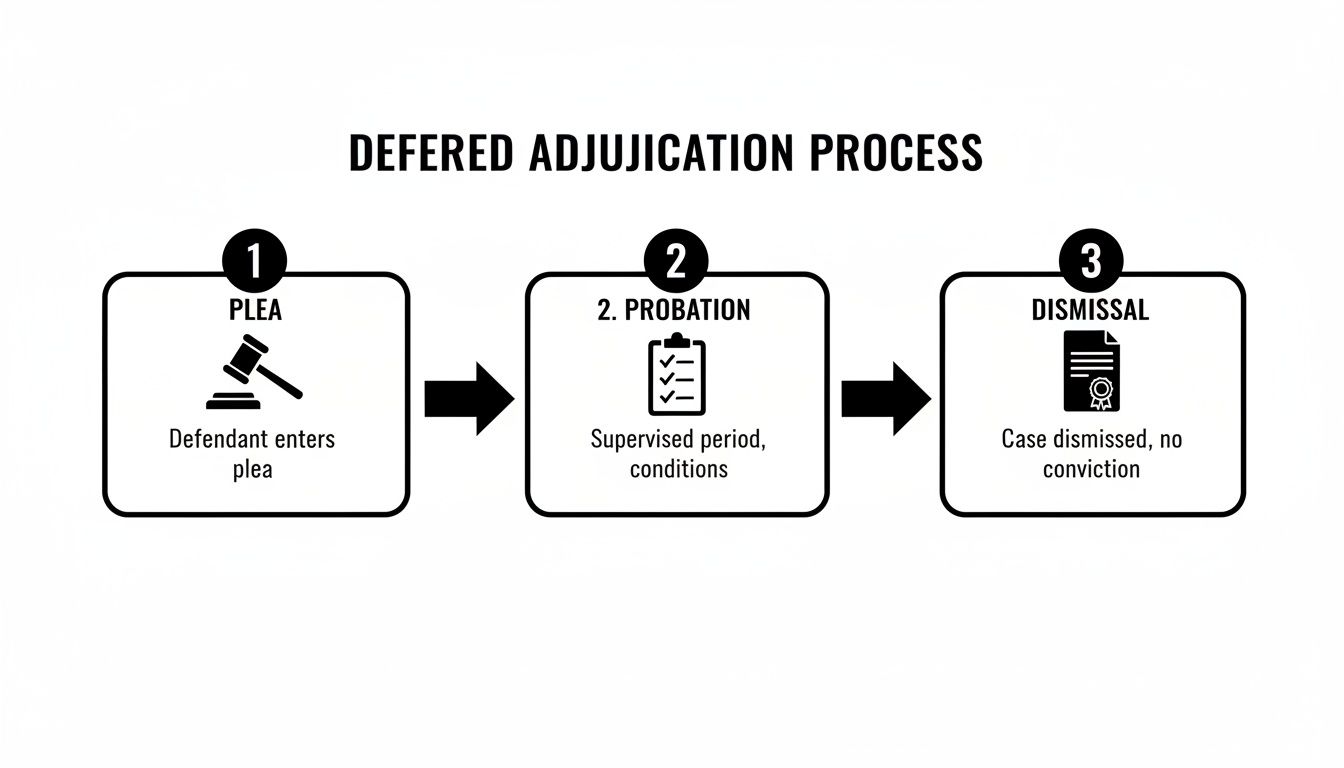
Successfully getting through this probation is the key that unlocks a case dismissal and a much brighter future.
Community Supervision: Your Path to a Dismissal
This supervision period is the core of deferred adjudication. It's your time to prove to the court that you can follow the rules. While the specific terms can be tailored to your case, most people in Harris County can expect some common conditions:
- Regular Reporting: You'll have to check in with a probation officer, usually once a month.
- Paying Fines and Fees: All court costs and any fines have to be paid on schedule.
- Community Service: You'll likely need to complete a certain number of community service hours, perhaps at a local Humble non-profit.
- Counseling or Classes: Depending on the charge, you might be ordered to attend classes for anger management, drug and alcohol awareness, or anti-theft programs.
- No New Offenses: This is a big one. You absolutely cannot get arrested for any new crimes while on supervision.
If you check every single box and complete the term without a single violation, the court will dismiss your case. You will have officially dodged a conviction, shielding your record from the permanent stain that can follow you for life.
Is Deferred Adjudication the Right Move for You?
Deciding whether to accept a deferred adjudication offer is one of the biggest calls you'll have to make in a criminal case. It's a path that offers a massive reward, but it doesn't come without serious risks. For anyone in Atascocita, Humble, or the surrounding areas, thinking through the pros and cons is absolutely critical to protecting your future.
The main benefit is huge: it's your chance to walk away without a permanent criminal conviction on your record. A conviction is a stain that can follow you forever, slamming doors on jobs, housing, and even school applications. Deferred adjudication is the off-ramp, a way to keep your record clean so you can move on with your life.
But this isn't a free pass. The community supervision period is a court order with strict rules, not a set of friendly suggestions. You have to comply perfectly. A single slip-up, like missing an appointment with your probation officer or failing a drug test, can bring the whole deal crashing down.
The High Stakes of a Violation
If the prosecutor files what’s called a "Motion to Adjudicate Guilt" and the judge agrees you broke the rules, the "deferred" part of your agreement is wiped out. At that point, the judge can find you guilty of the original charge and sentence you on the spot.
Here's the critical part: when you accept a deferred deal, you give up your right to a trial. This means the judge has the power to hand down any sentence within the full punishment range for that crime. That could be anything from more probation all the way up to the maximum time in jail or prison. It's a high-stakes bargain—success means a dismissal, but failure could mean facing the worst-case scenario.
When Is Deferred Adjudication a Good Idea?
This route is often a fantastic strategy for people facing first-time, non-violent charges. Judges and prosecutors in Harris County are often open to it in these situations because it focuses on rehabilitation, not just punishment, which is better for the community in the long run.
Think about these common scenarios for folks in our part of northeast Harris County:
- A young adult in Atascocita gets charged with misdemeanor theft (shoplifting). For a first offense, deferred adjudication offers a way to learn from a mistake without wrecking their chances of getting into college or starting a career.
- A professional in Humble is facing a first-time charge for possession of a controlled substance. Completing the supervision period can prevent a conviction that might otherwise cost them their professional license.
In cases like these, the reward of a clean record is well worth the risks of probation, especially for someone who is ready to follow the rules to the letter.
When Is Deferred Adjudication Off the Table?
While it’s a common option, deferred adjudication isn't available for every charge. Texas law takes it off the table for certain offenses. For example, you typically can’t get deferred for:
- Driving While Intoxicated (DWI) if you have a commercial driver’s license (CDL).
- Repeat felony offenses.
- Certain serious or violent felonies.
Figuring out if this is the right legal strategy for you means taking a hard look at the evidence, the specific charge, your own history, and whether you can realistically handle the demands of probation.
Deferred adjudication is more than a legal tactic; it's a commitment. Before you agree, you must be honest with yourself about your ability to meet every single requirement for the entire duration of the supervision period.
Texas actually has one of the largest diversion systems in the country, and the data shows it works. Studies on the Texas program have found significant, lasting benefits. For example, one major analysis discovered a 75% reduction in future convictions over a ten-year period for people who got deferred adjudication compared to similar defendants who didn't. You can dig into the incredible impact of this approach by reading more about the findings on Texas's diversion programs.
This path is a powerful tool, but it's not a one-size-fits-all solution. You should never make this decision lightly or without talking to a lawyer you trust. An experienced local attorney can help you see if it's the right choice for your specific situation.
What Happens to My Record After Deferred Adjudication?
You've made it. After months—or even years—of jumping through hoops and sticking to the strict rules of community supervision, the judge finally dismisses your case. It's a huge moment of relief, a weight lifted off your shoulders. But as you walk out of the courthouse, a critical question probably pops into your head: What does this actually mean for my criminal record?
It’s a common misconception that a dismissal magically erases everything. Unfortunately, that's not how it works here in Texas. While you successfully avoided a conviction, which is a massive win, the journey isn't quite over.
The fact that you were arrested and charged, and the details of your deferred adjudication, all remain part of your permanent criminal history. This means they are public information, ready to pop up on almost any standard background check.

What a Visible Record Can Do
Even without a conviction, a visible criminal record can throw up unexpected roadblocks in your life. Imagine you’re applying for your dream job, trying to rent a great apartment in Kingwood, or seeking a professional license. A background check is almost guaranteed.
When a potential employer or landlord sees the charge and the deferred adjudication, they might not understand the nuances. They could mistake it for a guilty finding or simply decide it's a red flag they'd rather avoid, moving on to the next person in line. It’s a gut-wrenching feeling, especially after you worked so hard to prove yourself and earn that dismissal.
A dismissal from deferred adjudication is a critical legal victory, but it isn't the finish line. To truly clear your name and protect your future, you have to take the next step and seal your record from public view.
This is where the next, and arguably most important, phase of your legal journey begins.
The Fix: Sealing Your Record With a Petition for Non-Disclosure
So, how do you fix this? The good news is, Texas law gives us a powerful solution: an Order of Non-Disclosure. This is the formal legal process of asking a judge to seal all the records related to your case.
If the judge grants the order, it essentially makes the case invisible to the public. Government agencies are legally prohibited from releasing the information to private entities like background check companies.
Here’s what a non-disclosure order really does for you:
- Hides It From Public View: It effectively blocks access for most private employers, landlords, and credit agencies.
- Gives You Back Your Privacy: On most applications for jobs or housing, you can legally deny that the arrest ever happened.
- Offers a Real Fresh Start: It allows you to move forward without having to explain a past mistake over and over again.
It's important to understand, though, that a non-disclosure isn't the same as an expunction. The record isn't destroyed; it's just sealed. Law enforcement and certain state licensing boards can still see it under specific, limited circumstances.
Don't Forget the Waiting Periods
You can't file for a non-disclosure the day after your case is dismissed. Texas law establishes mandatory waiting periods, which depend on the offense.
- For most misdemeanors, you can file the petition right after the dismissal.
- For some specific misdemeanors (like Assault or Unlawful Carrying of a Weapon), you have to wait two years after the dismissal date.
- For felonies, the waiting period is much longer, typically five years from the dismissal date.
Figuring out these timelines and filing the petition correctly is a complex legal task. For anyone in northeast Harris County, working with a local attorney who knows the ins and outs of the Harris County District Clerk's office is crucial. They can make sure your petition is filed properly, giving you the best shot at finally closing this chapter for good.
How an Atascocita Attorney Can Help Your Case
Trying to navigate the complexities of deferred adjudication on your own is a huge risk. The Harris County justice system can be overwhelming, and a misstep is easy to make. Having a seasoned local attorney in your corner isn't just about understanding the law—it's about having a strategist and an advocate who cares about you and your family fighting for you.
Deferred adjudication is an incredible tool for protecting your future, but it demands absolute precision. You have to comply perfectly with every court order and then take the right steps to seal your record. From the moment we take your case, we get to work evaluating the prosecutor's evidence, confirming your eligibility, and negotiating for the best possible terms.
Your Advocate From Start to Finish
Here at The Law Office of Bryan Fagan, we're deeply committed to serving families and individuals right here in Atascocita, Humble, and the surrounding areas. We’ve walked countless clients through the process of securing deferred adjudication and, just as importantly, successfully completing it.
But our job doesn’t stop once the judge accepts the plea. We’re with you for the long haul, guiding you through every requirement to make sure you avoid any violations. When you’ve successfully finished, we handle the most critical final step: filing the Petition for Non-Disclosure to get the case sealed off from public view. This is a core part of our criminal defense services, because a second chance should be a truly fresh start.
You deserve a legal partner who understands not just the law, but the local courts, the prosecutors, and the community. Our goal is to provide compassionate, skilled representation that brings you peace of mind.
When looking for a lawyer, it can be helpful to know how firms build their reputations. If you're curious about what goes on behind the scenes, you might find this guide on understanding law office branding interesting.
Don't let this one mistake dictate the rest of your life. Call The Law Office of Bryan Fagan – Atascocita TX Lawyers to schedule a confidential, no-cost consultation at our Atascocita office. Let's sit down together, go over the details of your case, and map out a clear strategy to protect your record and your future.
Frequently Asked Questions About Deferred Adjudication
It's only natural to have a lot of questions when you're facing the legal system. Here in our Atascocita office, we’ve heard just about every concern imaginable when it comes to deferred adjudication. Below, we've answered a few of the most common questions we get from folks just like you.
Can I Get Deferred Adjudication for a DWI in Texas?
Technically, yes, but it's a tricky path. For a first-time DWI, a judge might offer deferred adjudication, but the conditions are almost always far stricter than for other types of cases.
There's a major exception, though. This option is completely unavailable if you hold a commercial driver's license (CDL). It doesn't matter if you were in your personal car or a big rig; Texas law draws a hard line for CDL holders to protect public safety.
Does Deferred Adjudication Show Up on a Background Check?
Yes, it absolutely will. This is probably the biggest misconception people have. Even after you jump through every hoop and the judge dismisses your case, the initial arrest and the deferred adjudication itself are still part of your public criminal history. A potential employer or landlord will see it.
To get that off your public record, you need to go a step further and get an Order of Non-Disclosure. Even with that order, certain government and law enforcement agencies can still access the information. It’s a good reminder that knowing the difference between an arrest and a conviction is just as important as knowing what are your Miranda rights when dealing with law enforcement.
A common and costly mistake is assuming a dismissal automatically clears your record. To truly protect your future, you must be proactive about sealing the case with a non-disclosure order after you've successfully finished supervision.
What Happens If I Violate My Deferred Adjudication Probation?
Violating the terms of your community supervision is a very serious misstep. If your probation officer reports that you've slipped up—maybe you missed a check-in, failed a drug screen, or picked up a new charge—the prosecutor can file a Motion to Adjudicate Guilt.
That motion sends you right back to court. Since you waived your right to a trial when you took the deal, the hearing is not about whether you committed the original crime. The judge's only job is to decide if you broke the rules of your probation.
If they find you did, they can immediately find you guilty and sentence you. The scary part? They can sentence you to anything within the full range of punishment for the original charge, right up to the maximum time in jail or prison.
The legal system can feel overwhelming, but you don't have to navigate it by yourself. The Law Office of Bryan Fagan – Atascocita TX Lawyers is here to help our neighbors in Atascocita and Humble protect what matters most. If you're dealing with a criminal charge and have questions about deferred adjudication, we invite you to schedule a free, confidential consultation. Visit us at https://www.atascocitaattorneys.com to get started.