Skip to content
If your spouse has been paying the mortgage from separate funds while the divorce is moving through Harris County, you're probably staring at the same question I hear from Atascocita homeowners all the time, “Do I get that money back, or does it just get folded into the divorce?” The answer depends on tracing, valuation, and whether the payment fits Texas reimbursement law. It's rarely as simple as “I paid, so I recover.”
That's why an economic contribution claim divorce Atascocita TX case can become one of the most valuable parts of a property division. It can also become one of the easiest claims to lose if the records are sloppy or the wrong payments are counted. In homes, refinances, and major renovations around Atascocita, Humble, and northeast Harris County, the fight usually comes down to hard numbers, not emotion.
Why Your Atascocita Divorce May Involve an Economic Contribution Claim
A common Atascocita divorce starts with one spouse using separate-property money to help a house in Humble or Kingwood. The payment might go toward the mortgage principal, a refinance payoff, or a renovation that changes the value of the property. On paper, that sounds like a straightforward request for repayment. In court, the details control everything.
Texas law recognizes a claim when one marital estate benefits another and repayment would otherwise create unjust enrichment. The older economic-contribution system was not a loose fairness argument. It was a calculation built on balances, dates, and the amount of equity affected by the payment. That history still matters in cases that fall under the old law, which is why the statutory background in Texas economic contribution law history still comes up in property division disputes.
Why this shows up so often in local divorces
These claims surface fast in northeast Harris County because the same house often carries several money moves. One spouse pays down principal. Another spouse stays in the home. A refinance changes the debt structure. Then the divorce case starts, and both sides begin arguing over what counts and what gets offset.
The hard part is tracing the source and purpose of each payment. A check written from separate funds is not enough by itself. The court wants to know whether the payment reduced principal, covered an excluded expense, or just kept the house current.
Practical rule: If you cannot prove the source, the date, and the purpose of the payment, you do not have a strong claim yet. You only have a starting point.
The distinction between separate and marital property matters here, which is why the rules on community property in Texas are part of the analysis. But community property alone does not answer whether an economic contribution or reimbursement claim survives after offsets, excluded payments, and the principal-versus-interest split. Clients comparing ownership issues also need a clear read on a 2026 tenancy by entirety overview, because title language can shape how the house is treated in the divorce.
The trap is delay. Loan statements disappear, refinance records get harder to find, and appraisals lose value as proof. The other side may also start building offset arguments before your records are in order. In a real Harris County divorce, that delay costs money.
What Texas Law Says About Economic Contribution and Reimbursement
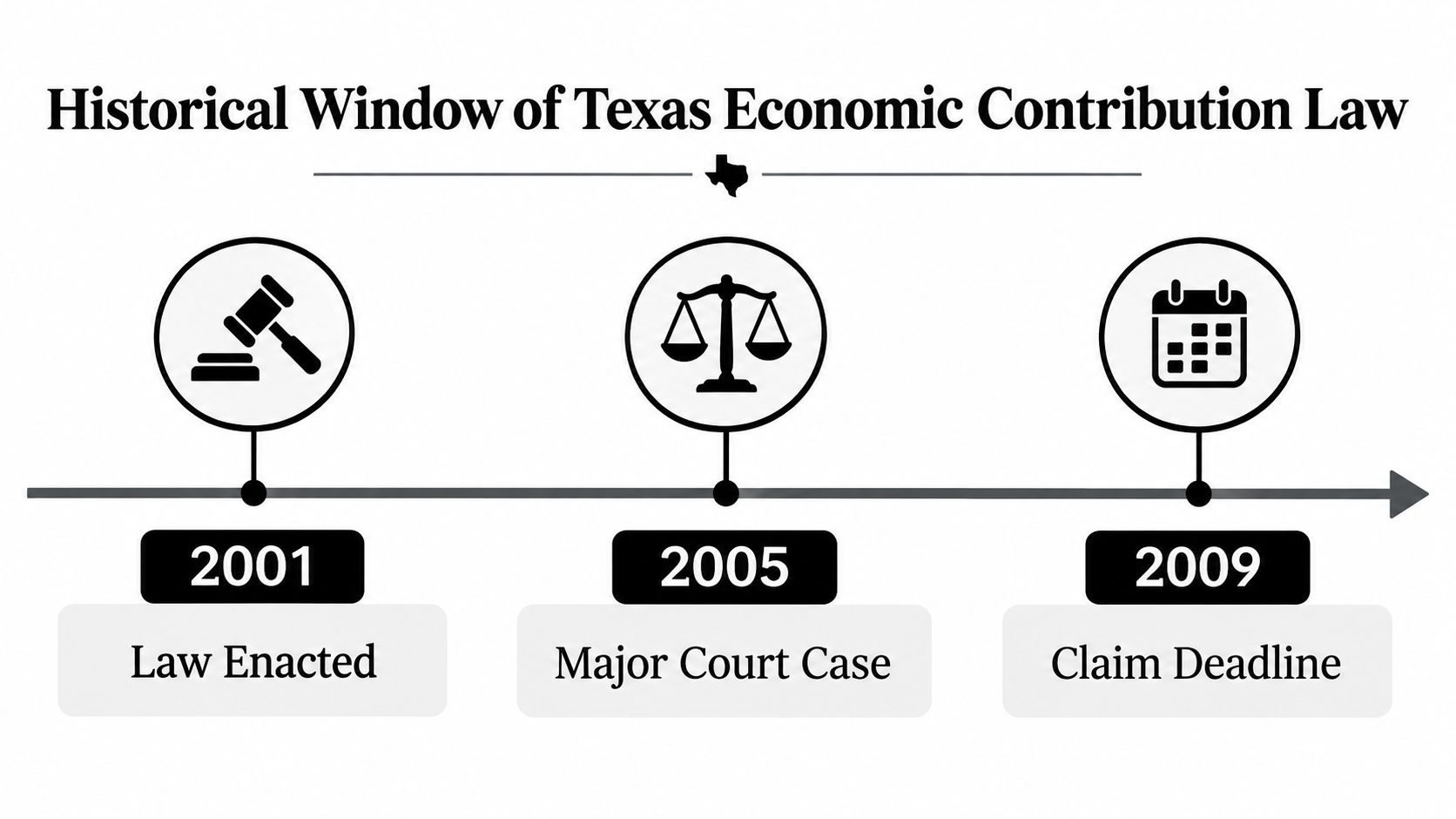
A divorce in Atascocita can turn on one ugly question, who paid down the house and what part of that payment counts. Texas law draws a hard line between economic contribution, the older formula-based remedy, and reimbursement, the current framework that applies when one marital estate benefits another and equity requires repayment. The older system still matters for the historical window from 2001 to 2009, because claims tied to cases from that period were handled under that formula, not the current reimbursement rules. See the statutory background in Texas Family Code § 3.402.
Texas courts also care about the larger property picture. That starts with community property in Texas, because a house, a loan payoff, or a repair bill does not get analyzed in isolation. A reimbursement claim can still shrink or disappear after offsets, excluded payments, and the principal-versus-interest split.
What counts and what doesn't
Texas law focuses on measurable benefits. The cleanest examples are reduction of principal on secured debt and capital improvements to the property. It does not treat every housing expense as part of the claim. Interest, property taxes, and insurance were excluded from the economic-contribution base, and that exclusion still drives the analysis today. A mortgage payment, by itself, is not a reimbursement payment.
That is why the records matter more than the emotion behind the divorce. Your lawyer should be looking at loan ledgers, closing statements, title records, and appraisal evidence. Those papers show how much principal came down, what the equity position looked like when the claim arose, and whether separate property money funded the payment. A tracing-focused approach is also consistent with the documentary method described in Marital Property Issues, Tracing, Reimbursement, and Claims for Economic Contribution.
Why the law is so document-heavy
A reimbursement or economic-contribution claim works only when the evidence ties money to a benefit. That means proving more than the fact that household bills were paid. You need to show what part of the payment reduced principal or funded an improvement that can be measured. Separate the principal, interest, taxes, insurance, and improvement costs before anyone starts talking settlement.
The title and debt records usually decide the fight. If the payment covered charges that Texas excludes, the claim gets smaller. If the payment retired principal on the benefitted property, the claim has something real behind it. That is where offsets start to matter, because the other side will argue that some or all of the payment should not count.
For comparison on ownership and debt structure, the 2026 tenancy by entirety overview gives a useful contrast, even though Texas division rules still control the divorce. A timeline graphic depicting the historical window for Texas economic contribution law from 2001 to 2009.
How Courts Calculate the Claim Amount
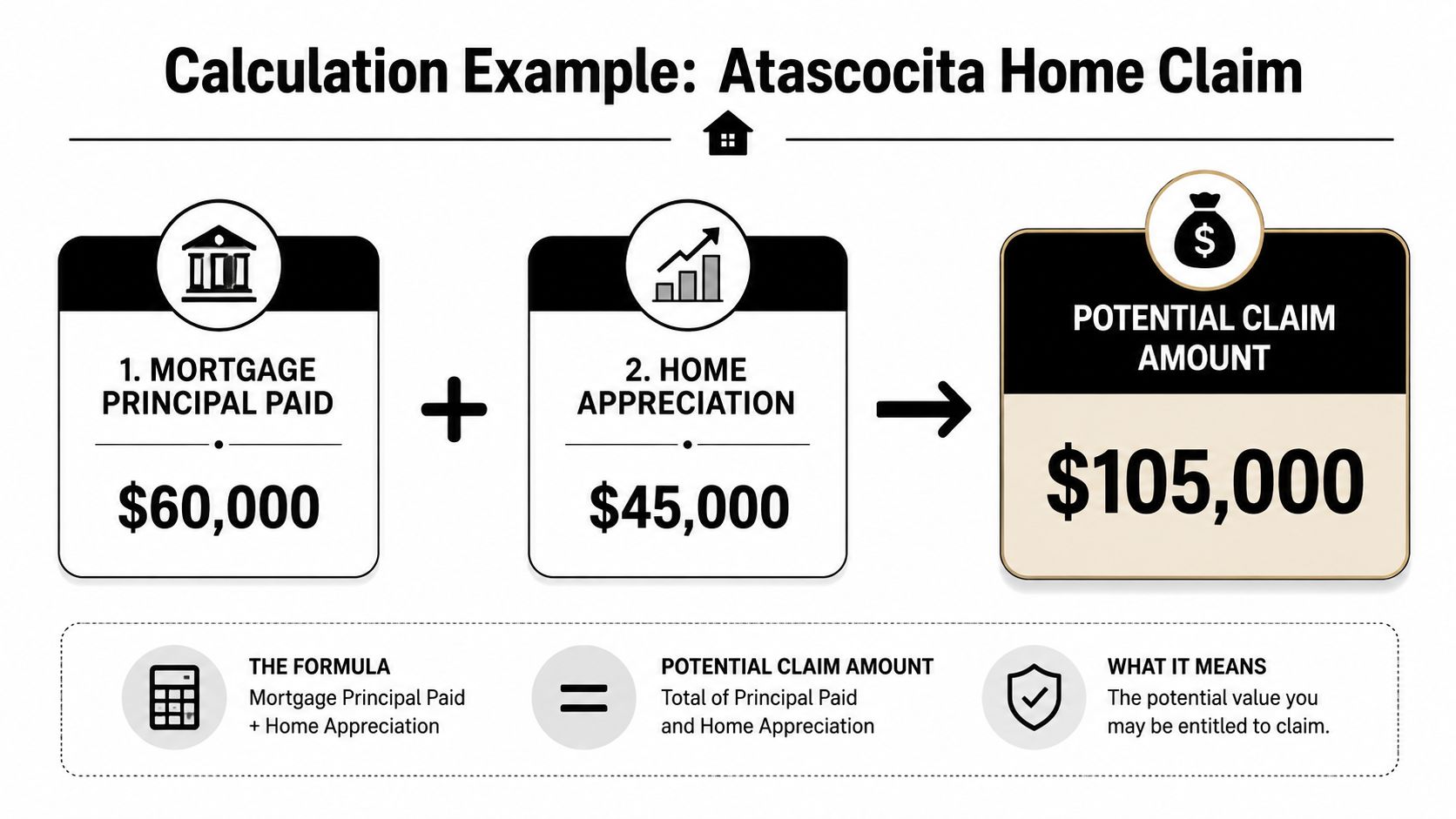
The old Texas formula was blunt. Courts calculated the claim using the equity in the benefitted property at divorce, then applied a ratio built from the contributing estate's payments and the property's equity at the time of first contribution. In plain English, the claim was tied to appreciation and equity, not just the amount of cash you wrote on checks. That's why the old doctrine was a true equity-sharing remedy. See the appellate discussion in Texas economic contribution formula.
A Harris County home example
Take a home in the Atascocita or Humble area. If one spouse paid down principal over time and the house also appreciated, the final claim could be larger than the raw cash outlay because the formula looked at equity, not just reimbursement dollars. That's the part many overlook.
If the principal reduction is well documented and the property value moved up before divorce, the claim can gain strength. If the equity picture is weak, the claim can shrink fast. The number that matters is the one supported by the records, not the one that feels fair in hindsight.
The valuation date matters. A house that looked modest at separation can look very different by the time the decree is signed, and the court will care about the numbers tied to the correct point in the case.
What your lawyer needs to build the calculation
- Loan amortization history: This shows principal reduction versus interest.
- Closing documents: These help prove first contribution, title status, and the original equity picture.
- Appraisal records: These anchor the property's value at the right time.
- Proof of separate funds: Bank records matter when the payment came from one spouse's separate property.
If your money moved through joint accounts, tracing becomes harder, not impossible. That's where a focused review of account activity helps, including services that track commingled funds like commingled bank account tracing in Atascocita TX.
Common Reasons These Claims Fail or Get Reduced
The fastest way to lose an economic contribution claim in an Atascocita divorce is to treat every payment as recoverable. Texas courts do not work that way. They separate principal reduction from amounts like interest, property taxes, and insurance, and they also allow offsets that can push the final number down.
Offsets change the final number
If the estate that benefited from the payment can prove its own contributions, the court can cut the claim. You have to prove what was paid in and also be ready for credits the other side will try to apply back against the claim. In real divorce cases, that changes the number in a meaningful way.
A clean claim can still shrink fast if the offset evidence is strong.
Evidence standard is what really decides the case
Texas property claims like this rise or fall on clear and convincing evidence when separate-property funding is part of the story. That standard is demanding. Missing bank records, vague testimony, and inconsistent dates give the other side room to argue that the claim is overstated or not proven. The tracing and proof concerns are laid out in the marital-property guidance above, and they are not academic, they decide cases.
Bottom line: A claim can be valid and still get cut hard if the paperwork does not show exactly what happened.
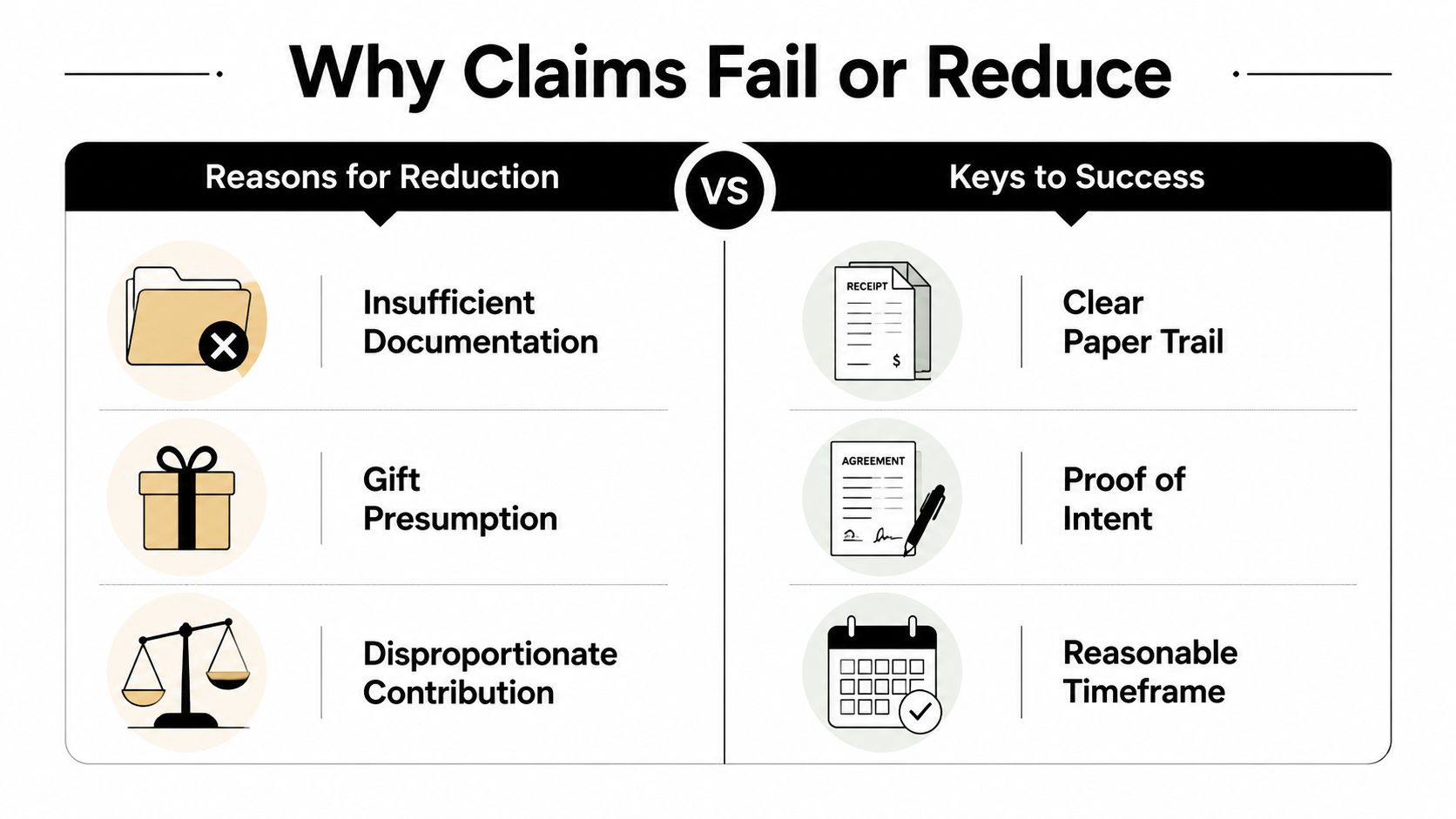
Common reasons the number drops
- Insufficient documentation: No clean trail from separate funds to the payment.
- Excluded categories: Interest, taxes, insurance, and ordinary living expenses do not drive the claim the way people expect.
- Offsets and competing credits: The other side may show its own contributions or argue that a payment should not count the way you think it does.
For a useful evidence-focused framework, the PartnerScanX evidence guide is a practical reminder that financial disputes turn on the quality of the paper trail. In Harris County, where home values and mortgage structures can complicate the picture, the principal-versus-interest distinction is the first thing I would have a client sort out before mediation. If you are still at the filing stage, the process starts with filing a divorce in Harris County.
Filing and Proving Your Claim in Harris County Courts
Start by putting the claim in writing early. If you wait until the end of the case, the other side has more room to shape the story, and the court is left with a thinner record. In many divorces, that means raising reimbursement or economic-contribution relief in the initial petition or counterpetition, then building the evidence from day one.
A clean filing strategy matters because Harris County judges look for a clear trail from the money to the property, then from the property to the claimed benefit. The easiest way to lose value is to blur those steps.
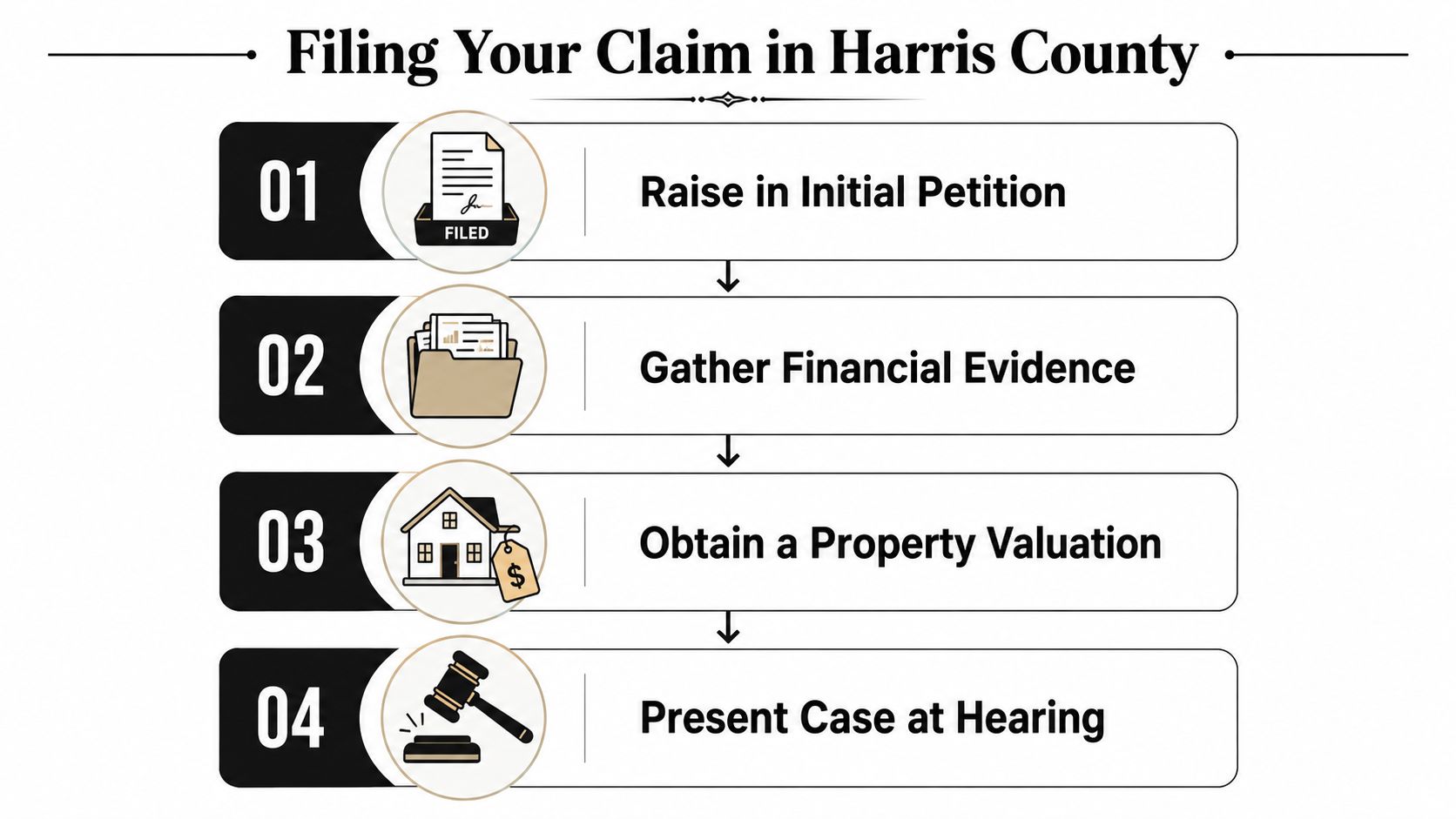
The practical sequence
- Raise the issue early. Put reimbursement or economic-contribution relief on the table before settlement positions harden.
- Gather financial records. Loan histories, refinance files, title papers, and bank statements matter more than general recollection.
- Get a property valuation. Appraisals and market records help pin down the equity number tied to the claim.
- Present the case clearly. At hearing or trial, the judge needs a clean story that ties every number to a document.
Temporary orders can matter too, especially when one spouse is still paying the mortgage or controlling the house records. Harris County standing orders can also affect property activity during the divorce, so preserving the status quo is the smart move. If you are still at the filing stage, start with the process for filing a divorce in Harris County.
Who helps build the proof
A family lawyer may work with a forensic accountant or a real estate appraiser when the financial trail gets messy. That is especially true when payments came from multiple accounts or when the house was refinanced during the marriage. The PartnerScanX evidence guide is a useful reminder that these claims live and die on record quality.
The hard part is not proving that money changed hands. The hard part is proving which part of the payment counts, which part gets excluded, and whether the other side has a valid offset. Principal reductions usually matter far more than interest, taxes, insurance, or ordinary living expenses, so the numbers have to be sorted with precision before anyone walks into mediation or court.
If the divorce is uncontested, the claim can still be negotiated into the final settlement. That is often the better path when both sides can agree on the numbers without turning a home equity dispute into a long courtroom fight. In the Atascocita office, a lawyer may also use the firm's divorce representation services to frame the property issue alongside the rest of the divorce.
Protecting Your Financial Future After Divorce
The cases that go well usually have three things in common. The payment qualified. The paperwork proved it. The lawyer pushed the claim with precision instead of guesswork. Miss one of those, and the number can shrink fast.
That's why I tell Atascocita clients not to wait for the divorce to “settle itself.” Once statements disappear, valuations drift, and the other side starts building offsets, your negotiating power drops. If you're also worried about tax fallout after divorce, the IRS innocent spouse relief guide is a useful companion read for understanding how financial responsibilities can follow you after the decree.
The right move is to gather the loan records, appraisal history, and proof of where the money came from, then have a lawyer sort out what counts under Texas law. That's especially important in northeast Harris County, where home equity disputes are often tied to a family's biggest asset. Good representation doesn't just argue fairness. It protects the numbers.
If you're dealing with a reimbursement or economic-contribution issue in Atascocita, Humble, or anywhere in Harris County, schedule a free consultation before the record gets any thinner. You need a focused plan, not a hopeful guess.
If you're facing an economic contribution claim in divorce, the Law Office of Bryan Fagan, Atascocita TX Lawyers can help you sort out what counts, what gets excluded, and what evidence moves the court. Visit Law Office of Bryan Fagan – Atascocita TX Lawyers to talk through your situation with a local team that handles divorce, custody, estate planning, and related family law matters in northeast Harris County.