Skip to content
In Texas, a parent usually can't refuse to communicate with a co-parent when a court order requires communication, and courts can enforce those duties with serious consequences, including fines up to $500 per violation. But Texas courts can also restrict or even cut off direct communication when it harms the child's best interest, as shown by a 2023 Harris County case where the parents were ordered to communicate only by mail.
You may be reading this because a simple parenting question has turned into a daily source of stress. One parent asks about a school event, a doctor's appointment, or a pickup time, and the other parent goes silent. Or maybe the problem is the opposite. You're trying to communicate in good faith, but your co-parent is now accusing you of refusing to communicate at all.
That tension is common in Atascocita, Humble, and across northeast Harris County. Co-parenting breaks down less often over one major event than over repeated small moments. Missed replies. Hostile texts. Selective silence. Last-minute changes. Each one chips away at trust.
The legal answer depends on two things. First, what your court order says. Second, whether the communication itself is helping or harming the child. If you're searching for can a parent refuse to communicate with co parent texas atascocita, the safest answer is this: don't make that decision on your own without looking at the order and the facts carefully. Texas judges expect parents to support the child's welfare, not escalate conflict.
The Frustrating Silence of Co-Parenting
A parent in Atascocita waits all afternoon for a reply about a child's prescription refill. Another parent in Humble sends three polite messages asking whether the child made it to tutoring. No answer. Then, days later, a message arrives accusing that parent of being “uncooperative.”
That pattern creates more than irritation. It affects routines, school, medical care, and the child's sense of stability. Kids notice when parents can't exchange basic information. They notice when one parent seems tense every time the other parent's name appears on the phone.
Sometimes what starts as ordinary post-divorce friction grows into a pattern that looks a lot like the broader signs of poor communication in couples. The family law difference is that separated parents still have to function as decision-makers for their children, even when the personal relationship is over.
Silence can be a tactic, but it can also become evidence.
That's where many parents get stuck. They know the communication is unhealthy. They don't know whether they're allowed to stop responding, switch channels, or refuse direct contact altogether.
What the silence usually means in real life
In practice, parents often face one of these situations:
- The non-response problem: One parent ignores messages about logistics but later complains they were “left out.”
- The selective response problem: The co-parent answers only topics that benefit them and avoids school, medical, or counseling issues.
- The conflict trap: Every text turns into a personal attack, making even necessary communication feel dangerous or pointless.
- The record-building problem: A parent is trying to stay reasonable while the other side appears to be collecting screenshots for court.
The law doesn't reward pettiness. It also doesn't expect you to absorb abuse forever. The hard part is knowing where that line is.
The Legal Foundation of Co-Parent Communication in Texas
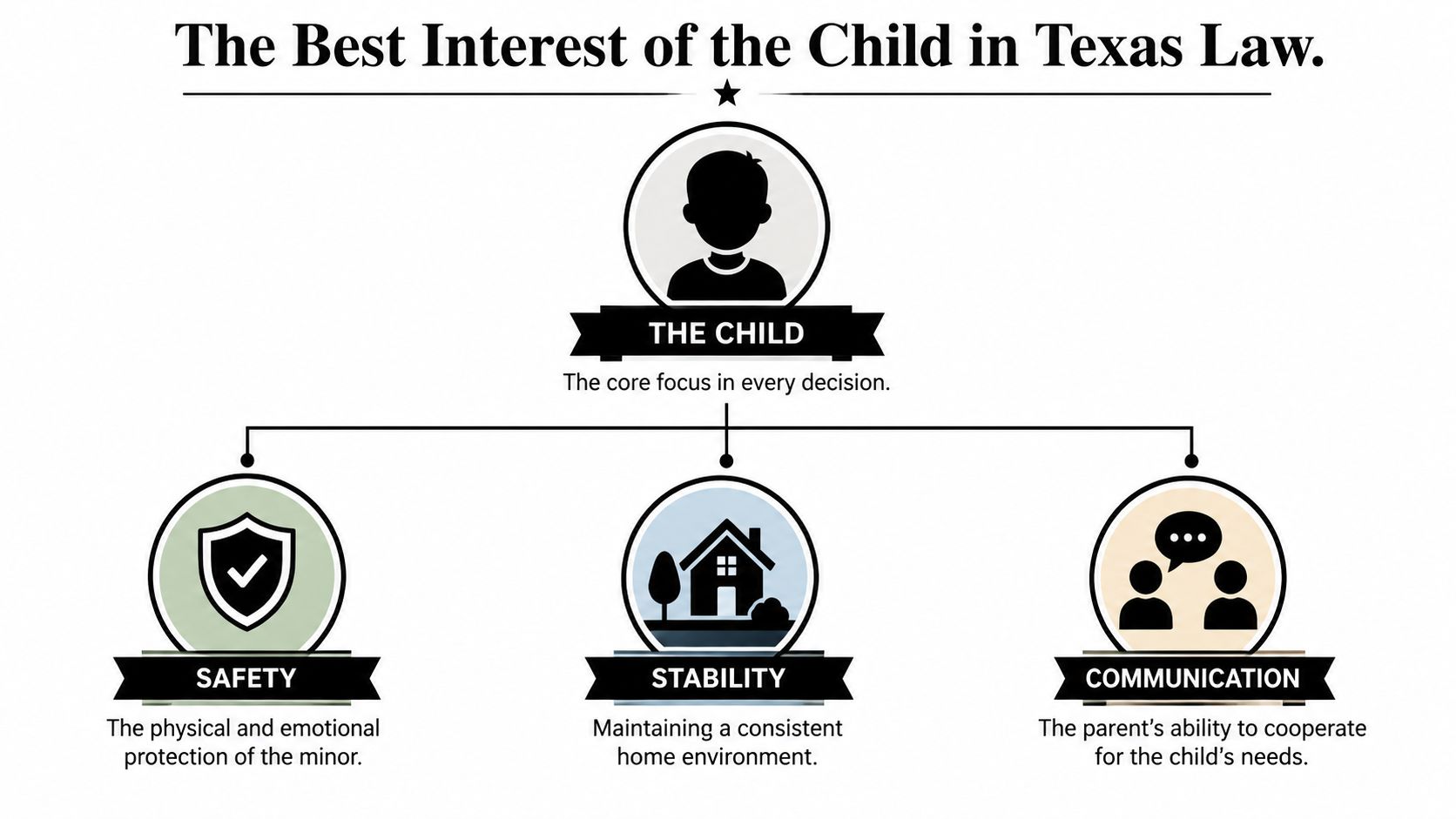
Texas family law starts from one core idea: the child's best interest controls. That isn't a slogan. It's the standard judges in Harris County use when they decide conservatorship, possession, enforcement, and communication issues.
Texas Family Code § 153.001 says courts should assure “frequent and continuing contact” between children and parents who act in the child's best interest. At the same time, Texas courts can limit communication when it undermines child welfare. In Harris County family cases from 2023 to 2025, communication interference made up 18% of motions, which shows how often this issue reaches court, as discussed in this review of Texas court restrictions on parent communication.
Why judges care so much about communication
Think of co-parenting like two pilots flying the same plane on alternating shifts. The passengers are the children. If one pilot refuses to pass along weather updates, medication information, or schedule changes, the flight becomes unstable fast.
A judge usually isn't asking whether the parents like each other. The judge is asking whether they can exchange enough accurate information to keep the child safe, supported, and on schedule.
Three practical concerns tend to drive these rulings:
- Safety: Parents need to share urgent information about medical issues, school concerns, and travel.
- Stability: Children do better when transitions are predictable and important details don't vanish between households.
- Decision-making: Shared conservatorship doesn't work if one parent blocks access to basic information.
Communication doesn't have to be warm to be legally sufficient
A lot of parents assume “co-parenting” means being friendly. It doesn't. In many cases, legally sufficient communication is brief, neutral, and focused only on the child.
Practical rule: You don't have to be emotionally open with a co-parent. You do have to be reasonably reachable if your order or the child's needs require it.
For some families, structured support helps. Even when the resource isn't local, articles on professional counselling for Penticton families describe a useful principle that applies anywhere: high-conflict family communication often improves when the adults use boundaries, predictable formats, and child-focused topics instead of trying to “work on the relationship.”
That mindset matters in Texas courtrooms. Judges look for parents who reduce friction, follow the order, and keep the child out of adult conflict.
How Your Parenting Plan Dictates Communication Rules
The most important document in your case is usually not a text thread. It's your court order.
Parents often use broad language like “my ex won't communicate,” but a judge will go straight to the decree, the SAPCR order, or the modification order and ask a narrower question. What exactly were both parents required to do? If your order includes terms about notice, exchange details, school updates, electronic contact, or app-based messaging, those terms are binding.
Where to look in your order
If you live in Atascocita or Humble and have a standard custody arrangement, review these parts first:
Conservatorship provisions
These sections may assign rights and duties related to medical, educational, or welfare information.Possession and access language Many orders spell out exchange logistics and notice requirements in this section.
Electronic communication terms
Some orders address phone calls, email, FaceTime, or similar contact with the child.Additional injunctions or special conditions
High-conflict cases sometimes include extra limits on how parents may contact each other.
Texas law also allows courts to order electronic communication with a child if it's reasonable and in the child's best interest. After the amendments to §153.433, phone, email, and FaceTime-style contact became something courts can order, but that communication is not a substitute for possession. The same source notes that if no order exists, a parent isn't automatically obligated to provide that access, though refusal can still lead to litigation over whether it should be added.
What works and what usually backfires
The parents who protect themselves best usually do a few simple things consistently.
- Use one communication channel: If you text, email, and message on social media, the record gets messy.
- Keep the topic narrow: School, medical care, pickup, drop-off, extracurriculars.
- Confirm facts, not feelings: “Appointment is Thursday at 3:00 p.m.” is stronger than “You never help.”
- Read the exact wording: “Reasonable communication” does not mean unlimited communication.
What doesn't work is freelancing. A parent who decides, without court approval, “I'm only answering if I feel like it” often creates unnecessary legal exposure.
When apps and written records help
Many high-conflict parents benefit from using a co-parenting app or email because it slows the conversation down and creates a cleaner timeline. Even when your order doesn't require an app, a written record can be useful if there's later a dispute about who said what, when they said it, or whether anyone responded at all.
That's especially true if the conflict is already moving toward enforcement or modification.
Legally Justified Reasons for Refusing Communication
There are situations where refusing direct communication is legally defensible. The key is that the refusal must usually be tied to safety, court orders, or child welfare, not anger, punishment, or convenience.
If your co-parent is harassing you, threatening you, or using communication to create danger, that changes the analysis. A Texas judge may permit tightly limited contact, channel communication through attorneys, require written-only exchanges, or impose much stronger restrictions depending on the record.
The difference between protection and stonewalling
Parents get into trouble when they confuse emotional exhaustion with legal authority. Being fed up is understandable. It usually isn't enough by itself.
Here is the practical distinction:
| Situation | Is Refusal Likely Permitted? | Recommended Action |
|---|---|---|
| There is a protective order or a court-imposed no-contact limitation | Yes, often | Follow the order exactly and use the approved channel only |
| The co-parent sends abusive or threatening messages and safety is a concern | Possibly, but get legal guidance quickly | Preserve messages, consider emergency relief, and limit contact to necessary written communication |
| A judge has already ordered mail-only or restricted contact | Yes | Do not go outside the court-approved method |
| The co-parent is rude, immature, or difficult | Usually no | Keep responses brief and child-focused |
| You're angry about child support, dating, or personal issues | No | Do not withhold communication over unrelated grievances |
| You want to “teach them a lesson” by ignoring messages | No | Respond appropriately or seek modification instead |
Valid reasons tend to look objective
Courts respond better to facts than to labels. “He's toxic” is vague. “She sent repeated abusive messages after being asked to stop, and I preserved them” is more useful.
A legally justified limit often involves one or more of these:
- A safety-based order already exists
- There is documented harassment
- The communication itself harms the child's stability
- The existing order gives a specific restricted method
- Counsel or the court has directed contact through structured channels
Parents should separate “I don't want to talk to them” from “I need legal protection from the way they're contacting me.”
Some parents also need support outside the courtroom because prolonged conflict takes a mental toll. For readers in the Houston area who are trying to manage that stress while making sound legal choices, this roundup of expert mental health options can be a useful starting point.
The safest move when you think refusal may be justified
If communication feels unsafe, take measured steps.
- Preserve the evidence: Save texts, emails, voicemails, and call logs.
- Shift to writing if possible: Written messages are easier to prove later.
- Don't escalate: Threats, insults, or retaliation can damage your position.
- Ask for a modification or protective relief: If the current order doesn't fit the reality, fix the order.
Parents hurt their own cases when they unilaterally cut off all contact before getting legal guidance. Even if the other parent is difficult, a judge still wants to see that you acted reasonably.
What Happens When a Co-Parent Illegally Refuses Contact
When a parent violates a communication-related court order, Texas courts have tools to intervene. Those tools are stronger than many people expect.

A major example came out of Harris County in 2023. In that case, the trial court found one parent incapable of effective co-parenting and restricted the parents' communication to mail only. The court also prohibited contact with the children during the other parent's possession, banned tracking devices, imposed a 500-foot no-approach zone around the other parent's home, and barred appointment cancellations or attendance during the other parent's possession. The appellate court upheld the ruling and affirmed that there was no abuse of discretion, according to this discussion of the Harris County appellate decision.
That case matters because it shows something many parents underestimate. Texas courts don't merely “encourage better behavior.” They can impose strict limits when communication becomes harmful to the child.
What enforcement usually looks like
Enforcement cases are built on proof. A judge generally wants to see a clear order, a clear violation, and evidence that the violation was willful.
Common evidence includes:
- Screenshots of unanswered or blocked messages
- Copies of the order with the violated language highlighted
- Call logs and email records
- School or medical records showing missed information
- A chronological timeline of events
In the verified data, Harris County enforcement process materials note that hearings can be scheduled within 30 days and that contempt penalties can include jail up to 180 days when a willful violation is proven. Fines may reach $500 per violation under Texas Family Code § 157 in the circumstances described above.
If your situation involves a broader possession-order problem, this guide on an ex who refuses to follow a custody order in Atascocita may help you identify the next procedural step.
Courts can tailor the remedy
A judge doesn't always jump straight to the harshest punishment. The remedy often depends on the severity and pattern of the conduct.
Courts look for the least disruptive fix that protects the child, but repeated noncompliance can move a case quickly into contempt territory.
Some families need a more structured exchange format, written-only communication, or an app requirement. Others end up in modification territory because the communication breakdown reflects a larger inability to co-parent.
For a practical overview of how enforcement disputes develop, this video gives useful context:
The big lesson is simple. If your co-parent is illegally refusing necessary contact, don't answer that conduct with your own violation. Build the record and use the court.
Defending Against False Accusations of Non-Communication
This is the part many articles skip. Sometimes the problem isn't that you refused to communicate. It's that your co-parent wants the court to think you did.
That tactic shows up in modification fights, enforcement disputes, and alienation claims. One parent sends vague accusations like “she never tells me anything” or “he refuses to discuss the kids,” while leaving out the fact that messages were answered, just not on the terms they wanted.
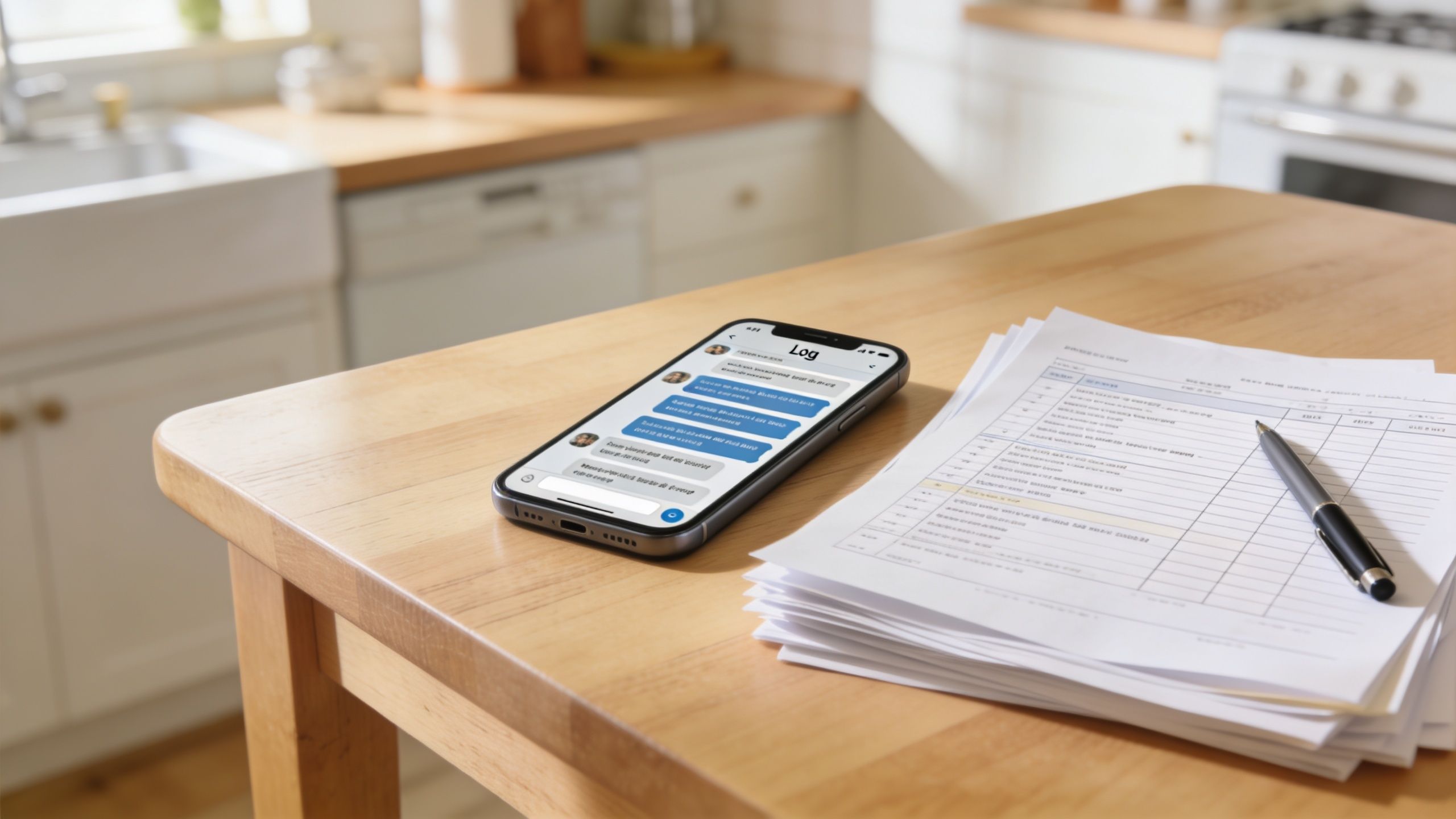
The strongest defense is usually not a long explanation. It's a clean, dated record. As noted in this discussion of communication disputes and credibility, courts closely scrutinize “he said/she said” conflicts, and the parent who can show clear documentation of reasonable communication attempts is in a much stronger position.
Build your paper trail before you need it
If you think a false accusation is coming, start acting like a judge may read every message.
- Save full threads, not snippets: Partial screenshots often create more questions than answers.
- Use neutral subject lines in email: “School conference March 12” is better than “You ignored me again.”
- Keep a communication log: Date, time, topic, method, response, or no response.
- Confirm important points in writing: After a call, send a short recap.
- Stay on one platform if possible: Consistency makes your record easier to follow.
What good-faith communication looks like
A reasonable message is short, specific, and child-focused. It doesn't bait. It doesn't editorialize. It doesn't turn logistics into a fight.
Examples of stronger wording:
- “Emma's appointment is Thursday at 3:00 p.m. Please confirm whether you'll attend if the order allows.”
- “I'm following up on school pickup for Friday. If I don't hear back, I'll follow the current order.”
- “Please send the coach's contact information when you can.”
Examples that often hurt your credibility:
- “You never co-parent and everyone knows it.”
- “I'm done talking to you.”
- “Answer right now or I'll show the judge.”
The parent who looks calm on paper usually stands on stronger ground in court.
If the accusation ties into a larger effort to damage your relationship with your child, you may also want to review legal issues connected to how to prove parental alienation. These cases often overlap more than parents expect.
A practical point from experience: don't over-message to prove you're cooperative. Ten unnecessary texts can make you look intrusive, not reasonable. One clear message and one polite follow-up are usually more effective evidence.
Your Next Steps and When to Call an Atascocita Attorney
If you're dealing with co-parent silence, start with the order. Read the exact language. Follow it closely. Keep your messages short, factual, and centered on the child.
If you believe communication is unsafe, preserve the evidence and get legal advice before cutting off contact on your own. If your co-parent is violating the order, document each instance carefully. If you're being falsely accused, treat every message like an exhibit and keep a clean timeline.
A simple decision path
- If there is immediate danger: Call law enforcement.
- If there is harassment or abuse: Preserve the record and ask about protective relief.
- If the other parent is ignoring the order: Gather proof for enforcement.
- If you're facing false claims: Focus on dated, written evidence of good-faith communication.
Parents in Atascocita and Humble don't need a generic answer to can a parent refuse to communicate with co parent texas atascocita. They need an answer tied to their order, their evidence, and their child's best interest. If you're weighing enforcement, modification, or defense against a false accusation, this overview on finding a child custody lawyer in Atascocita is a useful next read.
If you're facing a communication breakdown with a co-parent, or you're worried a false accusation could affect custody, the Law Office of Bryan Fagan – Atascocita TX Lawyers can help you review your court order, assess your evidence, and decide on the right next step. Schedule a free consultation with the Atascocita office for confidential guidance specific to your family, your child, and your case.