 Skip to content
When someone breaks a promise, especially one that costs you money, it can be incredibly frustrating. A deal was made, you held up your end, and now you're left dealing with the fallout. If you're a resident of Atascocita, Humble, or anywhere in northeast Harris County, it's important to know your rights and understand what it takes to win a breach of contract lawsuit in Texas. It’s not just about feeling wronged; it’s about proving your case with clear, solid facts.
At its core, suing for breach of contract means showing that a legally binding agreement was in place, you did your part, the other party didn't, and you suffered financially because of their failure. We understand this can be a stressful time, and our goal is to provide clear, step-by-step guidance to help our neighbors navigate this process.
What Qualifies as a Breach of Contract in Texas
When you make a deal with someone in our Atascocita community, you expect them to follow through. Whether it was a handshake agreement with a local landscaper or a detailed document with a general contractor for a home on Lake Houston, a promise is a promise. When that promise is broken, it's more than just an inconvenience; it can disrupt your finances and your life. Let's break down the legal foundation you'll need to build your case on.
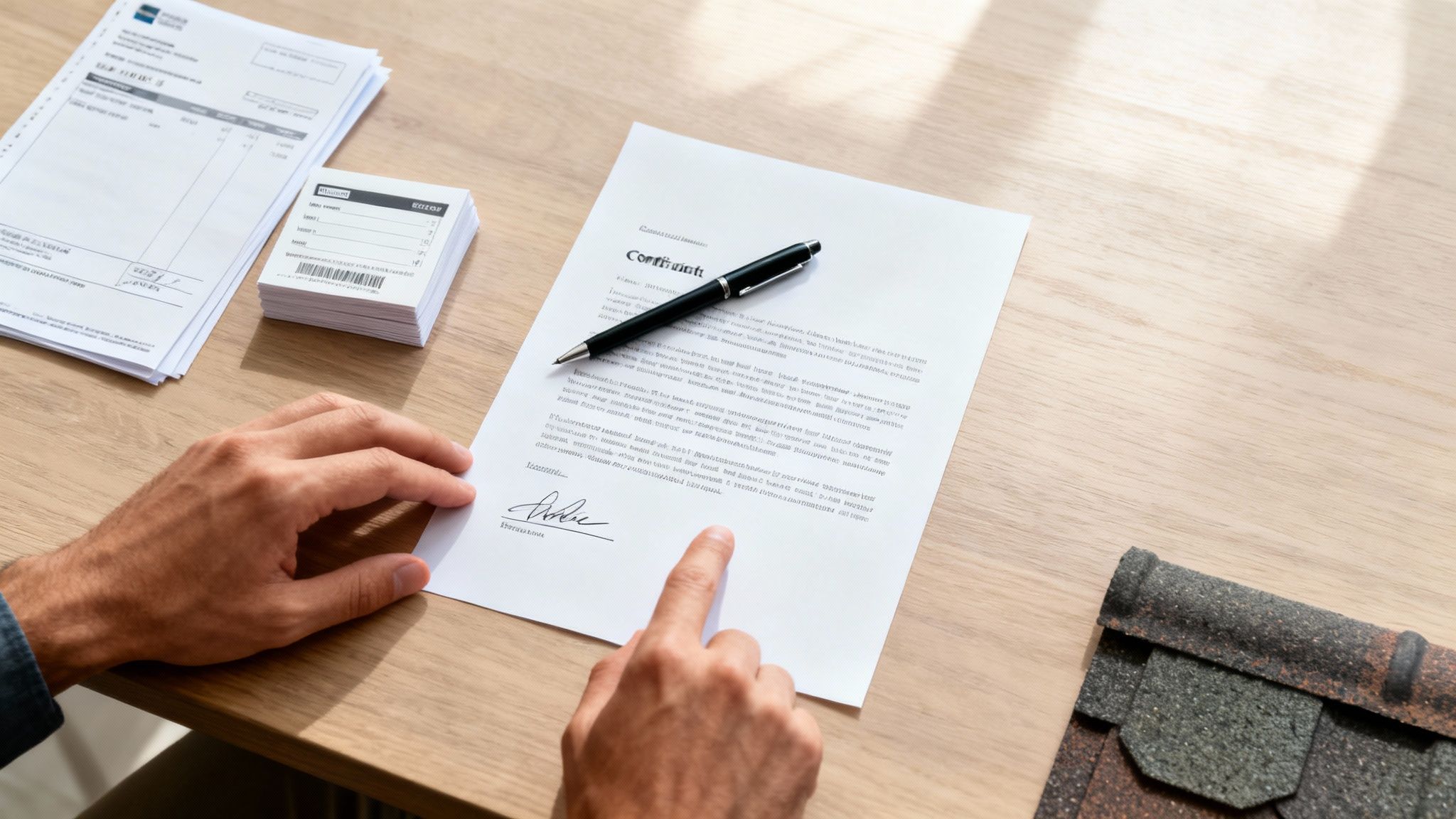
The Core Elements of a Valid Contract
For a Texas court to recognize your claim, you first have to prove that a real, enforceable contract existed. It’s not as complicated as it sounds. You just need to show three basic things were present.
- An Offer: This is a clear, definite proposal. For example, a roofer from Humble offers to replace your entire roof with specific materials for $10,000. It's a straightforward proposition.
- Acceptance: You must agree to the exact terms laid out in the offer. No "what-ifs" or counter-offers. You say, "Yes, I agree to the $10,000 for that roofing job." That's acceptance.
- Consideration: This is the legal term for the exchange of value—what each person is giving up. The roofer provides their expertise, labor, and materials. You provide the $10,000. This two-way exchange is the heart of any valid contract.
These elements can form a contract whether it’s written down or just spoken, though a verbal agreement is always harder to prove in court. This same logic applies to business partnerships, where a broken agreement can trigger a difficult and complex breakup. We often see this when local business partners need guidance on the proper dissolution of a partnership after promises have been broken.
Material vs. Minor Breaches of Contract
It's also important to understand that not all breaches are treated the same way in the eyes of the law. Texas courts separate them into two categories, and the difference is a big deal for your case.
A material breach is a major failure. It's a breach so significant that it defeats the entire purpose of the contract. Let's go back to our Humble roofer. If the contract specified high-end, 30-year architectural shingles and they installed cheap, flimsy ones instead, that’s a material breach. The very thing you paid for—a durable, quality roof for your Atascocita home—was not delivered. In this scenario, you're likely off the hook for payment and can sue for damages.
A minor breach, on the other hand, is a smaller slip-up that doesn’t destroy the contract's overall value. You can still sue for any financial loss the breach caused, but you typically still have to fulfill your end of the bargain (like paying them).
For instance, what if the roofer did a perfect job with the right materials but finished one day late? That's almost certainly a minor breach. You can't refuse to pay the whole $10,000, but if that one-day delay forced you to buy a tarp to cover a leak during a surprise storm, you could sue them for the cost of that tarp.
Gathering Your Evidence from the Start
To win your lawsuit, you need proof. Strong, undeniable evidence. The moment you suspect the other party isn't going to hold up their end of the deal, it's time to start gathering evidence. This groundwork is absolutely essential, whether you end up settling out of court or arguing your case before a Harris County judge.
Start collecting and organizing everything you have. Your evidence file should include:
- The original written contract, if one exists.
- Every email, text message, or written letter about the agreement.
- All invoices, canceled checks, receipts, and any proof of payment.
- Photos and videos showing the incomplete work, faulty goods, or damages.
- Notes on any conversations, including dates, times, and what was said.
- Contact info for any witnesses who were present for the agreement or saw the breach happen.
By getting a handle on these fundamentals, anyone in the Atascocita and Humble area can get a much clearer picture of their situation and start taking confident, informed steps toward making things right.
Thinking About Suing? Here’s What to Do First
When a deal falls apart in Atascocita or a contractor in Humble leaves you with an unfinished job, your first instinct might be to race to the Harris County courthouse. We understand that feeling of frustration. But taking a few deliberate steps before you file can save you a mountain of time, money, and stress.
Acting strategically now isn't just about showing good faith; it's about building a stronger case from the very beginning, just in case you do end up in front of a judge.
Before you do anything else, find that original contract. Read it carefully—every single word. You're looking for something specific: a dispute resolution clause. Many modern contracts require you to try mediation or arbitration before a lawsuit is even an option. If you skip this step, a judge could dismiss your case, and you'll be back at square one.
The Power of a Professional Demand Letter
After you've checked the contract, your next move should almost always be a formal demand letter. This isn't just a heated email or an angry text. It’s a carefully crafted legal document that officially tells the other party, "You broke our agreement, and here's your final chance to make it right."
To make it official, send it via certified mail. That little green receipt card is your proof they received it. A solid demand letter should be professional, clear, and to the point:
- Lay out the facts: Briefly explain the agreement and pinpoint exactly how they failed to uphold their end.
- Point to the contract: Reference the specific sections they violated. This shows you've done your homework.
- Spell out your damages: Itemize the financial losses you've suffered because of their breach. Be specific.
- State your demand: Tell them exactly what you want. This could be a specific dollar amount, finishing the job, or delivering the promised goods.
- Give a deadline: Set a firm but reasonable date for their response, like 10 or 15 days. Let them know what will happen if they ignore you.
This letter does more than just ask for payment; it creates a paper trail that proves you tried to resolve the issue professionally. Judges appreciate that effort.
You Have a "Duty to Mitigate" Your Losses
Here's something many people don't realize: under Texas law, you can't just sit back and let your damages pile up after a contract is breached. The law says you have a duty to mitigate damages. In plain English, that means you have to take reasonable steps to minimize the financial harm.
Let's say you own a small shop in Atascocita, and your main supplier fails to deliver a crucial product, bringing your sales to a halt. You can't just close your doors for a month and then sue them for every penny of lost revenue. A court will want to see that you immediately started looking for another supplier to get back in business.
You can absolutely sue the original supplier for any extra costs you incurred—like if the new product was more expensive—but you have to show you made an effort. Keep every email, note every phone call. Proof of your efforts is invaluable in court.
This isn't just a legal hoop to jump through. It's about showing you acted responsibly, which always plays well with a judge and jury.
It's Not Always Just About Two Parties
We're seeing more cases where the breach involves a third-party vendor or supplier. It’s a perfect illustration of how interconnected business is today—one broken link in the supply chain can cause a massive ripple effect. The core of your case will still rely on proving a contract existed, that it was broken, and that the breach cost you money. Those are the fundamentals in Texas.
Interestingly, a 2025 report found that 35.5% of all data breaches worldwide involved a third party, a sharp increase from the year before. While this is about data, the principle is the same. As discussed in the findings on third-party breach risks, relying on others adds complexity, making solid contracts and a clear plan for when things go wrong absolutely essential.
Taking these initial steps—reviewing the agreement, sending a proper demand, and mitigating your damages—builds a powerful foundation for your claim. Often, it can even lead to a settlement before a lawsuit is ever filed, saving you the headache and expense of a court battle.
If you're dealing with a contract dispute in the Atascocita area and need a hand navigating these critical first steps, we're here to help.
Schedule a free, confidential consultation with our team at the Law Office of Bryan Fagan – Atascocita TX Lawyers. We can walk you through your options and help you figure out the smartest way forward.
Starting Your Lawsuit in Harris County
You’ve sent your demand letter, tried to negotiate, and still have nothing to show for it. When the other side goes silent or simply refuses to make things right, it’s time to take your fight to the courthouse.
This is the point where things become official. For folks here in Atascocita or Humble, that means filing your lawsuit with the Harris County District Clerk's office. It feels like a huge step, and it is, but knowing what comes next can demystify the process and put you back in control.
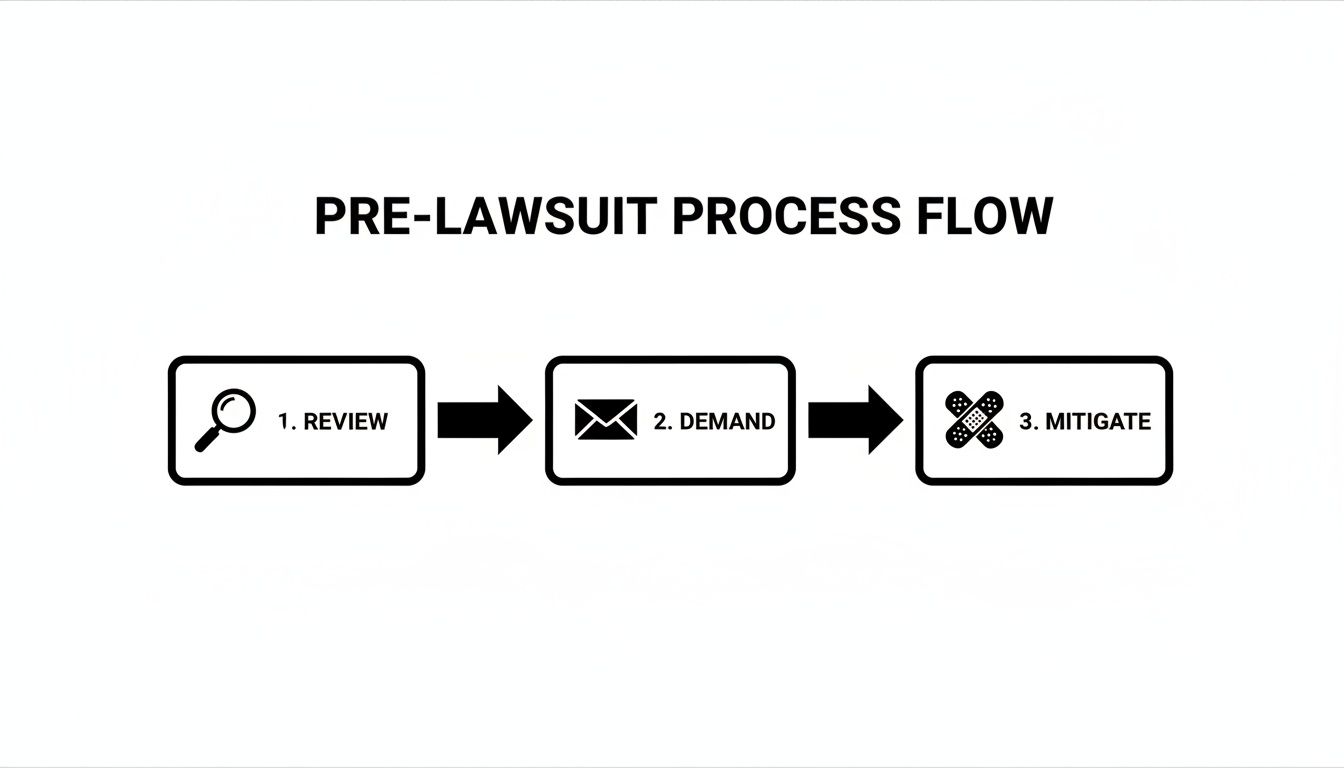
This pre-lawsuit phase—reviewing the contract, making a formal demand, and limiting your losses—sets the stage for a strong case. Filing the lawsuit is simply the next logical move when those earlier efforts don't work.
Drafting the "Original Petition"
The document that officially starts your lawsuit is called an Original Petition. It’s not just a complaint; it’s the story of your case, told according to the court's rules. This is your first and best chance to clearly explain to the judge and the other party what happened and why you are suing. Getting this document right is crucial.
A proper petition needs to cover several key bases:
- Who’s Who: You need to state your full legal name and address (you're the "Plaintiff") and the full legal name and address of the person or company you’re suing (the "Defendant").
- Why Here?: You have to include a statement explaining why Harris County is the right place—the proper jurisdiction—to hear this case. For example, the contract was signed in Humble, or the defendant lives in Atascocita.
- The Story: Lay out the facts clearly and in chronological order. What was the contract? How did they break it? What happened as a result?
- The Legal Claim: This is where you state your "Cause of Action," which is Breach of Contract. If you have other related claims, you list them here, too.
- The Damage: Be specific. State the exact dollar amount you're seeking to recover based on the financial harm you suffered.
- What You Want: End with a "Prayer for Relief," where you formally ask the court to award you the damages you’ve listed and any other relief you might be entitled to, like your attorney's fees.
Getting this right can be tricky. The court system has its own language and rules. To get a better handle on the nuts and bolts, it can be helpful to read up on general topics related to Texas civil procedure, which governs how these documents are supposed to work.
"Serving" the Lawsuit: A Critical Step
Once your petition is filed with the clerk, your job isn't done. In fact, one of the most important steps is next. The court can't move forward until the defendant has been officially notified that you're suing them. This is called service of process, and there are no shortcuts.
Key Takeaway: You absolutely cannot serve the lawsuit yourself. Just walking up and handing the papers to the other person doesn’t count and will get your case thrown out. Texas law requires a neutral third party—like a sheriff's deputy, a constable, or a certified private process server—to do it.
This official delivery ensures the defendant gets a copy of the court-issued "citation" and your petition, leaving no doubt they've been put on notice. The server then files a document called a "Return of Service" with the court, which is the official proof of delivery.
If you don't have proper service, the defendant can claim they never knew about the lawsuit, and a judge will likely have to dismiss your case. For anyone in the Atascocita or Humble area, this means hiring a professional process server who knows Harris County well. Getting the filing and service right from the very beginning is the bedrock of a successful case.
Proving Your Case and Calculating Damages
Once you’ve filed the lawsuit and the other side has been served, the real work begins. Winning a breach of contract case isn't just about being in the right; it's about proving you're right with cold, hard evidence. This next phase is called discovery, and it’s where both sides are required to share their information and evidence.
This is also the point where you have to put a precise dollar amount on your losses. Every single cent the breach has cost you needs to be calculated and justified.

The discovery process can feel intrusive, but it’s designed to make sure no one is surprised at trial. Understanding how discovery works and what kinds of damages you can claim is crucial for building a rock-solid case.
Uncovering the Facts During Discovery
Discovery is the formal, court-supervised process of trading information. You get to demand evidence from them, and they get to demand it from you. Think of it as a mandatory show-and-tell governed by Texas court rules, where the most important facts of the case often come to light.
Here are the main tools you'll use to find the truth:
- Requests for Production: This is a formal, written request telling the other party to hand over specific documents. You'll want their copy of the contract, every email or text message about the project, internal memos, invoices, and any financial records related to your deal.
- Interrogatories: These are written questions the other side is legally required to answer in writing and under oath. You might ask them to identify every person who made decisions on your project or to explain, in their own words, why they failed to deliver.
- Depositions: This is live, out-of-court testimony given under oath. Your attorney gets to question the defendant (and other key witnesses) face-to-face, with a court reporter transcribing every word. It's a powerful tool for locking in their story and seeing how they hold up under pressure.
The evidence you gather here—the contract, the email chain where they admit fault, your canceled checks, and photos of the shoddy work—becomes the foundation of your entire argument.
Understanding the Different Types of Damages
Once you've proven they breached the contract, the court needs to know what it will take to make you whole. In Texas, the goal isn't to punish the other party; it's to put you back in the financial position you would have been in if they had held up their end of the bargain.
Expectation Damages
This is the most common type of damage. It’s designed to give you the "benefit of the bargain"—what you expected to get from the contract in the first place.
Imagine you hired a local Atascocita painter for $5,000. You paid the deposit, but they never showed up. You're forced to hire another painter who charges $7,000 for the exact same job. Your expectation damages are $2,000, which is the extra cost you had to pay to get what was originally promised.
Consequential Damages
These are the ripple effects of the breach. They are indirect losses that were a predictable result of the other party’s failure. For example, a bakery in Humble orders a special oven for delivery before the holiday season. The supplier misses the delivery date, and the bakery can't fill $10,000 in Christmas cake orders. That lost profit could be claimed as consequential damages because the supplier knew (or should have known) that the timing was critical.
A word of caution: You have to meticulously document these kinds of losses. The court will want to see clear proof directly linking the breach to these secondary financial hits.
Liquidated Damages
Sometimes, a contract will spell out the penalty for a breach in advance. This is called a liquidated damages clause. You see these often in Harris County construction contracts to cover costly delays. For this clause to be enforceable, the amount must be a reasonable estimate of the actual damages that would be hard to calculate later. It cannot be an unfair penalty designed to punish someone.
On a final note, the world of contract disputes is always evolving. A recent global forecast revealed that 70% of businesses now see cybersecurity and data privacy as their top risk for disputes. It's becoming more common to see breach of contract claims when a tech vendor fails to meet its security promises after a data breach. You can read more about these trends in the 2025 Global Disputes Forecast.
Deciding the Endgame: Settlement vs. Trial
Once you’ve gone through the discovery process, your breach of contract lawsuit is on a path to resolution. It almost always ends in one of two ways: a negotiated settlement or a trial.
While courtroom dramas on TV are exciting, the reality here in Harris County is that the vast majority of civil cases, especially contract disputes, are resolved out of court.
For most folks in Atascocita and Humble, figuring out which path to take is a huge decision. Understanding the pros and cons of settling versus going to trial is critical to making a smart choice that aligns with your goals.
The Power of a Good Settlement
A settlement is simply a voluntary agreement between you and the other side to end the lawsuit. It’s a negotiation. The biggest advantage? Certainty. You know exactly what you’re getting and when you're getting it. A trial, by contrast, is a gamble—you're leaving the final decision to a judge or a jury, and there's always a chance you could walk away with nothing.
Negotiations can happen anytime, but they usually get serious after discovery is complete. At that point, both sides have a much clearer picture of the evidence. Your attorney will leverage the facts, emails, and documents you’ve gathered to push for a settlement that makes you whole without the extra cost and stress of a trial.
Key Takeaway: Settling isn't giving up; it's a strategic move. It gives you control over the final outcome, saves a ton on future legal bills, and gets money in your hands much faster than waiting for a trial date and dealing with possible appeals.
What is Mediation?
Before you can even get a trial date, many Harris County judges will require both parties to try mediation. Think of it as a structured, confidential negotiation session led by a neutral third-party called a mediator.
The mediator’s job isn’t to declare a winner or loser. Instead, they act as a guide, helping both sides find common ground and work toward a compromise that everyone can live with. It’s a chance to have open conversations and explore creative solutions that aren't possible in a formal courtroom setting. If you succeed, you’ll walk away with a signed settlement agreement, which is a legally binding contract that officially ends your case.
What Goes into a Settlement Agreement?
A solid settlement agreement is more than just a check with your name on it. It’s a detailed contract designed to close this chapter for good and protect you from any future issues. It will almost always include:
- Payment Terms: The exact dollar amount, the payment method, and a firm due date.
- Release of Claims: A crucial clause where you agree not to sue the other party again over this specific incident.
- Confidentiality Clause: It’s common for both sides to agree to keep the settlement amount and terms private.
- Dismissal of Lawsuit: The agreement will outline the process for formally filing papers with the court to have the case dismissed.
Gearing Up for a Harris County Trial
If a fair settlement just isn’t possible, then it's time to prepare for trial. This is where things get much more formal, time-consuming, and expensive. The process involves jury selection, opening statements, presenting evidence, calling your witnesses to the stand, and cross-examining their witnesses. It all wraps up with closing arguments before the judge or jury makes a final decision.
It’s crucial to be realistic about what a trial demands. It can be an emotional process and, as mentioned, the outcome is never guaranteed. That said, sometimes it’s the only path forward to get the justice you deserve.
The legal world is definitely seeing more companies willing to go the distance. The 2025 Annual Litigation Trends Survey found that disputes over data-related contracts are a massive concern, with a surprising 73% of companies having sued as plaintiffs in 2024. This shows that when the stakes are high, businesses are more prepared than ever to fight it out in court.
Answering Your Questions About Texas Contract Disputes
When someone breaks a promise here in Atascocita or Humble, it's natural to have a lot of questions. The legal process can feel overwhelming, but getting clear answers is the first step toward getting back on track. Let's walk through some of the most common questions we hear from our neighbors facing a breach of contract.
How Long Do I Have to File a Lawsuit in Texas?
This is a critical question, because there's a strict deadline. In Texas, the statute of limitations for a breach of a written contract is four years. That clock starts ticking from the day the other party broke the agreement.
For an oral or verbal agreement, you have a much shorter window—just two years. If you miss that deadline, the court will almost certainly throw out your case, even if you have rock-solid proof. Time is of the essence, so it's important to act quickly.
Can I Get My Attorney's Fees Back if I Win?
In many cases, yes. This can be a huge relief for our clients. Chapter 38 of the Texas Civil Practice and Remedies Code allows the winning party in a legitimate contract dispute to recover their reasonable attorney's fees from the losing party.
Additionally, many contracts include a "prevailing party" clause. This is a specific term stating that whoever wins the lawsuit is entitled to have their legal costs paid by the other side. We can review your contract to see if this protection is included.
What if Our Agreement Was Only Verbal?
This is a tough spot to be in, but not an impossible one. Verbal agreements can be legally binding in Texas, but proving them is the biggest challenge. Without a written document, it can easily become a "he said, she said" argument.
To have a fighting chance, you'll need to gather compelling evidence that shows a deal was made and what the terms were. This could include:
- Testimony from you or anyone else who witnessed the agreement.
- Emails, text messages, or even social media messages that discuss the deal.
- Evidence of performance, like invoices, canceled checks, or proof of partial work.
It's much harder to prove, which is why we always advise our Atascocita neighbors to get important agreements in writing.
Our Commitment to the Community: We believe every Atascocita resident deserves clear legal guidance. Whether your dispute involves a written contract or a verbal promise, understanding your rights is the first step. For more detailed information, explore our resources on Texas civil law.
Do I Absolutely Need a Lawyer for a Small Claim?
Technically, no. You can represent yourself in court, especially in Justice Courts that handle small claims in Harris County. However, the legal system is a maze of procedures, deadlines, and rules of evidence. It's incredibly easy for an unrepresented person to make a small mistake that could cost them the whole case.
An experienced attorney ensures everything is filed correctly, your evidence is presented effectively, and your arguments are framed in the strongest possible way. For anyone in the Atascocita area, even a single consultation can provide a clear strategy and peace of mind. Having a professional on your side simply gives you a much better chance of success.
At the Law Office of Bryan Fagan – Atascocita TX Lawyers, we've seen firsthand how disruptive a broken contract can be. You upheld your end of the deal, and you deserve to have a compassionate, knowledgeable advocate in your corner fighting for you.
Schedule a free, confidential consultation at our Atascocita office today. Let's sit down, talk about what happened, and figure out the best way to move forward and make things right.


