Public intoxication in Atascocita is usually a Class C misdemeanor punishable by up to a $500 fine and no jail time for a first offense, but repeat convictions can escalate to a Class B misdemeanor with up to 180 days in jail. The charge still deserves serious attention because an arrest can affect your record, employment, custody disputes, and future legal options.
You may have been leaving a restaurant along FM 1960, waiting for a rideshare near Hufsmith-Kohrville Road, or standing in a shopping-center parking lot when an ordinary evening suddenly turned into handcuffs and a trip to the Harris County Jail. Fear and embarrassment are normal reactions. They shouldn't decide what happens next.
An officer doesn't need a breath test to make an arrest, and paying a fine isn't always the safest response. The important questions are whether you were in a legally defined public place, whether the evidence shows intoxication, and whether your condition may have endangered you or another person. This guide addresses the statute, repeat-offense penalties, the evidentiary gap, collateral consequences, and practical steps to protect your future. An arrest isn't a conviction, and early legal action can make a meaningful difference.
What a Public Intoxication Arrest Means in Atascocita
You leave dinner near FM 1960, sit on a curb while waiting for a rideshare, and end up in handcuffs after an officer decides you appear impaired. The same can happen near a pickup zone by Hufsmith-Kohrville Road, even when no one was injured and no vehicle was involved.
For a first offense, public intoxication in Atascocita is generally a Class C misdemeanor punishable by up to a $500 fine and no jail time. Repeat convictions can escalate to a Class B misdemeanor carrying up to 180 days in jail. Texas criminal-defense guidance from the Landl Law Group describes the baseline adult penalty, while Kevin Bennett Law discusses repeat-offense enhancement.
The state does not need to prove that you consumed alcohol. The issue is whether you appeared intoxicated in a public place to the degree that you may have endangered yourself or another person. Officers often rely on observations, statements, conduct, and the surrounding circumstances rather than a breath test. That creates a practical evidentiary gap your attorney should examine closely.
Remember: The police report is an allegation, not the final legal answer.
Do not give law enforcement a detailed explanation without counsel. Preserve witness names, messages, receipts, and possible video, then confirm the exact charge and court date. Review basic protections after an arrest through this guide to your Miranda rights.
An arrest can also affect background checks, custody disputes, employment, and later expunction options in Harris County. An attorney should test the report, video, medical explanations, and location facts instead of treating the charge as a fine to pay and forget. The arrest itself isn't a conviction, and prompt action preserves more choices.
Understanding the Texas Public Intoxication Statute
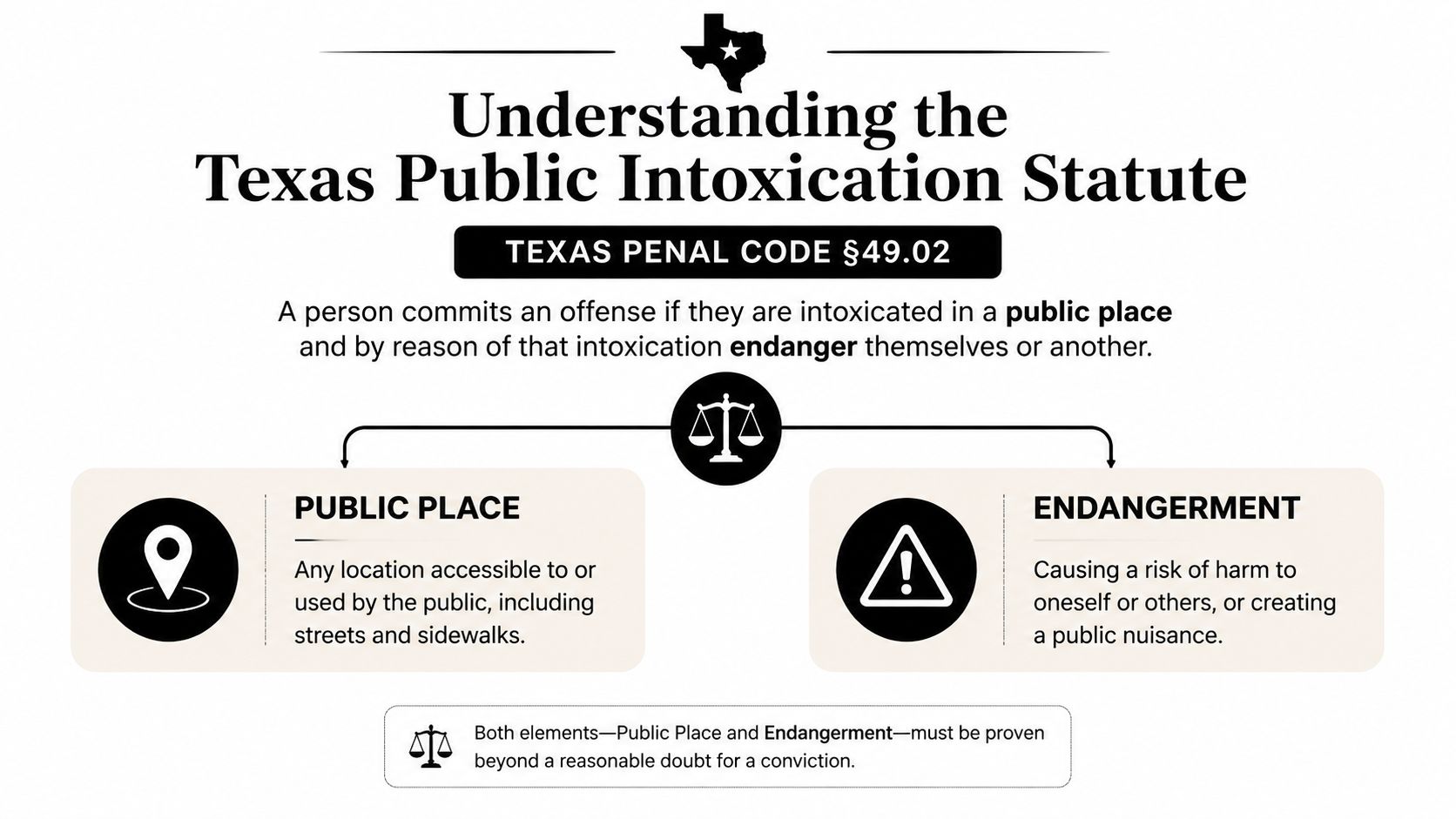
Texas Penal Code §49.02 creates two separate requirements. The state must prove both beyond a reasonable doubt, as reflected in the official Texas statute and explained in the statute summary from FindLaw.
The location requirement
First, you must appear intoxicated in a public place. That doesn't mean only a street or sidewalk. Texas treats a location accessible to the public or a substantial group as a public place for this offense. A licensed or permitted alcohol-premises location also qualifies, so a bar or restaurant can satisfy the location element even indoors.
In Atascocita and Humble, the issue may arise in a shopping-center parking lot along FM 1960, a gas station, a park trail, an apartment complex common area open to residents and visitors, or another place where people have access. The precise facts matter. A private residence isn't automatically transformed into a public place merely because someone can see it, so counsel should examine the location, access rules, property layout, and officer observations rather than accept a label in the report.
The danger requirement
Second, the state must show intoxication to the degree that you may have endangered yourself or someone else. Drinking alone isn't enough. Being tipsy, smelling of alcohol, or speaking loudly doesn't automatically establish the required danger.
An officer may describe stumbling toward traffic, falling into a roadway, trying to enter a vehicle, fighting, threatening people, or being unable to protect yourself. But the report must connect the observations to a potential danger. Someone sitting on a bench, waiting for a rideshare, or sleeping in a parked car may present a much weaker endangerment argument, depending on the surrounding facts.
Each element gives the defense a separate line of attack. A lawyer can question the location, the claimed intoxication, the interpretation of conduct, and the alleged risk. For residents handling a separate family matter, Harris County Family Courts: A Atascocita Resident's Guide describes how family-law cases proceed in the Harris County courts serving Atascocita, but a public-intoxication charge should be evaluated independently and promptly.
Penalties and Enhancement Rules for Repeat Offenses
For an adult, ordinary public intoxication is a Class C misdemeanor. The offense carries a maximum fine of $500 and no jail time. That limited penalty does not make a guilty plea harmless. A conviction can remain in your criminal history and affect background checks, employment decisions, housing applications, and family-law disputes.
Texas increases the stakes after repeat convictions. After two prior public-intoxication convictions, a third conviction may be enhanced to a Class B misdemeanor, exposing the defendant to up to 180 days in jail and a fine of up to $2,000. Review every prior case before entering a plea, including convictions from another Texas jurisdiction. The classification and the wording of those records can affect the available defense strategy.
| Offense Level | Classification | Max Fine | Jail Time | Additional Consequences |
|---|---|---|---|---|
| Ordinary adult offense | Class C misdemeanor | $500 | No jail for the offense itself | Criminal conviction exposure and possible future record consequences |
| Third conviction after two prior convictions | Class B misdemeanor | $2,000 | Up to 180 days | Greater custody risk and enhanced criminal consequences |
A different punishment structure applies to people under twenty-one. Texas connects under-21 alcohol offenses to provisions in the Alcoholic Beverage Code, so age can change the consequences even though the core issue remains public intoxication and potential danger. The Texas Alcoholic Beverage Commission FAQ provides a starting point for alcohol-enforcement questions. A charged person still needs advice based on the actual facts and documents.
Do not treat a minor classification as a reason to plead guilty immediately. Dismissal, deferred handling, and later record relief depend on the evidence and procedural history. Reviewing deferred adjudication in Texas can help you understand one possible resolution, but it does not replace a case review. Ask how any outcome may appear in background checks and whether it can affect custody or other Harris County proceedings. Enforcement of Court Orders in Atascocita concerns a separate legal process and should not be confused with the criminal charge.
How Officers Prove Endangerment Without a Breath Test
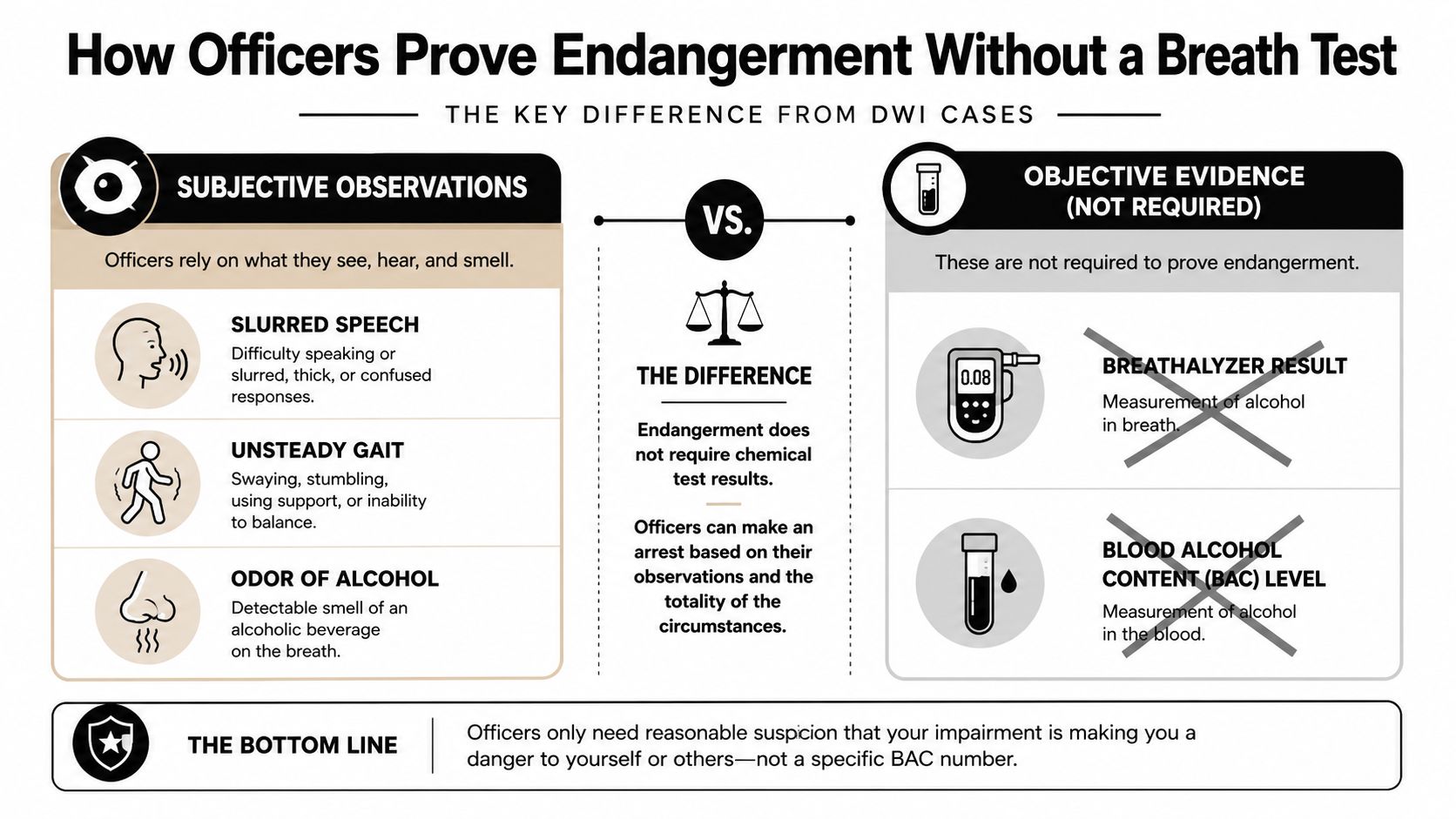
A public-intoxication arrest can proceed without a breath or blood test. Texas does not require chemical testing for this charge. Officers may base their account on speech, balance, odor, conduct, and the surrounding circumstances.
The difficult issue is endangerment. A report describing slurred speech or an unsteady gait does not, by itself, establish that you were intoxicated and posed a potential danger to yourself or another person. The prosecution must connect the observations to both parts of that conclusion.
What can weaken the report
Your defense should compare the officer's interpretation with objective evidence:
- Body-worn camera footage: Video may show speech, balance, and behavior that were calmer or more coordinated than the report states.
- Witness accounts: Sober friends, restaurant employees, rideshare drivers, or bystanders may explain that you were seated, waiting, or receiving help safely.
- Physical surroundings: Uneven pavement, poor lighting, fatigue, medication, an injury, or a medical condition may offer an innocent explanation for the observed conduct.
- The actual risk: Standing away from traffic with companions presents a different factual situation from walking into moving vehicles.
Field sobriety exercises also require careful review. They are not a required measurement for public intoxication, and informal conditions, distractions, or physical limitations can affect the result. The lack of chemical evidence does not end the prosecution, but it can expose conclusions based mainly on subjective observations.
Defense focus: Identify the specific act that allegedly created danger. Do not accept a report that only describes suspected drinking.
Treatment monitoring raises a separate issue. The resource on breathalyzer implications for treatment programs discusses testing technology in that setting. It does not determine whether officers proved intoxication or endangerment in an Atascocita criminal case.
Collateral Consequences Beyond the Courtroom
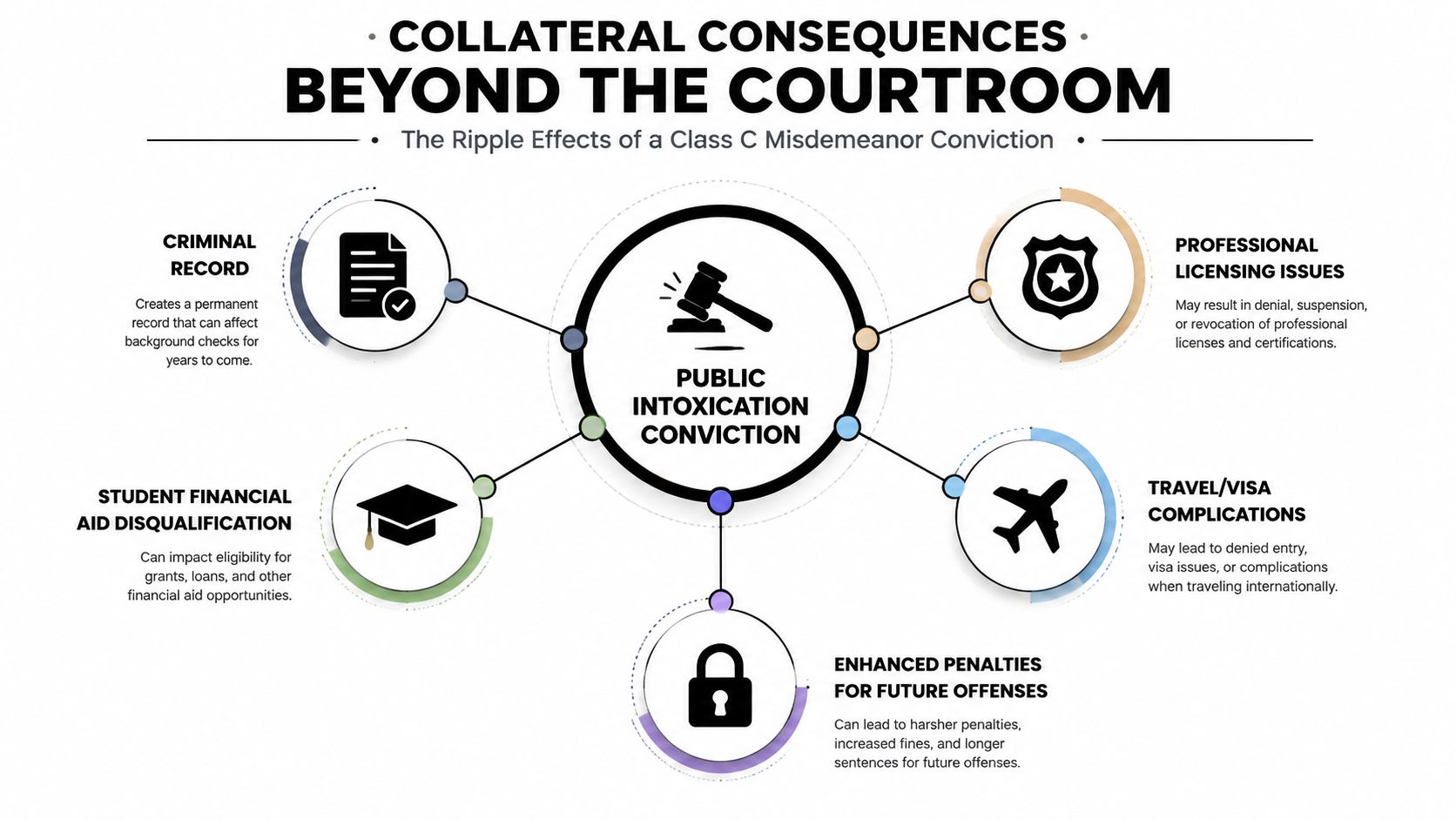
A public intoxication conviction can follow you after the fine is paid. Employers, licensing agencies, schools, and other decision-makers may find the criminal-record entry during a background check. The effect depends on the position, license, application, and wording of the question. Do not assume a Class C conviction will stay out of view.
The same record can affect a Harris County custody or modification dispute. The other parent may question your judgment, supervision, or alcohol use, even if the incident involved no allegation of harm to a child. One charge does not decide custody, but it can become evidence used against you in litigation. If immigration status is involved, speak with counsel who handles immigration consequences before entering any plea.
Arrest, conviction, and record relief
An arrest is not a conviction. Still, an arrest record may appear in some searches after dismissal, so the final disposition and available record-clearing remedy matter.
Expunction can remove qualifying arrest records from government files. Eligibility depends on how the case ended and whether statutory requirements are met. A conviction usually creates a harder path than a dismissal, and paying a fine may result in a conviction that limits future relief. Do not plead just because the charge sounds minor and plan to fix the record later.
For a case-specific review, contact an expunction lawyer in Atascocita, Texas. Counsel should review the arrest, charging instrument, disposition, prior history, and applicable waiting or eligibility rules before discussing the likely result.
Harris County's public-health concerns also call for practical, non-stigmatizing advice. A cited Harris County discussion reports that substance-related deaths increased 74.9%, from 673 in 2018 to 1,177 in 2022. That broader context does not prove intoxication or endangerment in your case. It does show why an isolated arrest should be distinguished from a substance-use problem, while also supporting treatment when treatment is needed.
Practical Steps to Take After an Arrest
The period after release is when useful evidence can disappear and avoidable mistakes can begin. Follow a disciplined plan.
Write down the evening. Record where you were, what you remember, who spoke with you, what the officer asked, whether you performed any tests, and whether you were injured or experiencing a medical issue. Don't edit the account to make it sound better. Preserve the facts while they're fresh.
Save witness information. Keep names, phone numbers, rideshare details, receipts, messages, and photographs. Ask witnesses not to argue with police or post a public account. Their information may help counsel locate video or challenge the alleged danger.
Request preservation of video. Body-camera footage, business surveillance, parking-lot video, and phone recordings may be overwritten. Tell your attorney about every location that may have captured the encounter so preservation requests can be considered promptly.

Protect the court process
Read every release document. Confirm the court, case number, and appearance date, then calendar the date with reminders and arrange transportation. Missing a required appearance can create a new legal problem, including a possible bench warrant.
Don't provide a detailed statement to the prosecutor or post about the arrest before speaking with counsel. If you need general arrest logistics outside Texas, this overview of the Colorado bail process explained offers broader procedural background, but Harris County procedures and your release terms control your case.
Choose a lawyer who can answer direct questions:
- Court experience: Do they regularly handle misdemeanor cases in Harris County?
- Evidence review: Will they examine body-camera footage, witness information, and the location?
- Outcome assessment: Can they explain dismissal, plea, trial, and record-clearing possibilities without guarantees?
- Communication: Who will update you, and how will you receive court-date information?
- Fees: Is the fee structure clear, and are court appearances handled by the attorney you meet?
Bring the charging paperwork and release documents to the consultation. A good attorney-client relationship starts with accurate information, realistic advice, and timely communication.
Protecting Your Future with Local Legal Guidance
A public-intoxication charge may look minor on paper, but the record can follow you into employment, licensing, custody, immigration, and later criminal cases. The strongest defense starts by treating the allegation as a proof problem. Counsel should ask where the incident occurred, what the officer saw, what danger allegedly existed, whether video supports the report, and whether another explanation fits the conduct.
Local experience matters because Atascocita cases move through Harris County systems with their own procedures, personnel, and practical expectations. During a consultation, ask whether the lawyer personally handles court appearances, understands Texas Penal Code §49.02, reviews the evidence before recommending a plea, and can explain possible expunction timing without making promises. You should also receive a clear fee arrangement and a candid assessment of both strengths and weaknesses.
The Law Office of Bryan Fagan – Atascocita TX Lawyers handles criminal defense along with family-law matters that may become relevant when a public-intoxication record affects custody or another Harris County proceeding. The right advice is measured by how well it protects your record and future, not by how quickly someone closes a low-level case.
If you've been arrested for public intoxication in Atascocita, the Law Office of Bryan Fagan – Atascocita TX Lawyers can review the report, release paperwork, evidence, and potential record consequences with you. Schedule a free consultation by visiting Law Office of Bryan Fagan – Atascocita TX Lawyers and take the next step before a Class C arrest becomes a lasting problem.