 Skip to content
When you're facing a divorce, the idea of a courtroom can feel incredibly daunting. A divorce mediator offers a different path. Think of them not as a judge in a black robe, but as a skilled guide—a neutral professional whose entire job is to help you and your spouse find common ground and build a roadmap for your separate futures. As a law office that has served the Atascocita community for years, we’ve seen firsthand how mediation empowers families to navigate this difficult time with dignity and control.
What a Divorce Mediator Does for Atascocita Families
For families in Atascocita and Humble, mediation can transform a potentially hostile process into a constructive one. It shifts the focus from winning and losing to finding workable solutions. But what does a mediator actually do?
Their role is unique. A mediator doesn't take sides, and they won't give either of you legal advice. Their purpose is to create a safe, structured space where you can have the tough, productive conversations needed to untangle your lives and move forward in a way that works for your family.
The Mediator's Core Responsibilities
At its heart, a divorce mediator's job is to facilitate—to make the difficult process of negotiation easier. Unlike an attorney who advocates for one person, a mediator works with both of you to tackle the big issues: child custody, support, property division, and everything in between.
Over a series of meetings, the mediator helps you both get clear on what you truly need and want. They keep the conversation focused and make sure you, not a judge, are the ones making the final decisions. For a deeper dive, you can explore more about how a mediator helps you and your spouse reach an agreement.
Essentially, a mediator wears a few different hats:
- Facilitating Communication: They are the referee of the conversation, making sure it stays productive and doesn't spiral into old arguments. If things are too tense, they can even separate you into different rooms and carry offers back and forth.
- Identifying Issues: A good mediator ensures no stone is left unturned. They'll help you create a complete checklist of everything Texas law requires you to resolve, from what happens to the family home near Lake Houston to the details of your parenting plan.
- Exploring Options: They encourage you to think outside the box. A court might issue a standard order, but a mediator helps you brainstorm creative solutions that are tailored specifically to your family's unique situation.
- Drafting the Agreement: Once you've reached a consensus, the mediator puts it all in writing. This legally significant document, called a Mediated Settlement Agreement (MSA), becomes the blueprint for your final divorce decree.
The most powerful thing about mediation is that you stay in control. A mediator doesn't hand down a verdict; they guide you and your spouse to your own solution. This is a huge advantage, especially for parents in our Atascocita community who need to maintain a cooperative relationship for their children's sake.
To really understand the mediator's place in the divorce ecosystem, it helps to see how their role compares to that of a judge or your own attorney. Each plays a vital, but very different, part in the process.
Mediator vs Judge vs Attorney At a Glance
This table breaks down the distinct roles to help Atascocita families see who is responsible for what.
| Role | Primary Function | Who They Serve | Decision-Making Power |
|---|---|---|---|
| Mediator | Facilitates negotiation and communication between spouses. | Both spouses (as a neutral third party). | None. Guides the couple to their own agreement. |
| Judge | Hears evidence and arguments, then makes a legally binding ruling. | The court and the law. | Ultimate. Issues final orders and decrees. |
| Attorney | Provides legal advice, advocates for, and represents one spouse. | Their individual client only. | None. Advises their client, but can't make the final decision. |
Seeing these roles side-by-side makes it clear: a mediator empowers you, an attorney represents you, and a judge decides for you. Choosing mediation means choosing to keep the decision-making power in your own hands.
A Step-by-Step Guide to the Harris County Mediation Process
For families in Atascocita and Humble, knowing what the divorce mediation process actually looks like can take a lot of the anxiety out of the equation. In Harris County, the courts almost always require couples to try mediation before they’ll even consider giving you a final trial date. So, it's not just a good idea—it's a standard part of the journey.
Let's walk through what you can expect, step-by-step, from the moment you start to the final signature.
It all kicks off once you and your spouse have either chosen a mediator together or the court has appointed one for you. The first meeting usually starts with everyone in the same room. The mediator will lay down the ground rules, explaining that everything said is confidential, that they are a neutral party, and what everyone hopes to accomplish. This initial meeting is all about setting the stage for a productive, respectful conversation.
The Stages of a Typical Mediation
After that introduction, the real work begins. The process follows a few key steps to make sure every part of your divorce is addressed.
- Laying the Cards on the Table: The first major step is full financial disclosure. Both of you will need to gather and share documents—think bank statements, pay stubs, deeds to property, and retirement account information. Honesty and transparency here are non-negotiable; you can't build a fair agreement on incomplete information.
- Creating a Roadmap: Next, the mediator will help you and your spouse create an agenda. This isn't just a random to-do list; it focuses on the core issues that Texas law requires you to resolve, like child custody, child support, and how to divide your property.
- The Negotiation Phase: This is the heart of the process. You'll tackle each issue one by one, brainstorming different solutions and working toward a compromise that you can both live with. If things get heated, the mediator has tools to keep the conversation moving. A common technique is the "caucus," where you and your spouse are placed in separate rooms, and the mediator shuttles back and forth to help move the negotiations along.
- Putting it in Writing: Once you’ve reached a verbal agreement on everything, the mediator will draft a document called a Mediated Settlement Agreement (MSA). This legal document spells out every single decision you've made.
This flow-chart gives you a good visual of how a mediator guides a couple from conflict to a final agreement.
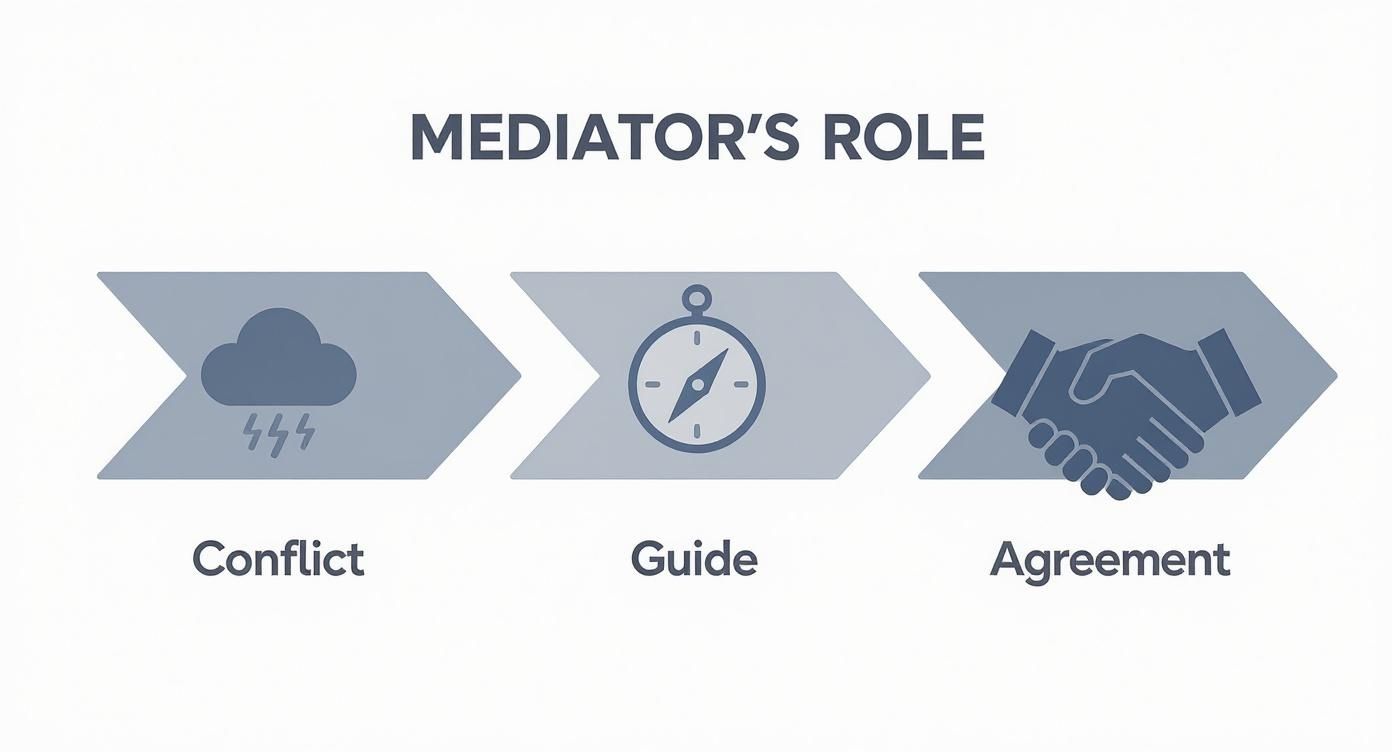
As you can see, the mediator's job is to bring structure to a chaotic situation, acting as a neutral guide to help you find a mutually acceptable path forward.
Finalizing Your Agreement
That MSA is a big deal. It's a legally binding contract, and once you both sign it, it's irrevocable. That means there are no take-backs. From there, your attorneys will take the MSA and draft the Final Decree of Divorce, which is the document the judge will sign to make your divorce official.
The numbers don't lie—mediation is an incredibly effective way to resolve a divorce. Studies consistently show that mediation successfully resolves around 80% of divorce cases. This high success rate means the vast majority of couples who try it are able to settle their differences without a judge having to make the decisions for them.
Of course, mediation is just one piece of the puzzle. To see how it fits into the bigger picture, you can read our guide on how to file for divorce in Texas, which covers the very first steps of the process.
By moving through these structured stages, you can be confident that all the important topics are covered, paving the way for a more stable future for you and your family. If you're facing a divorce in the Atascocita area and have questions about what to expect from mediation, our team is here to help. Contact the Law Office of Bryan Fagan for a free consultation to talk about your specific situation.
The Big Four: What's Actually Decided in Texas Mediation

Mediation is where the rubber meets the road. It’s the time and place where you and your spouse sit down to hammer out the life-changing decisions that will shape your future. So, what exactly does a divorce mediator help with? Think of them as a guide, leading you through productive conversations about the four main pillars of any Texas divorce.
A good mediator doesn't just let you talk in circles. They ensure every critical topic gets the attention it deserves, helping you build a solid, comprehensive agreement that actually works in the real world. Their focus is on helping families in communities like Atascocita and Humble find resolutions that feel fair and are practical for the long haul.
Crafting a Parenting Plan That Works for Your Kids
When you have children, they are, without question, the top priority. In Texas, the court document that outlines your custody and visitation schedule is called a Possession Order. A mediator’s real value here is helping you create a custom plan that fits your family’s unique rhythm, rather than just plugging you into a standard court template.
You'll dig into the details of daily schedules, figure out a fair plan for holidays, and map out summer vacations. The mediator keeps the conversation focused on what’s truly best for your children, helping you find common ground. This cooperative approach does wonders for preserving your co-parenting relationship, which is something you'll rely on for years to come. For a deeper dive, check out our articles on Texas child custody.
Sorting Out Child and Spousal Support
Money talks can be tough, and this is where a mediator’s steady hand becomes invaluable. They guide you through two distinct types of financial support.
- Child Support: The mediator uses the Texas Family Code as a starting point. From there, they facilitate a straightforward discussion about each parent's financial responsibility. They make sure all income is properly accounted for, so the final calculation is fair and follows state guidelines.
- Spousal Maintenance: This is what most people think of as alimony. It's intended as temporary support for a spouse who needs some time and resources to get back on their feet financially. The mediator helps you both have a practical conversation about who qualifies, how much is appropriate, and for how long, all based on actual need and the ability to pay.
A huge part of a mediator's role is to bring the temperature down during financial talks. They reframe the discussion around practical needs and legal standards, which keeps things moving forward productively.
Dividing Your Community Property
Texas is a community property state. In simple terms, that means most of what you earned or acquired during the marriage—both assets and debts—belongs to both of you. A mediator’s job is to help you take inventory of everything, figure out what it's worth, and divide it in a way that’s just and right. This often goes way beyond just the house.
A mediator will guide you through the division of things like:
- The family home on a quiet street in Humble or Atascocita
- Retirement accounts, such as 401(k)s and pensions
- Cars, bank accounts, and investment portfolios
- Interests in a family business or other complex assets
- Shared debts, like credit card balances or the mortgage
The real benefit here is flexibility. A mediator helps you explore creative solutions that a judge might never consider, giving you and your spouse much more control over the outcome. By breaking this massive task into smaller, manageable pieces, they make a process that feels overwhelming seem completely achievable.
If you have questions about how your property might be divided, The Law Office of Bryan Fagan offers a free consultation at our Atascocita office to go over your specific situation.
The Qualifications of a Divorce Mediator
When you're sitting across the table from your spouse, trying to untangle a life you built together, you need to have absolute confidence in the person guiding the conversation. A divorce mediator isn't just some random third party; they're a highly trained professional who meets specific standards set by Texas law.
Their job is to create a safe, structured space where you can make productive decisions for your family, whether you're in Atascocita, Humble, or anywhere else in Harris County. This takes a special mix of skills—they have to understand the emotional weight of what you're going through while also keeping a firm grasp on the legal and financial details that need to be ironed out.
Specialized Training and Expertise
The role of a mediator is incredibly nuanced. It demands specialized knowledge that goes far beyond just being good at resolving arguments. In Texas, anyone mediating a family law case has to complete rigorous training to handle the sensitive issues that come up in a divorce.
This training usually covers a few key areas:
- Family Law Concepts: They need a solid working knowledge of Texas community property laws, how child support is calculated, and all the factors a judge would consider when approving a parenting plan.
- Conflict Resolution Techniques: This is where they learn the art of de-escalating tense moments, finding the hidden common ground between spouses, and keeping the negotiations moving forward.
- Psychology of Divorce: A good mediator understands the emotional landscape of a family in transition. This allows them to manage difficult conversations with empathy and skill, not just logic.
The bedrock of a mediator's qualification is their unwavering neutrality. They are ethically bound to remain impartial. They cannot take sides, give legal advice, or favor one person over the other. This strict impartiality is what makes the process fair and trustworthy.
This kind of specialized training is what separates a professional mediator from just a well-meaning friend. For a deeper dive, you can read more about the critical skills of a divorce mediator to see just how comprehensive their role is.
Finding the Right Fit for Your Family
While every certified mediator meets the state's baseline requirements, finding the right person for your specific situation can make all the difference. Think about the unique details of your life.
For instance, if you and your spouse own a business together in the Lake Houston area or have complicated investments, a mediator with a financial or business background could be a huge asset. They'll speak your language and understand the nuances.
Likewise, if you know that co-parenting is going to be the biggest hurdle, you might look for a mediator who specializes in high-conflict custody cases. Don't be shy about asking a potential mediator about their background, experience, and approach. Finding the right professional is one of the most important first steps you can take.
At the Law Office of Bryan Fagan, we've worked with countless mediators across Harris County and can help you figure out what to look for. Schedule a free consultation at our Atascocita office to talk about your case and learn how we can support you through this entire process.
How to Prepare for a Successful Mediation
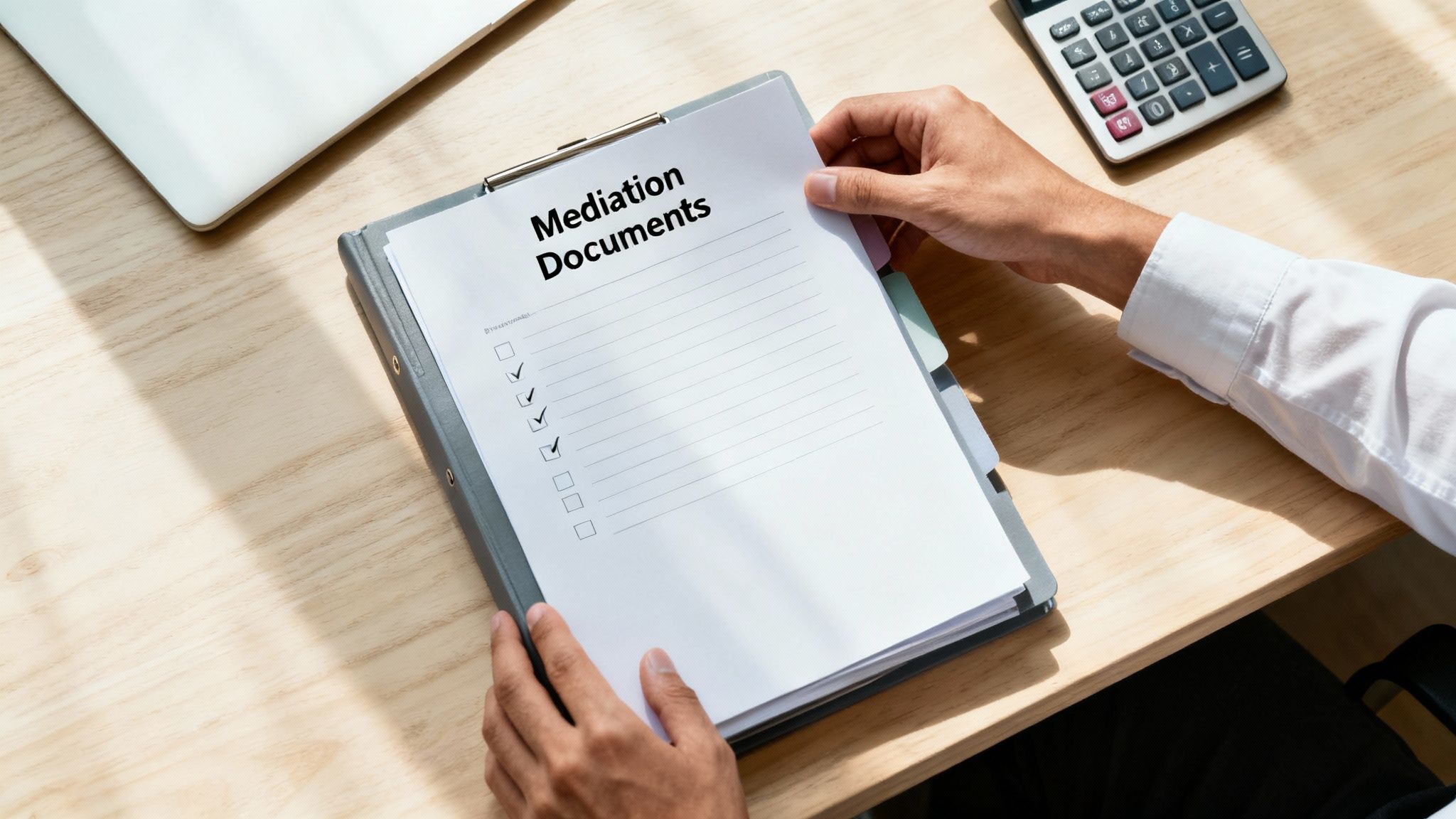
Walking into your mediation session prepared can be a game-changer. The work you put in beforehand lays the groundwork for a much smoother, more productive negotiation, and it often has a direct impact on the final outcome. Think of it less as preparing for a fight and more as getting organized for a serious business meeting about your family's future.
For families here in Atascocita and Humble, taking the time to get your thoughts and documents in order is one of the most powerful things you can do. It helps you engage confidently and makes sure you don’t overlook a critical detail when you’re sitting at the table.
Gather Your Financial Documents
Financial transparency is the bedrock of mediation. There's no getting around it. You'll need to bring documents that paint a complete and honest picture of your marital estate—everything you own and everything you owe, together. Before your session, start pulling together this key paperwork.
A solid starting list includes:
- Proof of Income: Recent pay stubs, W-2 forms, and your last couple of tax returns.
- Asset Information: Statements for all bank accounts, retirement plans (like 401(k)s or IRAs), and any investment portfolios.
- Property Details: Deeds to any real estate, titles for your vehicles, and the most recent mortgage statements.
- Debt Records: Statements for every credit card, auto loan, student loan, and any other outstanding debts.
Having all this ready to go saves a ton of time during the actual mediation and helps build a foundation of trust. It means your mediator is working with hard facts and figures, not just guesses.
The point of gathering documents isn't to build a case against your spouse. It's to create a shared, factual starting point for a fair agreement. A well-organized file is a tool for clarity, not conflict.
Define Your Goals and Priorities
Beyond the spreadsheets and bank statements, a successful mediation hinges on you knowing what you truly want and need for your future. This isn't about drawing up a rigid list of demands. It's about doing some honest self-reflection. Take some quiet time to think about what a "good" outcome really means for you.
Ask yourself these kinds of questions:
- What does a healthy co-parenting relationship look like to me? What possession schedule is genuinely best for our kids?
- Financially, what do I need to start my next chapter on solid footing?
- Which assets are the most important to me, and why? Is it staying in the family home, or is it protecting my retirement savings?
Getting clear on these answers helps you negotiate from a place of purpose, not just emotion. While your mediator guides the conversation, having an experienced attorney review your goals beforehand is also a wise move. Our team can help you understand your legal rights and realistic options. For more on this, check out our guide on how to choose a divorce attorney who will best support you through this process.
Your Mediation Preparation Checklist
To help you get organized, we've put together a simple checklist for Atascocita residents. Use this table to track your progress and ensure you haven't missed anything important before you walk into the room.
| Preparation Task | Why It's Important | Documents to Gather (If Applicable) |
|---|---|---|
| List Your Goals | Clarifies your "must-haves" vs. "nice-to-haves" for a successful outcome. | A personal, written list of priorities. |
| Gather Financials | Provides a factual basis for all financial discussions and builds trust. | Pay stubs, tax returns, bank/retirement statements, debt statements. |
| Create a Draft Budget | Helps you understand your post-divorce financial needs realistically. | A simple spreadsheet or list of your monthly expenses. |
| Review Co-Parenting Options | Puts the focus on the children's best interests and practical schedules. | School calendars, kids' activity schedules. |
| Consult With Your Attorney | Ensures you understand your legal rights and the reasonableness of your goals. | Your list of goals and any key financial documents. |
Taking these steps will help you feel more in control and less overwhelmed by the process.
Ultimately, preparation is an act of empowerment. If you're feeling stuck on what documents to gather or how to even begin defining your goals, The Law Office of Bryan Fagan is here to help. Contact our Atascocita office for a free consultation to start building a clear strategy for your mediation.
Common Questions About Divorce Mediation
Even when you understand the basics, it's normal to have more specific questions about what a divorce mediator really does and how the whole thing works. Families here in Atascocita and Humble often ask us the same things, so we've put together some answers to help clear things up and give you more confidence.
Our hope is to give you straightforward answers and show you that you’ve got a knowledgeable local team ready to help right in your own backyard.
Do I Still Need My Own Lawyer If We Use a Mediator?
Yes, absolutely. This is probably the most important thing to get straight. The mediator is a neutral party—a referee. They can't give legal advice to you or your spouse. It's an ethical line they simply cannot cross. Their job is to guide the negotiation, not to protect your personal interests.
That’s where your own attorney comes in. Think of them as your personal legal coach. Their role is completely different, but just as critical. They will:
- Explain your specific rights under Texas law so you know where you stand before you start negotiating.
- Help you figure out what a realistic outcome looks like and map out a strategy to get there.
- Review the final agreement with a fine-tooth comb to make sure it's fair, legally sound, and won't cause problems for you down the road. You should never sign a settlement agreement without your lawyer reviewing it first.
What Happens If We Can't Agree on Everything?
That's perfectly fine, and frankly, it's pretty common. Don't look at it as a failure. Reaching a partial agreement is a huge win. Any issues you do manage to settle are locked in with a partial Mediated Settlement Agreement.
This is a big deal because it dramatically shrinks the list of things a judge needs to decide. Instead of fighting over every single detail in court, you only have to litigate the handful of issues that remain. That saves an incredible amount of time, money, and stress for families in our community.
Is Mediation Required for a Divorce in Harris County?
In almost every single case, yes. The judges here in Harris County are big believers in mediation because they've seen it work time and time again. It’s pretty much standard practice for them to order a couple to try mediation before they’ll even think about setting a final trial date.
So, while you can technically file for divorce without having gone to mediation yet, it will almost certainly become a mandatory step if you and your spouse have any disagreements at all about your kids or property.
It's better to think of mediation not as a hurdle, but as a required opportunity. The Harris County court system sees it as the best way for families to resolve their own issues with dignity and keep control over the outcome.
Can Mediation Work If We Barely Speak to Each Other?
Yes, it can. In fact, mediation is built for high-conflict situations just like that. A good mediator is trained to manage difficult conversations and de-escalate tension. One of their most powerful techniques for this is the "caucus."
This is where you and your spouse are put in separate rooms (or separate video breakout rooms). The mediator then shuttles back and forth between you, carrying offers, counter-offers, and messages. They act as a communication buffer, filtering out the emotion and focusing on the substance. This structure lets you negotiate productively without having to be in the same room, which can make all the difference when communication has completely broken down.
Figuring out the ins and outs of divorce mediation can feel overwhelming, but you aren't on your own. The team at The Law Office of Bryan Fagan – Atascocita TX Lawyers is here to give you the clear advice and strong legal support you need. If you're in the Atascocita or Humble area, contact us today to schedule a free consultation to talk about your situation and learn how we can protect your interests.


