 Skip to content
A broken contract usually doesn't arrive with much warning. In Atascocita and Humble, it often looks ordinary at first. A contractor stops showing up. A vendor misses delivery after delivery. A buyer backs out after everyone has already made plans around the deal. By the time you realize it's more than a misunderstanding, you may already be out money, time, and peace of mind.
That's when people start asking the same questions. Can I make the other side finish the job? Can I recover what I lost? Can I cancel the deal and move on? Those questions matter for homeowners, small business owners, and families across northeast Harris County. They also come up in other parts of civil, family, and criminal law. In family cases, people often need court order enforcement after a divorce or custody order is violated. In criminal cases, deadlines and evidence can change the outcome quickly. In estate planning, a poorly drafted document can trigger disputes after someone passes away. The common thread is this. Rights only help when you know how to protect them.
What Happens When a Contract Is Broken in Atascocita
A kitchen remodel in Atascocita is a good example because it feels familiar. You hire a Humble contractor. You sign a written agreement with a payment schedule, materials list, and completion date. Demolition starts, cabinets arrive, and then the crew disappears. Your kitchen is half-finished, your money is partly gone, and another contractor says it will cost more to fix the mess than to continue the original plan.
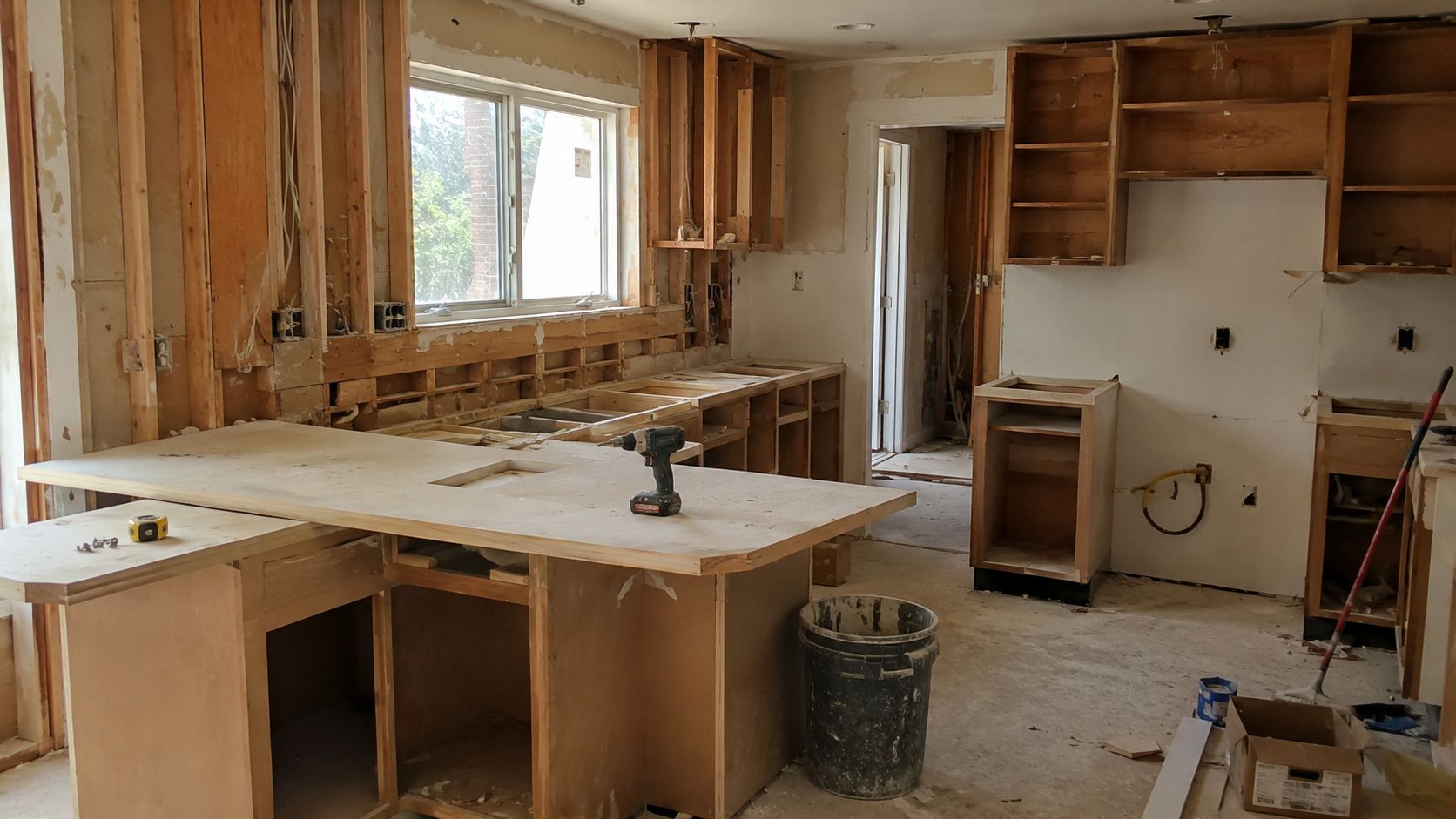
That's a classic breach of contract problem. In plain English, a breach happens when one side doesn't do what the agreement required. Sometimes the breach is obvious, like walking off the job. Sometimes it's more subtle, like delivering the wrong materials, missing a key deadline, or refusing to pay after work is complete.
Common local examples
In Atascocita, Humble, and surrounding Harris County communities, I see contract disputes grow out of everyday transactions:
- Home improvement projects: A remodeling company takes a deposit and leaves work incomplete.
- Service agreements: A business pays for marketing, bookkeeping, or repair work that never matches the written terms.
- Real estate deals: A buyer or seller fails to close after both sides have already relied on the agreement.
- Small business supply contracts: A vendor doesn't deliver goods on time, and the delay disrupts a larger project.
Not every disagreement is a legal breach. If the contract terms are vague, or both sides acted informally, the facts can get messy fast. Texas courts usually start by asking basic questions. Was there a valid agreement? What exactly did each side promise? What happened next? And did that failure cause a real loss?
A contract case usually turns less on outrage and more on proof.
Why this matters early
People often wait too long because they hope the other side will fix things. Sometimes that works. Often it doesn't. While you're waiting, emails disappear, text messages get deleted, replacement costs rise, and deadlines get closer.
If you're dealing with a broken agreement in Atascocita or Humble, the first step isn't panic. It's getting clear about what the contract required and what harm the breach caused.
The Primary Remedy Monetary Damages Explained
Most breach of contract remedies involve money. That surprises people who want the court to punish the other side or force immediate action. In most cases, the law focuses on financial compensation.
A helpful way to think about this is a car repair. If a mechanic agrees to fix your car properly and doesn't, the law usually asks, “What amount of money would place you where you should have been if the contract had been performed?” That question sits at the heart of contract damages.
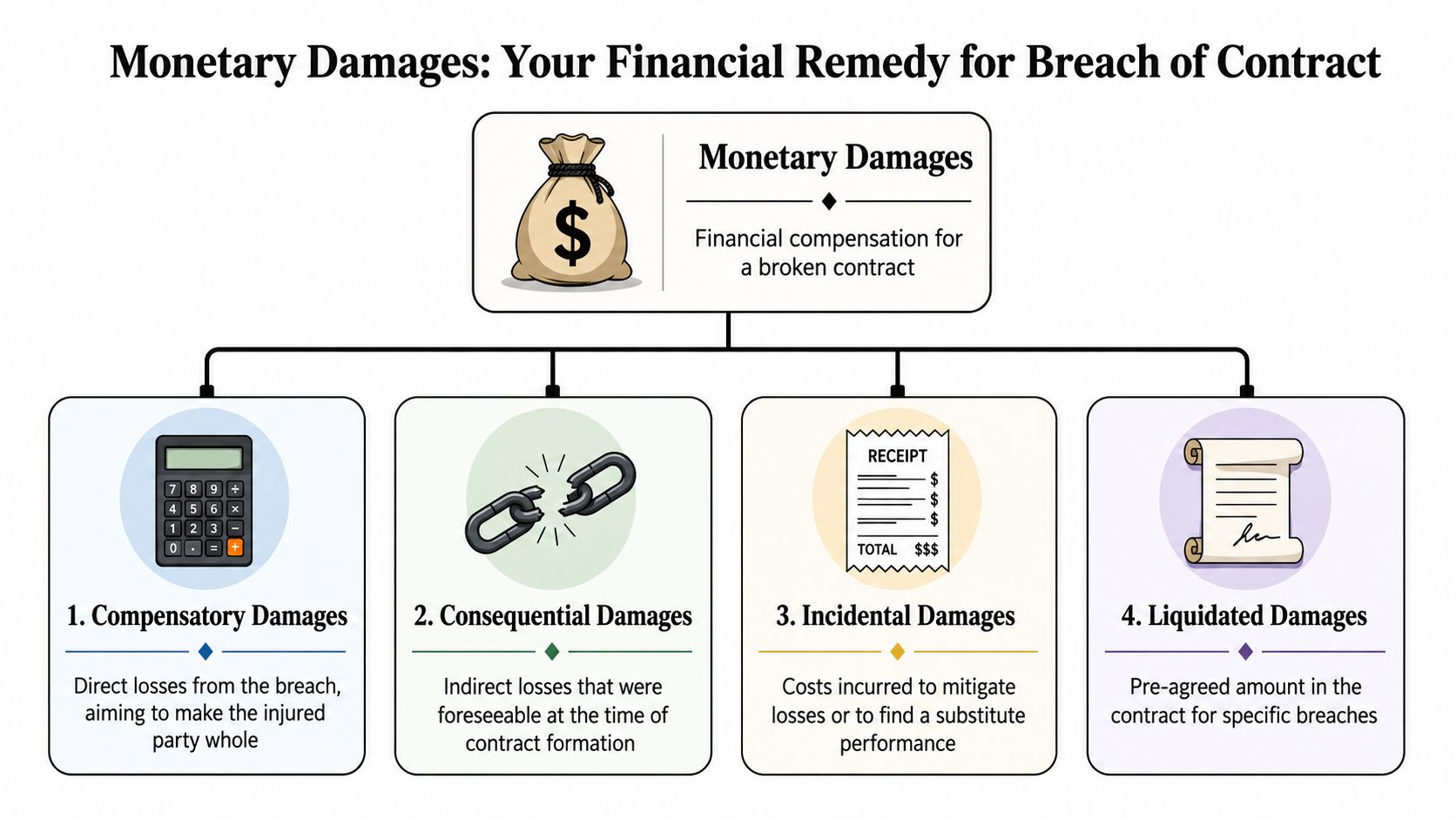
Compensatory damages, specifically expectation damages, are the most common legal remedy in breach cases. They are meant to put the non-breaching party in the financial position they would have occupied if the contract had been fully performed, not to punish the breaching party, as explained by Miller Law's discussion of breach of contract remedies.
The main categories people hear about
Expectation damages
This is the big one. These damages aim to give you the benefit of the bargain.
If you hired a contractor to finish your kitchen for an agreed price, and you have to pay more to get another contractor to do the same work, expectation damages may focus on that difference and related direct loss. In a business setting, they can also include lost future income or profit when the proof is solid.
Consequential damages
These are secondary losses caused by the breach.
For example, if a supplier fails to deliver materials and your business loses an opportunity you reasonably told the supplier about in advance, those losses may fall into this category. They are harder to prove than direct losses because the court will examine whether they were tied closely enough to the breach.
Here's a quick comparison:
| Type of damage | What it covers | Simple example |
|---|---|---|
| Compensatory | Direct loss from the broken promise | Cost to hire a replacement contractor |
| Consequential | Indirect loss caused by the breach | Lost business opportunity from a missed delivery |
| Nominal | A legal wrong with little or no measurable loss | A technical breach with no clear money loss |
| Liquidated | A pre-agreed amount written into the contract | A set payment for delay if the clause is enforceable |
A short explainer can help if you want a visual overview before looking at your own documents:
Two damage concepts that confuse people
- Nominal damages: These may apply when a breach happened, but no real monetary harm can be calculated.
- Liquidated damages: These are amounts the parties wrote into the contract ahead of time for a specific kind of breach, often delay or nonperformance.
Practical rule: The stronger your records are, the easier it is to connect your losses to the contract terms.
If you're a small business owner in Humble or Atascocita, that means keeping the signed contract, change orders, invoices, payment records, and written communications together from day one.
When Money Is Not Enough Equitable Remedies
Some contracts involve something money can't easily replace. A one-of-a-kind waterfront property near Lake Houston is a simple example. If a seller backs out at the last minute, writing a check may not solve the problem because another property with the same location, features, and timing may not exist.
That's where equitable remedies come in. Instead of asking for money alone, a party asks the court to order a result.
Specific performance
Specific performance means the court orders a party to do what the contract required.
This remedy shows up most often in disputes over unique property. If the subject of the contract is special enough that substitute performance won't really fix the harm, a court may consider ordering completion instead of awarding only money.
For example, if a seller agreed to transfer a particular parcel of land and then refused, the buyer might ask for specific performance because that exact property matters more than a damages check.
Rescission and reformation
Two other equitable remedies matter in Texas contract disputes.
- Rescission cancels the contract and tries to restore both sides to their earlier positions.
- Reformation corrects the written contract when the document doesn't match the parties' true agreement because of a mistake.
A rescission claim can make sense when continuing the agreement no longer helps anyone. A reformation claim can matter when everyone intended one thing, but the final paperwork says another.
When these remedies fit
A court won't treat equitable remedies as the automatic first choice. The party asking for them usually needs to show why money alone won't provide a fair result.
That principle also appears in other legal areas. Families planning for incapacity or asset transfer often need precise documents because small wording errors can create major problems later. In that setting, an Estate Planning Attorney in Atascocita handles wills, trusts, and estate plans for Atascocita families. Contract drafting calls for the same kind of care. Clear language now can prevent expensive litigation later.
When the thing you lost is unique, the remedy may need to be something other than a payment.
Texas-Specific Contract Rules You Must Know
Texas contract law has its own pressure points, and local business owners often miss them because online articles stay too general. In Harris County, timing and contract language can change the entire dispute.
The filing deadline matters
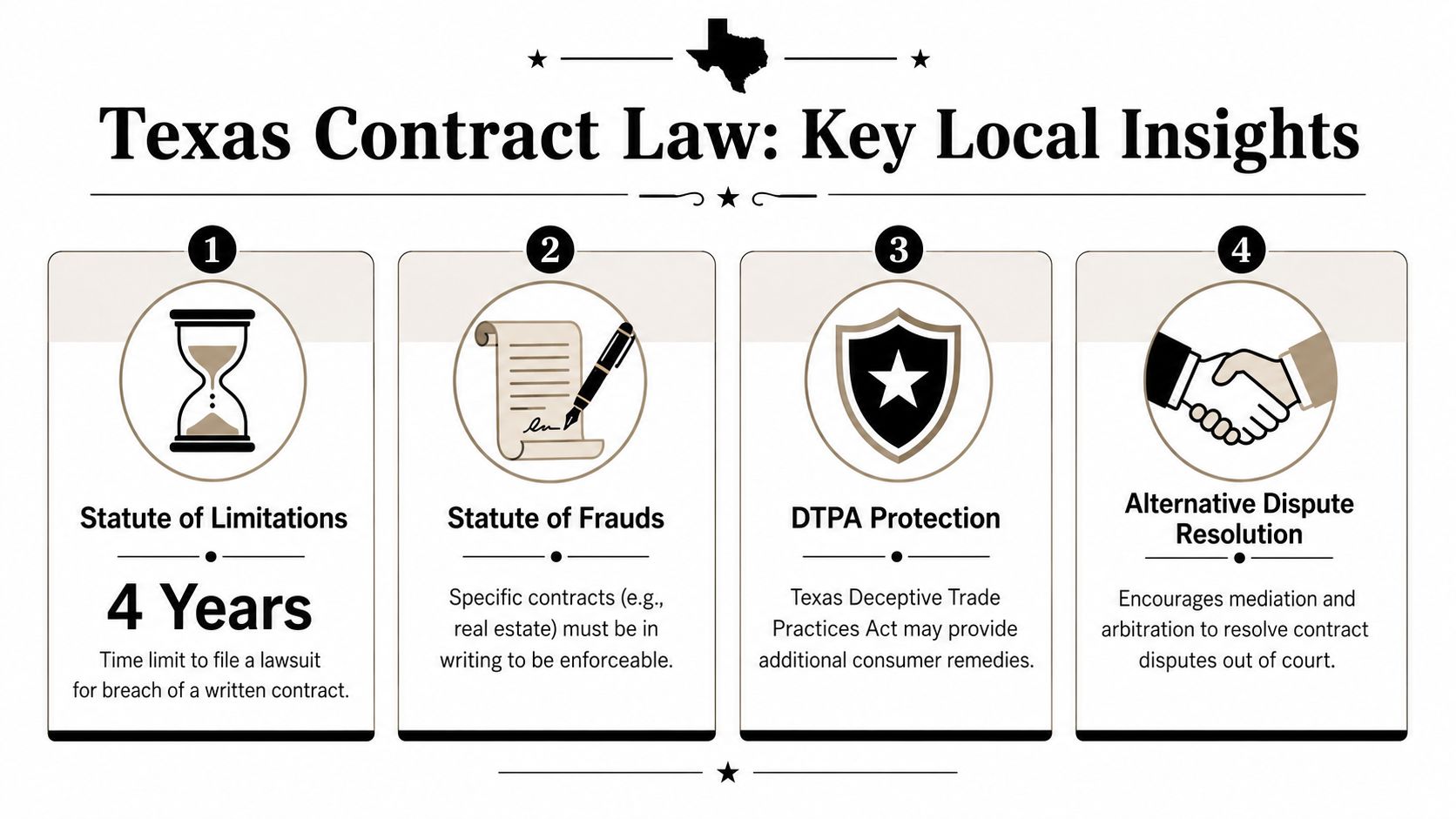
For a written contract claim in Texas, the statute of limitations is four years. That means you generally have a limited window to bring a lawsuit, and waiting too long can end the case before it starts.
For local readers, this is one of the most important practical rules to know. People often delay because they're trying to work things out informally. That can be reasonable at first, but delay becomes dangerous when the legal deadline is approaching.
Liquidated damages are not automatic
Texas businesses use liquidated damages clauses all the time, especially in service contracts, construction agreements, and commercial deals. The idea sounds simple. If a certain breach happens, the contract states a set amount owed.
The problem is that not every clause will hold up. Texas courts look closely at whether the amount operates like a fair estimate of likely harm or more like a punishment. If it looks like a penalty, the clause can create trouble rather than clarity.
Here's a practical way to assess one:
| Question | Why it matters |
|---|---|
| Was the amount a reasonable estimate when the contract was signed? | Courts are skeptical of disguised penalties |
| Is the clause tied to a specific type of breach? | Vague language invites disputes |
| Can actual damages be measured with ordinary records? | Easy-to-calculate loss may weaken the clause's value |
Other Texas rules worth checking
Certain agreements must be in writing to be enforceable. Real estate deals are a common example. Consumer disputes may also raise issues under Texas law outside ordinary contract claims. And many contracts require mediation or arbitration before a court case begins.
If your contract involves customer data, vendor handling obligations, or privacy responsibilities, it also helps to review examples of drafting data clauses for compliance so you can spot whether your agreement clearly assigns risk and responsibility.
For a focused discussion of local civil claims, the firm's page on breach of contract in Texas can be a useful starting point.
How to Pursue a Remedy and Prove Your Case
Once you know a contract was broken, the next challenge is proving it in a way a court will accept. Strong feelings won't carry a claim. Documents, timelines, and losses usually will.
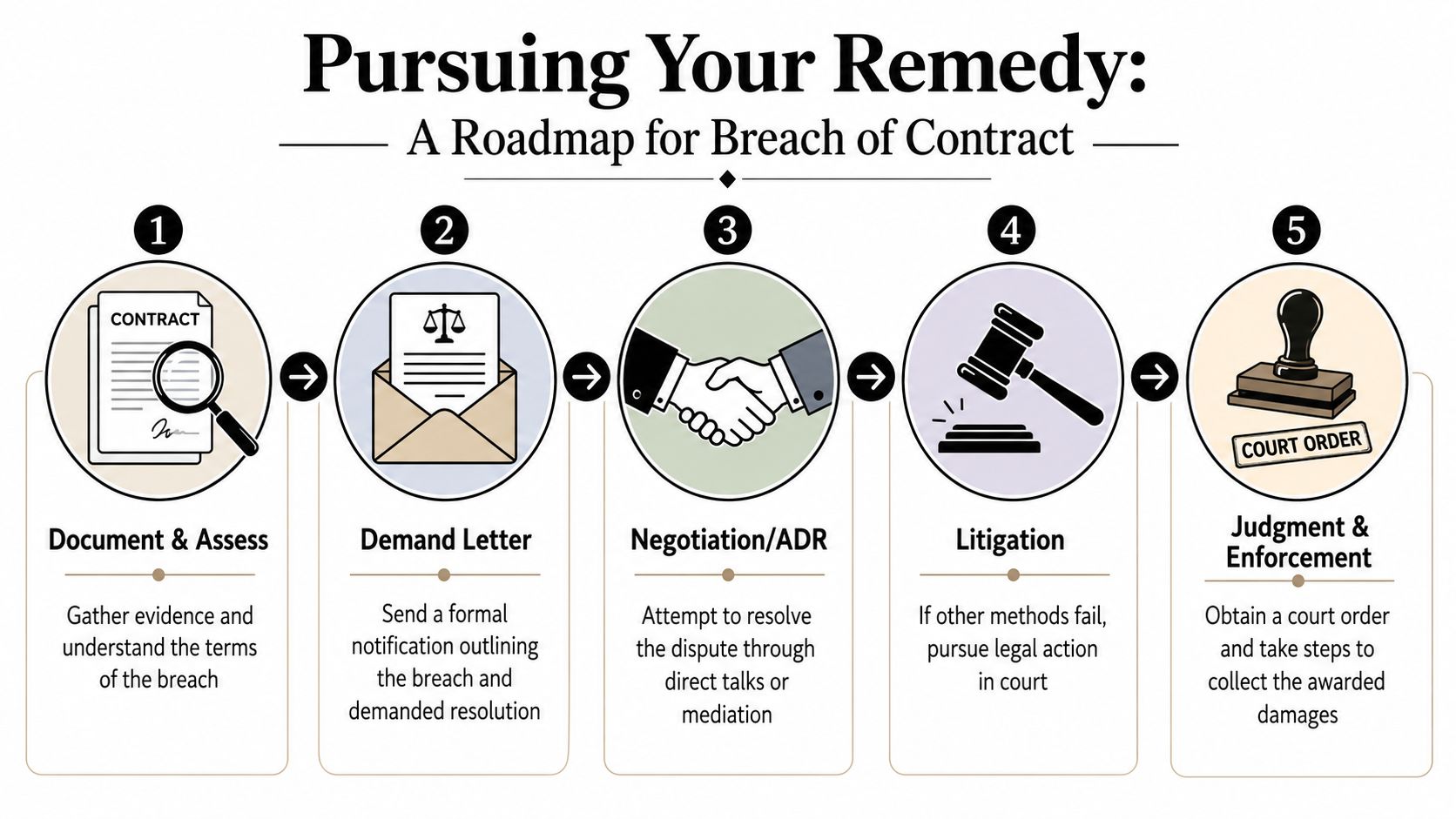
A practical path many cases follow
Gather the contract and related records
Pull together the signed agreement, amendments, change orders, invoices, receipts, emails, and text messages.Review exactly what was promised
Identify the key terms. Price, deadline, scope of work, delivery obligations, and notice requirements matter most.Send a formal demand letter
A clear written demand can frame the dispute and sometimes resolve it without litigation.Try negotiation or alternative dispute resolution
Some contracts require mediation or arbitration. Even when they don't, negotiated solutions can save time and cost.File suit if necessary
If the other side won't respond reasonably, you may need to file in a Harris County court and begin formal discovery.
What evidence helps most
Courts distinguish between direct compensatory damages and consequential damages, and indirect losses are only recoverable if they were foreseeable at the time of contracting. Courts also apply the doctrines of foreseeability, certainty, and avoidability, as discussed in Jaburg Wilk's explanation of remedies for a breach of contract.
That legal language sounds technical, but the daily meaning is straightforward. You need proof that the loss happened, that it can be measured, and that it connects to the breach.
A strong file often includes:
- The written agreement: The court wants to see the actual terms.
- Communications: Emails and texts can show admissions, delays, changed positions, or notice.
- Financial records: Invoices, replacement bids, bank statements, and accounting entries help quantify loss.
- Photos or project records: In construction or property disputes, visual proof can matter.
- Witnesses or experts: Sometimes a contractor, appraiser, or accountant helps explain the damage.
Keep your evidence in the order events happened. A clean timeline often tells the story better than a stack of disconnected documents.
If you want a broader overview of strategy and process, Legitt AI insights on contract remedies offer a general business-side perspective, though your Texas case will still turn on local law and your specific facts.
For readers who may be preparing for formal civil litigation, the firm's guide on how to sue for breach of contract outlines the next stage in more detail.
The Truth About Punitive Damages in Contract Disputes
Many people walk into a contract dispute believing the court will punish the other side for bad behavior. That belief is understandable. If someone knowingly broke a promise and caused real harm, punishment feels fair.
But ordinary contract law usually doesn't work that way.
The common misconception
Punitive damages are not the standard remedy for a broken contract. In fact, they are rarely allowed in breach cases and are generally barred unless the conduct also involves an intentional tort such as fraud, misrepresentation, or duress, as noted in Malek Attorneys' discussion of breach of contract remedies.
That matters in Harris County because small business owners often spend time and money pursuing a “punishment” theory that the law may not support.
What this means in practice
If a vendor failed to perform, that may support a contract claim. If the vendor also lied about a material fact to induce the deal, that may raise a different kind of claim. The distinction matters because remedies can change depending on the legal theory and the evidence available.
Here's the practical takeaway:
- Broken promise alone: Usually points toward compensatory relief.
- Broken promise plus separate wrongful conduct: May open the door to claims beyond ordinary contract damages.
- Anger by itself: Doesn't create punitive damages.
Courts usually ask how to compensate the injured party, not how to punish the breaching one.
That's why realistic case evaluation is so important. It helps you focus on recoverable remedies instead of spending resources on claims that probably won't survive.
Protecting Your Rights and When to Call an Attorney
A lot of people in Atascocita and Humble wait too long after a contract falls apart. A homeowner hopes the contractor will come back. A small business owner keeps accepting excuses from a vendor who missed three delivery dates. Meanwhile, records get lost, replacement costs change, and the dispute gets harder to prove.
Texas law also expects you to limit avoidable losses after a breach. That is the duty to mitigate. In plain terms, you need to make reasonable choices after the other side breaks the agreement. If a supplier fails to deliver materials for your job, you should usually look for a replacement if one is available at a fair market price. If a contractor abandons work on your home in Humble, document the condition of the project and get realistic bids to finish or repair it if that is practical.
Reasonable does not mean perfect. It means acting like a careful person or business owner would act under the same circumstances.
Here are smart first steps:
- Preserve the paper trail: Keep the contract, change orders, texts, emails, invoices, photos, and proof of payment.
- Confirm key facts in writing: If a phone call matters, send a short follow-up email or text summarizing what was said.
- Avoid costly self-help: Do not throw away materials, alter the jobsite, lock someone out without legal grounds, or send angry threats.
- Track your mitigation efforts: Save quotes from replacement vendors, repair estimates, and notes showing what you did to reduce the loss.
- Watch for related legal issues: Some contract disputes involve title problems, inherited property, LLC ownership, or family property questions.
That last point surprises people.
A broken agreement over a house or parcel of land may not be just a contract problem. If the property came through a family member's estate, title issues can affect who had authority to sign, sell, or transfer the property in the first place. In that situation, a guide on muniment of title in Texas can help you understand one part of the bigger picture.
Good organization also saves legal fees. If your file is scattered across screenshots, PDFs, handwritten notes, and email chains, tools like Markdown Converters for contract review can make the material easier to sort before you meet with counsel.
So when should you call a lawyer?
Call early if the contract involves a large amount of money, real property, a business partnership, a liquidated damages clause, or a claim that you failed to mitigate. Those issues come up often in Harris County disputes, and they can change the value of the case fast. A lawyer can also help if the other side is accusing you of breaching first, demanding payment that does not match the contract, or threatening to file suit.
Law Office of Bryan Fagan, Atascocita TX Lawyers, handles civil litigation and related matters for people in Atascocita, Humble, and Harris County. If you are dealing with a stalled project, a broken business agreement, or a property-related contract dispute, getting legal advice early can help you protect evidence, avoid expensive mistakes, and choose the right next step.


