 Skip to content
When you remarry and create a blended family, you're not just combining households—you're merging lives, futures, and financial pictures. For our neighbors here in Atascocita and Humble, this is an exciting new chapter. However, it also means a standard, off-the-shelf will is no longer enough. For blended families, estate planning is about crafting a thoughtful legal strategy to protect everyone you love: your new spouse, your children from a previous relationship, and any stepchildren you’ve welcomed into your life.
This isn't just about writing a simple will. It’s about using smarter, more effective legal tools, like trusts and carefully managed beneficiary designations, to make sure your assets go exactly where you intend. The goal is to prevent unintentional disinheritance and keep the peace in your family for generations to come.
Why Blended Families in Harris County Need a Custom Estate Plan

For families here in Atascocita, Humble, and across our part of Harris County, blending families is a common part of life. You're building something new and wonderful. But this beautiful dynamic brings with it unique legal and financial challenges that a generic will simply can't handle.
Most basic estate plans follow a predictable path: assets flow to the surviving spouse, and then, eventually, to their shared children. That straightforward approach can create huge, often devastating, problems for a blended family.
How the "Default" Plan Can Fail Your Family
Without a plan designed for your specific situation, you’re setting the stage for what’s known as accidental disinheritance. It’s a heartbreakingly common scenario we see in our community.
Imagine you leave everything to your new spouse, assuming they’ll take care of your kids from your first marriage. If your spouse passes away later, their own will would likely direct all remaining assets—including everything you brought into the marriage—to their biological children. Your own kids could be left with nothing. It’s a nightmare that unfolds far too often, not out of malice, but because of a faulty plan.
And this isn’t some rare, outlier situation. Blended families are a cornerstone of our community. Research shows that roughly 16 percent of children in the U.S. now live in a blended family household. With about 40 percent of new marriages involving at least one person who has been married before, it’s clear this is a critical conversation for many of us in the Lake Houston area. Learn more about these trends in family structure.
A proper estate plan for a blended family isn't just a legal document; it's a statement of love and intention. It ensures fairness, clarity, and peace of mind, protecting every member of the family you've worked so hard to build.
Common Challenges and Practical Solutions for Blended Family Estate Plans
Navigating these waters requires understanding the specific risks and having the right legal tools to address them. This table breaks down some of the most common hurdles blended families face and points toward effective, practical solutions available under Texas law.
| Challenge | Potential Problem | Effective Legal Solution |
|---|---|---|
| Accidental Disinheritance | Your assets go to your new spouse, who then leaves everything to their own children, unintentionally cutting out your kids. | Trusts (like a QTIP or Bypass Trust) can provide for your spouse for life, while ensuring the remaining assets go to your children. |
| Competing Interests | The surviving spouse may need funds for their lifetime, but the children from the first marriage are waiting for their inheritance. | A Marital Trust clearly defines how assets can be used, balancing the needs of the surviving spouse with the rights of the children. |
| Outdated Beneficiaries | Old life insurance or retirement accounts still list an ex-spouse as the beneficiary, overriding what your will says. | Regularly reviewing and updating beneficiary designations on all non-probate assets is crucial. |
| Unclear Property Rights | Confusion over what is considered community property vs. separate property under Texas law can lead to disputes. | A Marital Property Agreement (prenuptial or postnuptial) can clearly define asset ownership and inheritance rights. |
| Incapacity Decisions | Your new spouse and your adult children may disagree on who should make financial or medical decisions if you become incapacitated. | Durable Power of Attorney and Medical Power of Attorney documents let you appoint specific agents you trust. |
Each of these solutions offers a way to bring clarity and fairness to a complex situation, preventing conflict before it has a chance to start.
Moving Beyond a Simple Will: A Step-by-Step Approach
To truly protect everyone, you have to move beyond a simple will. The key is to build a protective legal framework that honors all your relationships. This often involves a multi-layered, step-by-step approach:
- Create a Trust: A trust is one of the most powerful tools for a blended family. It can hold assets for your spouse’s benefit during their lifetime, making sure they are financially secure, while guaranteeing that whatever is left over goes to your children. You get to control the final destination of your legacy.
- Update Beneficiary Designations: This is a big one. Assets like life insurance policies, 401(k)s, and IRAs pass directly to the person you name as beneficiary, completely bypassing your will. It's absolutely critical to review and update these forms after a remarriage to reflect your current wishes.
- Clarify Property Ownership: Here in Texas, our community property and separate property laws add another layer of complexity. A well-drafted plan, sometimes including a marital property agreement, can clearly define what belongs to whom, avoiding confusion and potential legal battles down the road.
By taking these steps, you create a clear, legally-binding roadmap that leaves no room for doubt. You ensure your spouse is cared for, your children are protected, and your stepchildren are included exactly as you intend. This proactive approach is the single best way to prevent future conflict and keep your family united.
What’s at Stake? The Dangers of Not Having a Plan
For families here in Atascocita and Humble, bringing two families together is an act of love. You’re building a new future. But if you don't create an estate plan that reflects your unique family, you risk leaving behind a legacy of confusion, division, and heartache for the very people you love.
When you don’t have a specific plan, you're essentially letting the State of Texas make all the decisions for you. Those decisions are based on what are called intestacy laws—a set of rigid, one-size-fits-all rules that were never designed for the nuance of a blended family.
When Texas Law Decides Your Family's Fate
Let's imagine a worst-case scenario: you pass away suddenly in Harris County without a will. The law, not your wishes, dictates who gets what. The results are often devastating for the surviving spouse and children.
- Your Spouse's Share: Your surviving spouse might only get their half of the community property (anything you acquired together during the marriage). Your half could go straight to your biological children, potentially leaving your spouse in a tight financial spot you never intended.
- Your Separate Property: The rules get even trickier for separate property—assets you had before the marriage or received as a gift or inheritance. Your spouse might get a small portion, but the bulk of it (often two-thirds or more) would be divided among your children from a prior relationship.
- Stepchildren Get Nothing: This is a hard truth: Texas intestacy laws do not recognize stepchildren as legal heirs. No matter how close you are, if you haven't legally adopted them, they have no automatic right to inherit anything from you.
Not having a will isn't a neutral choice; it’s an active decision to let the state's default rules take over. It's like asking a complete stranger to handle your family’s future, and the outcome rarely matches what you would have wanted. This almost always leads to painful and expensive legal fights in the Harris County probate courts.
The Tragedy of Unintentional Disinheritance
One of the most heartbreaking outcomes is accidental disinheritance. It usually happens with the best of intentions. A common example is leaving everything to your surviving spouse, fully trusting them to take care of all the kids—yours, theirs, and ours.
But once those assets belong solely to your surviving spouse, they have total control. Life is unpredictable. Years down the road, they might remarry or create a new will that only names their own biological children as heirs. It’s rarely done out of spite; circumstances simply change. But the result is the same: your children are left with nothing.
This very scenario is a leading cause of bitter family disputes. And these conflicts are more common than you might think. In fact, about 35 percent of Americans have seen family conflict erupt because an estate plan was missing or poorly drafted. When that happens, the emotional and financial toll can tear a family apart for good. Discover more insights about preserving generational wealth.
A well-crafted estate plan moves beyond just hope and trust. It builds a legally-binding framework that protects your spouse while also guaranteeing your children receive the inheritance you want them to have. By taking these steps now, you remove the guesswork, prevent future fights, and give everyone you love the peace of mind they deserve. The first step is sitting down with a local Atascocita attorney who sees these situations every day and knows how to protect your family.
The Core Legal Tools for Your Blended Family's Plan
When you're dealing with a blended family, estate planning can feel like a puzzle with a lot of moving parts. But it's not as complicated as it seems. Really, it just comes down to using the right legal tools to build a plan that protects everyone you care about. Think of it as a custom-built toolkit for your family's future—each tool has a very specific job.
For families here in Atascocita and Humble, getting a handle on these basic documents is the first step toward creating a plan that truly honors every relationship.
Let's break them down in plain English. Your Last Will and Testament is essentially your final instruction manual. It spells out exactly who gets what—from the house on Lake Houston to your grandmother’s wedding ring. If you don't have one, the state of Texas steps in and decides for you, and trust me, the state’s default plan rarely works for a blended family.
A Trust is a bit different. Think of it as creating a private, secure vault for your assets. You name someone you trust (the "trustee") to manage that vault based on a set of rules you create. This gives you a level of control and protection that a simple will just can't offer, which is absolutely critical when you're balancing the needs of a current spouse and children from a previous relationship.
Failing to put these basic protections in place can lead to some really tough situations. The risks aren't just financial; they're deeply personal.
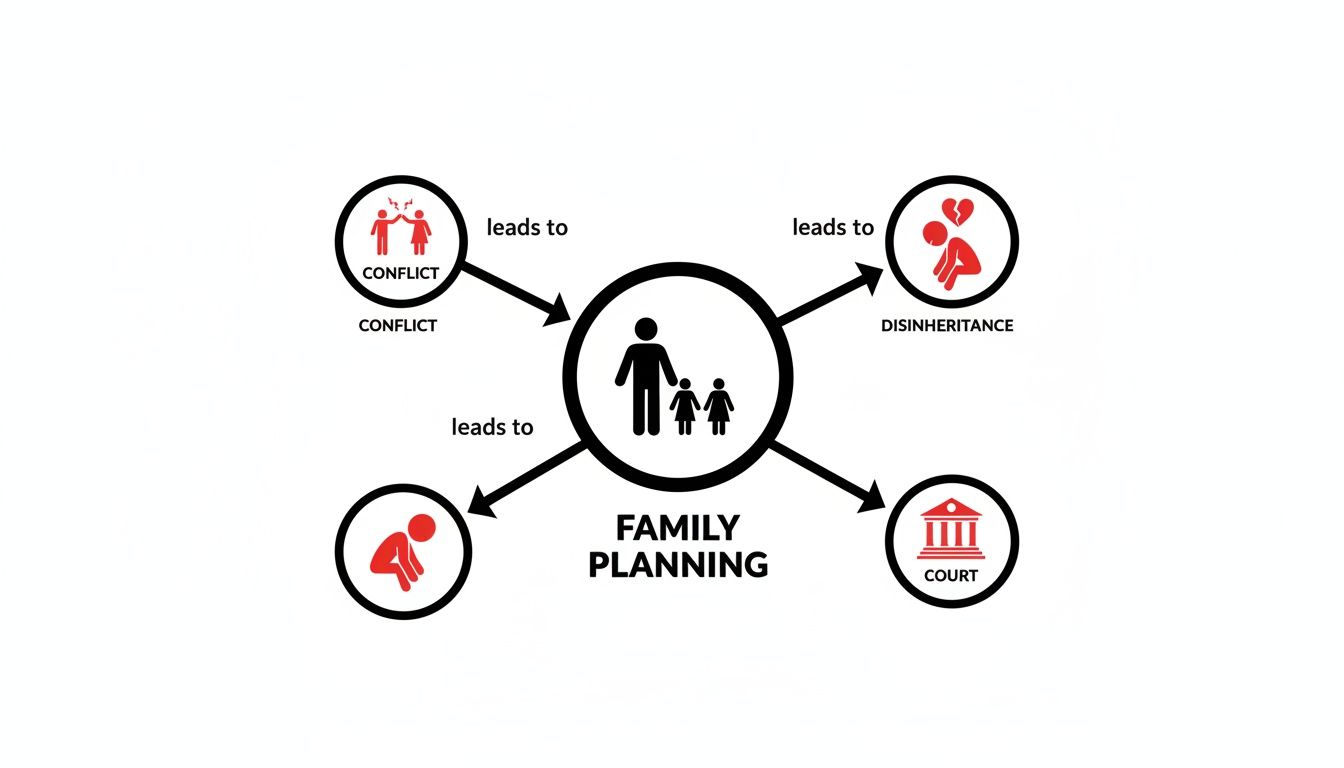
As you can see, doing nothing often leads straight to conflict, unintentional disinheritance, and painful, expensive battles in Harris County courts.
Beneficiary Designations: Your Financial Superpowers
One of the most powerful—and most often overlooked—tools in your entire estate plan is the beneficiary designation. These are the names you put on your 401(k), life insurance policies, IRAs, and bank accounts.
Here’s the part you absolutely cannot forget: beneficiary designations override your will. It doesn't matter what your will says. If you leave everything to your current spouse in your will, but your old life insurance policy from 10 years ago still names your ex-spouse, your ex gets the money. It's a simple mistake that we see cause devastation for local families all the time.
After a remarriage, going through and updating every single beneficiary designation you have isn't just a good idea—it's an absolute must. It’s the only way to guarantee your assets go exactly where you intend.
Protecting Yourself While You're Here
Estate planning isn't just about what happens after you're gone. It’s also about having a plan in place in case you become unable to make decisions for yourself. This is where Powers of Attorney become so important.
There are two key types you'll need:
- Durable Power of Attorney: This document lets you pick someone you trust (your "agent") to handle your finances if you become incapacitated. They can pay your mortgage, manage investments, and deal with your property, which keeps your family out of a court-supervised guardianship.
- Medical Power of Attorney: This appoints an agent to make healthcare decisions for you if you can't speak for yourself. This is crucial for preventing heartbreaking disagreements between your spouse and your adult children about your medical care.
You can get a deeper understanding of these documents in our guide on what a Power of Attorney document is and how they work under Texas law.
Finally, if you have minor children, a Guardianship Designation is non-negotiable. This is where you name the person you want to raise your kids if something happens to you and their other biological parent.
If you don't name a guardian in your will, a Harris County judge will be the one to make that choice. By putting your wishes in writing, you give the court clear and powerful evidence of who you trust most, ensuring your children are cared for by the right person.
Each of these tools has a unique and vital job to do. When you put them all together, you create a solid, comprehensive strategy that tackles the specific challenges blended families face, giving everyone you love security and peace of mind.
Using Trusts to Protect Everyone You Love

A will is your estate's essential instruction manual, but a trust is more like a secure, custom-built vault for your assets. This is where estate planning for blended families really shines, offering a level of control and precision that a simple will just can't match. With a trust, you can thoughtfully balance providing for your current spouse with protecting the inheritance you intend for your children.
For many families here in Atascocita and Humble, a well-crafted trust is the single best tool for creating genuine peace of mind. It lets you write the rules for how your legacy is managed and shared long after you're gone, making sure your wishes are carried out exactly as you planned.
The QTIP Trust: Balancing Today and Tomorrow
One of the most powerful tools in our toolbox for blended families is the Qualified Terminable Interest Property (QTIP) Trust. The name sounds a bit technical, but its purpose is beautifully simple: it allows you to fully support your surviving spouse for the rest of their life while legally guaranteeing your children from a previous marriage ultimately receive their inheritance.
Here's how it works: You put assets into the QTIP trust. For the rest of their life, your surviving spouse gets all the income those assets generate—like interest from investments or rent from a property—so they remain financially secure. But they can’t touch or redirect the original assets. When they pass away, that principal goes exactly where you originally decided: to your children.
A QTIP trust is the ultimate solution to the fear of accidental disinheritance. It legally separates "providing for my spouse" from "preserving an inheritance for my kids," allowing you to do both without conflict.
This strategy is incredibly effective in real-world scenarios. For example, an Atascocita homeowner could place their house in a QTIP trust. Their surviving spouse can live there for the rest of their life, but upon their passing, ownership of the home transfers directly to the homeowner’s children, just as they intended all along.
The ILIT: Creating a Separate Inheritance
Another fantastic strategy is the Irrevocable Life Insurance Trust (ILIT). This is a perfect way to create a dedicated inheritance for your children that exists completely outside of your main estate. It ensures they are well cared for without taking away from the assets you want to leave for your current spouse.
Here’s the breakdown: You establish an ILIT, and the trust itself becomes the owner of a life insurance policy on your life. When you pass away, the insurance payout goes directly into the trust, which then distributes the money to your children according to the rules you set up from the start.
This approach offers a few key advantages for blended families:
- Creates Instant Liquidity: The life insurance proceeds provide immediate, tax-free cash for your children. That money can be used for anything from college tuition to a down payment on a first home.
- Avoids Family Conflict: Because this inheritance is totally separate, it doesn’t reduce the assets available for your surviving spouse, helping to prevent potential friction and resentment.
- Offers Tax Benefits: For families concerned with estate taxes, an ILIT can be a game-changer. The proceeds are generally not considered part of your taxable estate, which can be a significant advantage.
Setting up these powerful tools requires careful legal guidance to get them right. If you're wondering where to begin, a great starting point is our guide on how to create a trust in Texas. With the right structure in place, you can build a plan that truly protects every single person you love.
Untangling Texas Property Laws: Community vs. Separate
If you're part of a blended family here in Texas, getting a handle on our state's property laws isn't just a good idea—it's the bedrock of a solid estate plan. These rules dictate how your assets are divided if you die without a will, and they can completely upend your family's future if you're not prepared. This isn't just legal theory; it’s the default system that decides who gets what.
Texas is a community property state. The easiest way to think about this is that marriage creates a shared financial partnership. Pretty much anything you or your spouse earn or buy during your marriage is considered community property, owned 50/50 by both of you. This covers everything from your paychecks to the family home you bought together in Humble.
Why Separate Property is a Game-Changer
Then there's separate property, which is everything that belongs exclusively to one spouse. The law is very specific about what falls into this bucket.
- What you owned before the wedding: If you had a house in Atascocita before you remarried, it remains your separate property.
- Gifts made just to you: Money your parents give you for your birthday, for example, belongs only to you.
- Inheritances you receive: Even if you're married when a loved one passes away, whatever you inherit is considered your separate property.
This distinction is absolutely critical. It’s the primary factor that will determine how your estate is split, especially if you haven't put your own wishes down in a will.
The line between community and separate property can get fuzzy over time. This happens through a process called "commingling." For instance, if you deposit an inheritance (separate property) into a joint bank account (community property) and use it to pay shared bills, proving it was originally separate can become a major headache later on.
The Real-World Impact on Your Blended Family
So, what does all this mean for your blended family? If you don't have a will, Texas's default intestacy laws take over, and the results can be devastating.
Under these laws, your surviving spouse keeps their half of the community property, but your half doesn't automatically go to them. Instead, it passes directly to your biological or adopted children.
Your separate property gets divided, too, following a complicated formula that splits it between your spouse and your children. This often leaves your spouse with much less than you would have intended. And, crucially, your stepchildren get absolutely nothing.
This is exactly why planning ahead is so vital. Tools like prenuptial or postnuptial agreements aren't about a lack of trust; they're about creating clarity. These legal documents let you and your spouse define what’s separate and what’s community from the get-go, protecting the inheritance you want to leave for your kids from a previous relationship. By clearly classifying your assets now, you can prevent ugly and expensive legal fights in the Harris County courts later on.
Your Next Steps with an Atascocita Estate Planning Lawyer
Hopefully, this guide has given you a solid starting point for thinking about how to protect your blended family. But knowing what to do is one thing—actually doing it is what matters. The only real way to make sure your wishes are respected and your family stays out of conflict is to get a solid plan in place now, using powerful tools like trusts.
Your next move should be to sit down with a local attorney who really gets the complexities of Texas law and, just as importantly, understands the families living right here in Atascocita and Humble.
Finding the Right Local Guide
A good lawyer does more than just draft documents. Think of them as a guide who can help you through some of the most sensitive and important conversations you'll ever have. They're there to help you build a plan that truly reflects your family's unique story and values. This isn't just about filling in blanks on a form; it's about creating a legal framework that protects everyone you care about.
When you work with a modern Atascocita estate planning lawyer, don't be surprised if they use advanced AI legal assistant tools behind the scenes to streamline their research and document management, bringing a higher level of efficiency to your case.
True peace of mind comes not just from knowing what to do, but from taking the decisive step to get it done. The most important part of estate planning for blended families is starting the conversation with a professional who can turn your intentions into a legally sound reality.
Taking this step ensures that every "i" is dotted and every "t" is crossed, preventing expensive mistakes and heartbreaking family disputes down the road. To keep learning, feel free to check out our detailed guide on how to find the right estate planning attorney near you.
We invite you to take that crucial first step today. Schedule a confidential, no-obligation consultation with The Law Office of Bryan Fagan – Atascocita TX Lawyers. Let us help you secure your family's future and find the lasting peace of mind you deserve.
Common Questions We Hear About Blended Family Estate Planning
When you're trying to figure out an estate plan for a blended family, it's natural to have a lot of questions. Here in the Atascocita and Humble areas, we find that most families run into the same handful of concerns. Let's walk through some of the most common questions we get and clear up the confusion.
I Already Have a Will from My First Marriage. Do I Really Need a New One?
Yes, without a doubt. Think of a will from a previous marriage as a map for a life you no longer live. Big life changes, especially divorce and remarriage, can have major—and often unintended—consequences for an old will under Texas law.
While your divorce likely voided any gifts to your ex-spouse, that old document is completely silent about your new spouse and stepchildren. Sticking with it is an invitation for conflict, potentially leaving your new family unprotected and sparking costly legal fights in Harris County probate court. Getting a new, updated plan in place is one of the most important things you can do after remarrying.
What’s to Stop My New Spouse from Cutting My Kids Out of Their Will Later On?
This is probably the biggest fear we hear from clients in blended families, and it’s a legitimate one. If you rely on a simple will and leave everything directly to your spouse, the answer is: nothing. Once they inherit those assets, they own them outright. They are then free to write a new will leaving everything to their own children or someone else entirely, effectively disinheriting your kids.
This is exactly the scenario that a specialized trust is designed to prevent.
A QTIP trust, for example, is a powerful tool. It lets you provide for your surviving spouse for the rest of their life, but it legally locks in your children as the final beneficiaries. After your spouse passes away, whatever is left in the trust must go to your children. A simple will just can't offer that kind of guarantee.
How Can I Make Sure the Right Person Takes Care of My Kids If Something Happens to Me?
The only way to ensure this is to legally name a guardian for your minor children in your will. You can't just assume a judge will hand custody to a stepparent, particularly if the children's other biological parent is still in the picture. The biological parent almost always has the primary legal right.
By formally nominating a guardian—and always naming at least one backup—you are giving the court clear, powerful instructions on who you trust to raise your children. An Atascocita estate planning lawyer can help you get this documented correctly, ensuring that if the unthinkable happens, your kids are cared for by the person you chose.
At The Law Office of Bryan Fagan – Atascocita TX Lawyers, we've seen firsthand the unique hurdles blended families have to clear. Let us help you build a plan that protects everyone you love and gives you real peace of mind. You can schedule your free, no-obligation consultation with our team today.


