Being handed divorce papers in Atascocita or Humble can make the room go quiet. Maybe a process server showed up at your door. Maybe the papers arrived when the kids were home. Maybe you knew a divorce was possible, but seeing it in writing still hit hard.
That reaction is normal. The mistake is letting shock turn into inaction.
Regarding what to do after being served divorce papers in Atascocita TX, you need a plan, not panic. Texas divorce procedure moves on a calendar whether you feel ready or not. The good news is that there are smart, immediate steps you can take to protect yourself, your children, and your finances. You do not need to solve your whole divorce today. You do need to stop making avoidable mistakes today.
For families in northeast Harris County, the first days matter more than is often realized. Small decisions made in the kitchen, driveway, or over text message can shape what happens later in court. That is why a calm, local, practical approach matters.
A Guide for Atascocita Residents Facing Divorce
A lot of people in Atascocita have the same first thought after being served. “What just happened, and what am I supposed to do now?”
Usually, the scene is ordinary. You're getting ready for work, helping with school drop-off, or walking back inside after checking the mail. Then a stranger hands you paperwork, or someone delivers an envelope that changes the day completely. By that evening, you've read a few lines, your mind is racing, and every worst-case scenario is trying to take over.
That is exactly when people make bad decisions. They fire off angry texts. They empty an account. They tell the children too much. They move out to “keep the peace” without understanding the consequences. They assume there's plenty of time because the divorce itself won't be final for a while. That assumption causes real damage.
Practical rule: Treat service of divorce papers like a legal deadline problem first and an emotional problem second.
You can feel upset and still act wisely. Those two things can happen at the same time.
For Atascocita and Humble residents, the right mindset is simple. Slow down. Read carefully. Preserve information. Follow the court's rules. Get advice before you make any major move involving money, housing, or the children.
The legal words in the packet may look cold and intimidating, but the situation is manageable when you break it into steps. You don't need to know every Harris County family court procedure by memory. You do need to understand what the papers are asking for, what deadlines apply, and what behavior will help or hurt you from this point forward.
If your family lives near Lake Houston, in Eagle Springs, Walden, Summerwood, Humble, or surrounding northeast Harris County neighborhoods, the practical concerns are usually the same. Who stays in the house. How bills get paid. What happens with school pickup. What to say to the children. Whether your spouse can clean out accounts. Those are real concerns, and they should be handled strategically, not emotionally.
Your Immediate Action Plan in the First 24 Hours
The first day after service is not the day to argue. It's the day to get organized.

What to do right away
Start with the packet itself. Read every page. Look for the names of the parties, the court, any requested relief, any mention of children, and any hearing date. If there's a temporary restraining order or notice of hearing attached, that changes what you need to do next.
Then do these things, in this order:
- Make copies of everything. Keep one paper copy in a safe place and one digital copy on a secure device or cloud folder.
- Write down the date and method of service. That detail matters for your response timeline.
- Create a case folder. Put the petition, citation, financial records, notes, and screenshots in one place.
- Calendar every date mentioned in the paperwork. Don't trust your memory.
- Secure personal records. Gather identification, account statements, tax records, insurance information, and school or medical records relating to the children.
A calm checklist beats a panicked conversation every time.
What not to do
Most damage in early divorce cases comes from impulsive behavior. Avoid these moves unless a lawyer tells you otherwise:
- Don't confront your spouse in anger. Angry calls, texts, and hallway arguments often become evidence.
- Don't post online. Social media gives the other side free exhibits.
- Don't hide or transfer assets. That move usually backfires.
- Don't move out just to lower the temperature. Leaving the home can create practical and legal complications, especially when children are involved.
- Don't throw away records or devices. Preserve documents, emails, and account access.
- Don't ignore the papers because the allegations seem unfair. The court process doesn't pause because the petition upset you.
If your spouse wants to “work it out privately” while asking you not to respond, don't rely on that. Protect your position first.
The best mindset for day one
Your job in the first 24 hours is to preserve the status quo and avoid self-inflicted harm. Keep routines steady for the children. Keep paying ordinary necessary expenses if you can. Keep communication brief and civil.
A short table can help:
| Situation | Smart move | Bad move |
|---|---|---|
| You feel blindsided | Read and organize the paperwork | Ignore it for a week |
| You're angry | Stop texting and cool off | Send threats or accusations |
| You're worried about money | Gather records first | Drain accounts or hide funds |
| You're unsure about the house | Get advice before moving | Leave without a plan |
That first day sets the tone. Handle it like someone protecting your future, not someone reacting to an insult.
Decoding the Divorce Papers and Critical Texas Deadlines
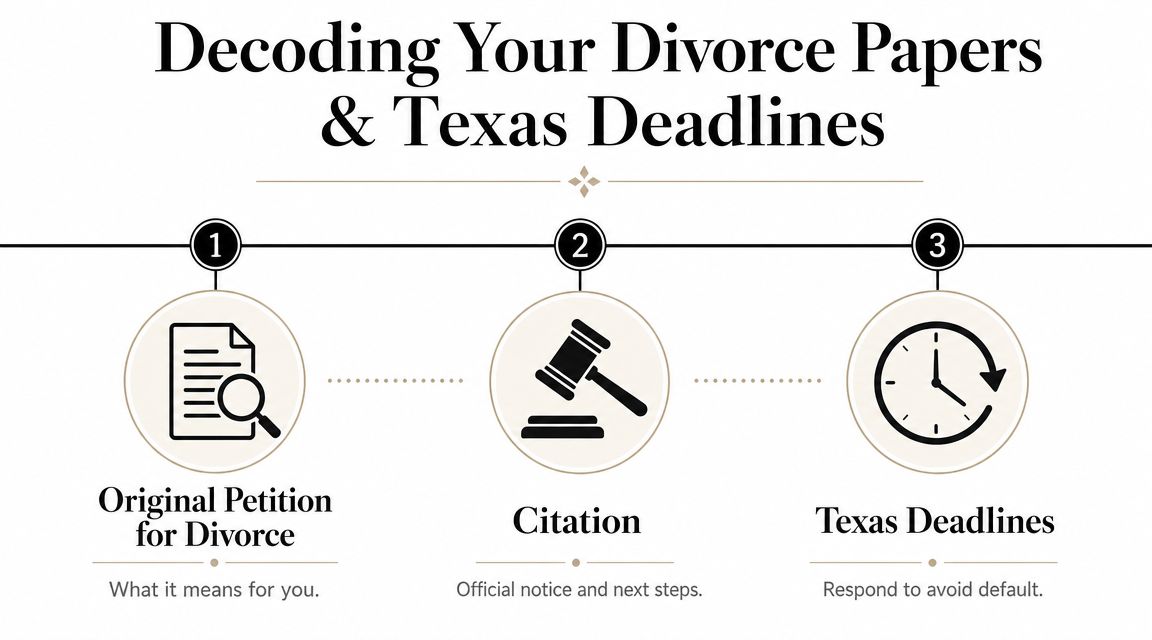
The papers you received usually contain two documents that matter immediately. The Original Petition for Divorce and the Citation.
The petition is your spouse's formal request for the court to grant a divorce and address issues like property, debt, children, support, and temporary arrangements. It is not a final ruling. It is a request. But you still need to take it seriously because it tells you what the other side is asking the court to do.
The citation is the court's formal notice telling you that a case has been filed and that you must respond. It's the procedural alarm bell. If you toss it aside because it looks technical, you miss the most urgent part of the process.
What to look for in the petition
Read for substance, not just legal wording. Focus on these areas:
- Children: Is your spouse asking for conservatorship terms, possession schedules, or support?
- Property and debt: Does the petition mention the house, retirement accounts, vehicles, credit cards, or separate property claims?
- Protective language: Are there restraints on financial conduct or moving the children?
- Immediate court settings: Is there a hearing date or request for temporary orders?
If you want a plain-language primer on why signed legal paperwork matters and why wording can carry real force, this overview of document legal enforceability explained is a useful companion read.
The deadline you cannot miss
Texas procedure is technical here. In Texas divorce cases, the respondent generally must file a written Answer by 10:00 a.m. on the Monday after 20 days have passed since service, and missing that deadline can allow the case to proceed without the respondent's input. Texas also imposes a minimum 60-day waiting period from the date the petition is filed before most divorces can be finalized, which means the response deadline and the final divorce timeline are separate issues, as explained in this guide on Texas divorce response timing and waiting periods.
That rule surprises people. They hear “60-day waiting period” and wrongly assume they have plenty of time to deal with the papers. They don't.
The case can move forward early in ways that affect property, debt, and children long before the divorce is final.
Why the Answer matters
An Answer tells the court you are participating. It preserves your ability to be heard. Without it, you risk a default path where decisions get made without your side of the story.
That doesn't mean filing an Answer solves everything. It means you've stopped the worst early outcome. After that, strategy matters. You may also need to evaluate whether a counterpetition, temporary orders response, or other filings make sense based on what the petition asks for.
Read the papers like a map. The petition tells you where your spouse wants the case to go. The citation tells you how fast you need to act.
Protecting Your Family Finances and Future
Divorce is not just a legal filing. It is a reordering of daily life. Bills still come in. Children still need routine. Mortgage payments, rent, insurance, groceries, and school logistics do not wait for emotions to settle.
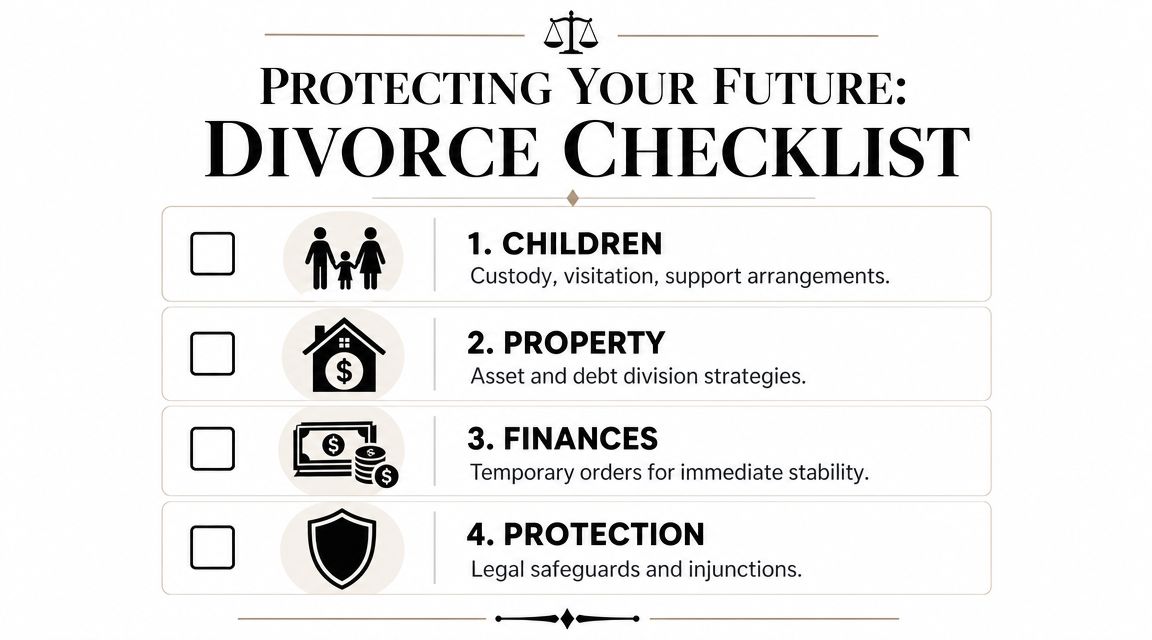
That is why I tell people to get serious about temporary stability immediately. If you have children in Atascocita or Humble, temporary arrangements often matter more to your day-to-day life than the final decree at the beginning of the case. The early stage is where families decide who handles school pickup, who stays in the home, how expenses are paid, and what parenting schedule works until longer-term orders are entered.
Build your financial file before conflict gets worse
A strong response starts with records. A high-value post-service step is to preserve evidence and build a document set. Bank statements, pay stubs, tax returns, W-2s, and credit card statements are core inputs an attorney needs, and Texas family-law guidance also warns against knee-jerk financial moves such as canceling access to joint accounts or taking loans against retirement assets before legal review, as described in this resource on preserving divorce evidence and avoiding financial mistakes.
Gather more than the minimum if you can. Add mortgage records, car loan information, insurance policies, business records if applicable, childcare receipts, and anything showing regular household expenses. If there's personal property that may become disputed, a home inventory can help. This guide on Vorby for organizing your possessions gives a practical way to document what is in the house before items start disappearing or changing hands.
Use a system that's boring and clear:
- One folder for income records
- One folder for debts and monthly bills
- One folder for children's records
- One folder for property photos and account screenshots
Temporary orders shape real life
Temporary orders can address who lives where, who pays which bills, parenting schedules, support, and rules about spending or transferring assets during the divorce. In a Harris County case, those orders often create the structure your family lives under while the case is pending.
Here's the practical point. If you walk into that stage disorganized, you are asking the court to trust your memory. Judges prefer documents, timelines, and specific facts.
To understand proactive planning in more detail, review this page on protecting assets during divorce.
A short video can also help you think through the financial side before you make a rushed decision:
Financial moves that usually hurt your case
People often think aggressive action shows strength. In divorce, it often shows poor judgment.
| Action | Why it creates problems |
|---|---|
| Emptying a joint account | It can look retaliatory or secretive |
| Cutting off normal bill payments | It destabilizes the household and the children |
| Running up debt | It creates a record of irresponsible conduct |
| Borrowing against retirement | It can complicate division and trigger avoidable conflict |
| Pulling children from school or childcare without review | It invites court scrutiny fast |
Keep records. Keep routines steady. Keep your hands off major financial changes until you've had legal advice.
That approach is not passive. It is disciplined.
Navigating the Harris County Court System
Atascocita residents don't deal with divorce in the abstract. They deal with the Harris County court system, with its filing rules, hearing settings, local practices, and very little patience for procedural sloppiness.

Why local procedure matters
People often think, “I understand the big picture. I'm getting divorced.” But family cases are won or lost in details. Which court is assigned. Whether a hearing was set. Whether a temporary restraining order applies. Whether your filing was completed correctly. Whether you showed up prepared.
For someone living in Atascocita, Humble, or another northeast Harris County community, the courthouse may feel distant from your daily life. That distance can trick you into treating the case casually. Don't. Once a case is filed, deadlines and settings are real whether you work in Houston, stay home with the kids, or commute along Beltway 8 or Highway 59.
A good starting point for residents trying to understand the local filing process is this guide on filing a divorce in Harris County.
The system is technical on purpose
Texas makes respondents calculate the answer deadline precisely. If served in person, the response is due by 10:00 a.m. on the Monday after 20 days have passed. If the court is closed on that date, the deadline moves to the next business day. Common mistakes include assuming “about 30 days” is close enough or ignoring hearing dates, according to this explanation of Texas divorce answer calculations and common pitfalls.
That rule tells you something important about Harris County family court practice. Close enough is not good enough.
What Atascocita clients usually need help with
People often don't need a lecture on legal theory. They need help with practical friction points:
- Paperwork confusion: figuring out what was served and what must be filed
- Scheduling pressure: tracking hearings, deadlines, and court notices
- Parenting concerns: making sure school and childcare routines don't collapse
- Financial fear: protecting accounts, income information, and household stability
- Courtroom anxiety: knowing what to expect before appearing in court
Harris County judges see a lot of family cases. They notice who is organized, respectful, and prepared.
That local reality matters. A lawyer familiar with the county's process can spot issues early, prepare for temporary orders, and keep your response aligned with how these cases move through court. Generic advice from a friend or an out-of-area blog post won't do that for you.
How an Atascocita Divorce Lawyer Can Help You Today
The hardest part of being served is that it makes you feel cornered. You are not cornered. You are at the point where legal strategy starts to matter.
A divorce lawyer's job at this stage is practical. Calculate the deadline correctly. File the right response. Review whether emergency issues exist. Identify financial risks. Prepare for temporary orders. Keep you from making emotional decisions that create long-term damage. If children are involved, the lawyer also helps you focus on routines, documentation, and positions a Harris County judge can take seriously.
What legal help should actually look like
You should expect direct advice, not vague comfort. That means someone should be able to look at your papers and tell you:
- what the petition is asking for
- what you must do first
- what conduct needs to stop immediately
- what records to gather
- whether a hearing or restraining language creates urgent issues
- how your goals for children, property, and support fit into the next stage of the case
If you are comparing lawyers, this resource on how to choose a divorce attorney is worth reviewing before you decide who should handle your response.
What to bring to a consultation
Don't overthink this. Bring what you have.
A useful consultation file usually includes the papers you were served with, any notice of hearing, recent financial records you can access, a short timeline of major events, and a list of immediate concerns involving the children, the house, or accounts. If you have screenshots of troubling messages or evidence of unusual financial activity, bring that too.
The Law Office of Bryan Fagan – Atascocita TX Lawyers provides family law representation for divorce and custody matters in this area, and a consultation gives you a place to sort out deadlines, risks, and next steps using the facts of your case rather than internet guesswork.
The right next move
If you've been served, don't wait for things to “cool off.” Waiting usually helps the person who filed first.
Call, get the paperwork reviewed, and make decisions from a position of clarity. That is how you protect your role as a parent, your finances, and your peace of mind. The early days of a divorce are not the time to improvise.
If you've been served with divorce papers in Atascocita, Humble, or anywhere in northeast Harris County, schedule a free consultation with Law Office of Bryan Fagan – Atascocita TX Lawyers. Bring the papers you received, bring your questions, and get clear guidance on what to do next. A focused legal plan can help you regain control quickly and avoid mistakes that are hard to undo.