You're in Atascocita, your license is suspended after a DWI arrest, and tomorrow still starts before sunrise. Maybe you drive from Humble to a job site, take your children to school, or use a company vehicle to earn your income. The immediate question is simple: when can you legally drive again, and what must you do first?
A Texas occupational driver license can help, but it isn't an unrestricted replacement for your regular license. It's a court-authorized, restricted license for a non-commercial vehicle, limited to work, essential household duties, or school-related activities. The order of your actions matters. Miss the wrong deadline, file in the wrong court, or assume a pending DWI charge has the same effect as a conviction, and you can lose valuable time.
The Three Clocks That Control Your License After a DWI
Consider a composite Atascocita situation. A Humble ISD parent is arrested after a traffic stop, needs to leave home early for work, and still has school pickup and grocery trips to manage. The arrest creates more than one legal problem. The license case, the criminal case, the insurance requirement, and any ignition-interlock condition can move on different schedules.
The first clock is the Administrative License Revocation, or ALR, process. A driver generally has a short window after the arrest to request an administrative hearing. The DPS materials tied to the suspension notice control the request, so you should read every page and calendar the deadline immediately. Waiting for the criminal court date is a mistake because the ALR case is separate from the DWI prosecution.
The second clock is the occupational-license waiting period. Texas guidance identifies different timing rules depending on the event and prior history. Texas Law Help summarizes waiting periods of 90 days after suspension for an alcohol or drug arrest within the prior five years, 180 days after suspension for a DWI conviction within the prior five years, and 365 days after suspension for a second or more DWI conviction within the prior five years. See the Texas DPS alcohol-related offenses guidance for the state's explanation of these issues.
The third clock concerns financial responsibility and ignition interlock compliance. DPS and Texas guidance connect occupational-license relief with proof of financial responsibility and, in applicable cases, installation of an interlock device on each vehicle you own or operate. DPS also notes that a person may still be eligible for an occupational driver license when the suspension is in addition to an interlock requirement.
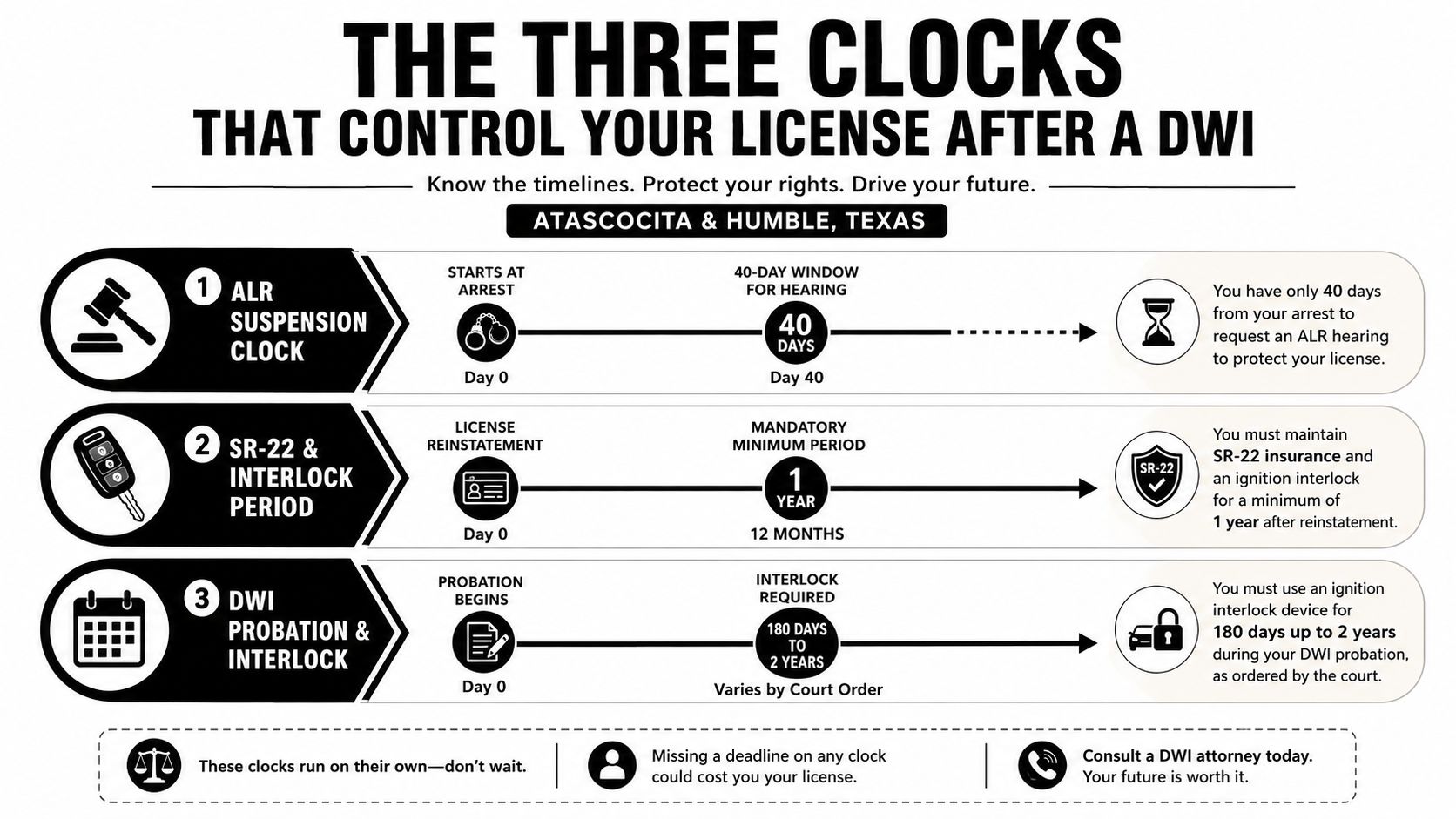
Practical rule: Treat the ALR deadline, occupational-license eligibility date, insurance filing, and interlock installation as separate checklist items. Completing one doesn't complete the others.
Requesting Your ALR Hearing Within the 15-Day Deadline
The ALR request is usually the first decision that needs attention. The suspension paperwork may arrive with a pink or white DPS form or another notice explaining the administrative process. Read the notice carefully, because the date that matters is tied to the arrest and suspension paperwork, not the date of your criminal court appearance.
What to do immediately
Start by locating the DPS notice you received after the arrest. Identify the stated deadline, then make the request through the method and office identified in the notice. Keep a complete copy of everything you submit, including proof that DPS received it.
Your choices are practical, not theoretical:
- Request the ALR hearing. This preserves your opportunity to challenge the administrative suspension and may allow you to continue driving under the temporary arrangement recognized during the pending process.
- Ask a DWI lawyer to review the notice. An attorney can examine the dates, paperwork, testing issues, and the relationship between the ALR matter and the criminal charge.
- Waive or ignore the hearing. This gives up an important opportunity and can allow the administrative suspension to proceed automatically.
The ALR case is separate from the criminal DWI case. A person can face both matters, and a result in one does not automatically resolve the other. That's why a criminal defense lawyer should review the full paperwork rather than relying on the citation alone.
Why the deadline matters
If you miss the request window, you may lose the chance to contest the administrative suspension before it begins. That suspension can run in addition to a court-related suspension, which can change when you qualify to seek an occupational license.
Don't spend the first days after arrest trying to solve every issue at once. Find the notice, identify the deadline, submit the request, and preserve the receipt. Family-law concerns can require separate counsel, including Divorce Lawyer in Atascocita, TX for divorce representation involving Atascocita and Harris County clients, but the ALR deadline itself requires immediate attention from a lawyer handling the DWI and license issues.
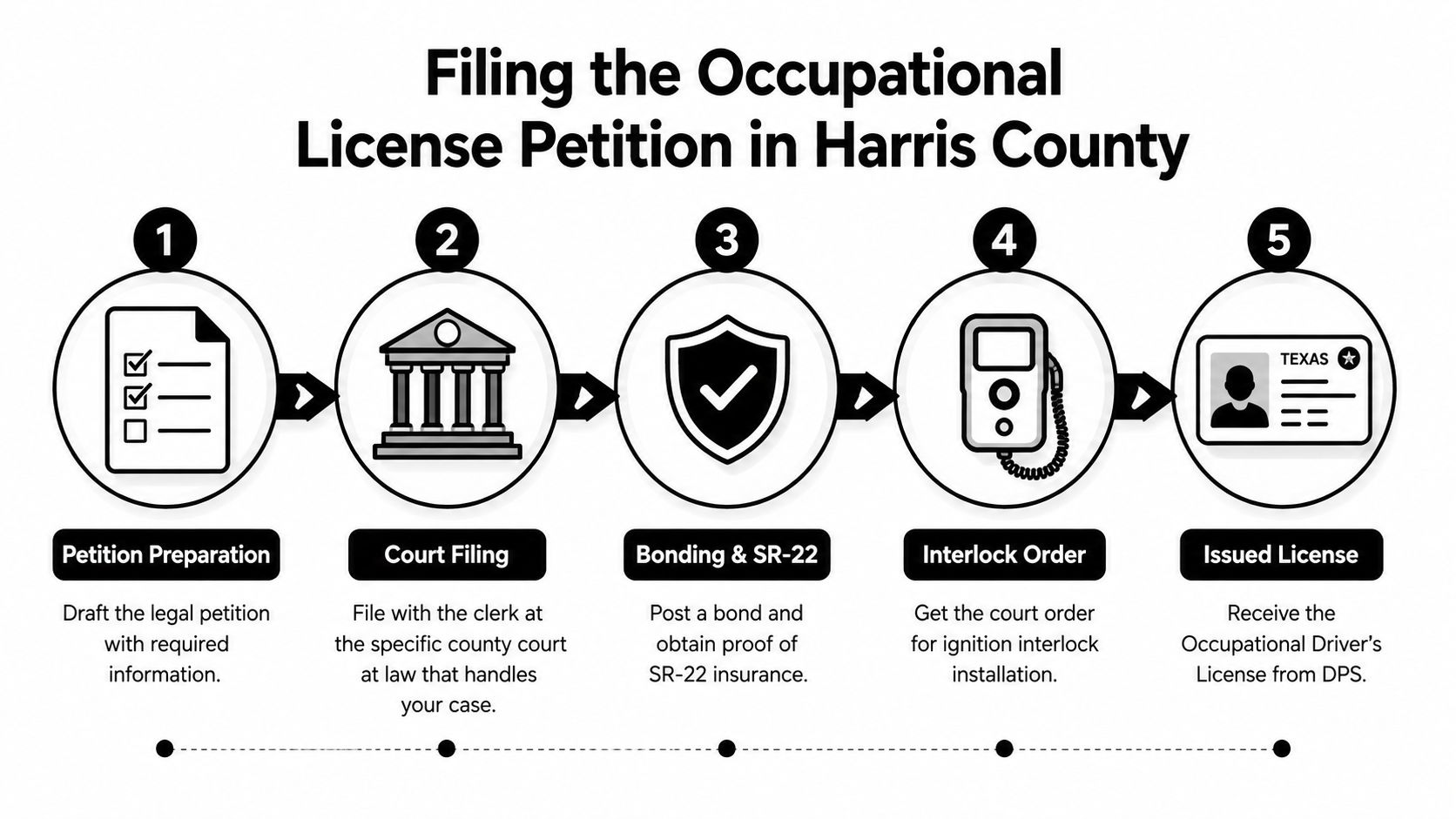
Filing the Occupational License Petition in Harris County
An occupational license doesn't arrive automatically after a DWI suspension. You must petition a court, obtain an order directing DPS to issue the restricted license, and then submit the required materials to DPS.
Texas DPS states that an applicant may petition the Justice of the Peace, county or district court where the applicant lives, or the court of original jurisdiction where the offense occurred. For an Atascocita resident, the correct Harris County court depends on the residence, the offense, and the court's jurisdiction. Don't guess based only on the courthouse that's closest to your home.
Build the filing packet
A careful packet should identify the specific suspension and explain the essential driving need. The court will need enough information to understand why restricted driving is necessary and what limits should apply.
Organize the following:
- Petition: State the legal basis for the occupational license and the driving needs you're asking the court to recognize.
- Identification: Include your full name, date of birth, and driver license number, which DPS identifies as required information for occupational-license paperwork.
- Driving record: Obtain the certified record and review it for prior suspensions, convictions, and incorrect entries.
- Financial responsibility: Prepare proof of the required insurance filing or other documentation the court and DPS require.
- Interlock documentation: If an interlock condition applies, include proof of installation and compliance.
- Proposed order: Give the judge a clear order describing the restricted privilege and its lawful purposes.
The Texas DPS occupational driver license page confirms that the license is restricted to non-commercial vehicles and may be used only for work, essential household duties, or school-related activities.
File with the right Harris County court
Atascocita addresses can fall under Justice of the Peace precincts serving the area, while some matters belong in a county or district court connected to the offense. The Harris County criminal courthouse at 1200 Franklin Street may be relevant for criminal matters, but that doesn't mean every occupational-license petition belongs there.
Call the clerk before filing and confirm the court's procedure, required copies, filing method, and whether a hearing is needed. Some courts may review paperwork on a set docket, while others may require an appearance. The clerk can explain procedure, but the clerk can't advise you about strategy or eligibility.
After the judge signs the order, the process still isn't finished. DPS requires the paperwork to be sent to its Austin address with the occupational-license fee. Keep certified copies and proof of mailing. A signed court order is authority for DPS to issue the license, not permission to drive a commercial motor vehicle.
How Your DWI History Changes the Waiting Period
Two Atascocita drivers can be arrested under similar circumstances and still face different occupational-license calendars. The difference may come from whether the suspension follows an arrest or conviction and whether the record shows a prior DWI conviction within the relevant period.
Texas Law Help's summary of the DPS rules identifies these tiers:
| Triggering Event | Waiting Period | Proof Typically Required |
|---|---|---|
| Alcohol or drug arrest within the prior five years | 90 days after suspension | Suspension records and certified driving history |
| DWI conviction within the prior five years | 180 days after suspension | Court judgment, suspension order, and certified driving history |
| Second or more DWI conviction within the prior five years | 365 days after suspension | Prior judgments, current judgment, and certified driving history |
The documents matter because the judge and DPS need to see the actual history, not your memory of what happened. Pull the certified driving record, locate prior suspension orders, and obtain the court judgment for any prior DWI conviction. A lawyer should compare those records with the current suspension notice before promising that an occupational license is available.
Use a simple decision framework
Ask three questions:
- Is the current matter only an arrest, or has there been a conviction?
- Does the certified record show a prior DWI conviction within the relevant period?
- Does the current charge involve facts that may affect eligibility, including a felony-level allegation?
A pending felony DWI charge deserves immediate legal review. Some felony DWI convictions can block an occupational license, and a pending charge can develop into a conviction that changes the waiting period or eligibility analysis. Don't assume that filing early creates a right to drive immediately.
The underlying alcohol issue also deserves attention. A local treatment resource can provide a separate perspective on Tru Dallas Detox recovery support, but treatment support doesn't replace the ALR request, criminal defense, or occupational-license petition.
Texas DWI data show why prior history must be checked carefully. The Texas Impaired Driving Assessment reported 90,376 DWI reports in 2017, 97,660 in 2018, 98,497 in 2019, and 82,597 in 2020. The same assessment reported one quarter with 22,982 DWI arrests, including 7,015 people with previous DWI arrests, an arrest recidivism rate of 30.52%, and 894 DWI convictions, including 257 people with prior DWI convictions, a conviction recidivism rate of 28.75%. Those figures appear in the Texas Impaired Driving Assessment, and they explain why the court will focus on the certified record rather than a first-offense assumption.
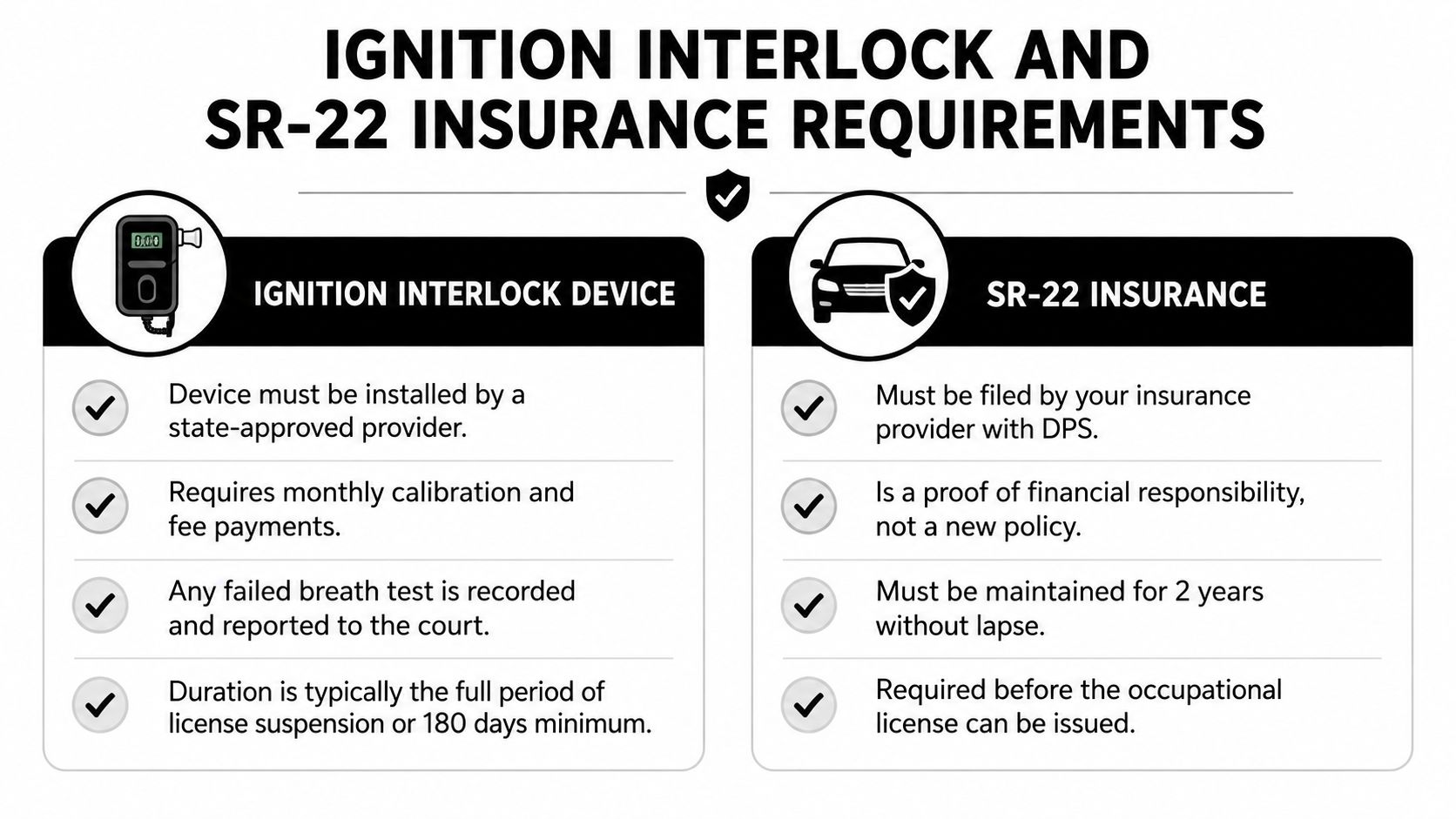
Ignition Interlock and SR-22 Insurance Requirements
The interlock and SR-22 filing are where many otherwise organized applications break down. An occupational-license petition must match the actual vehicle, insurance, and court requirements. Buying ordinary auto insurance or scheduling an interlock appointment isn't enough if the documentation doesn't reach the right agency in the right form.
The interlock side
An ignition interlock device is installed in a vehicle and requires a breath sample before the vehicle starts. Texas guidance ties occupational-license relief to installation on each vehicle you own or operate when an interlock requirement applies. Confirm the provider's status, keep the installation certificate, and ask how compliance reports are sent to the court or DPS.
Check these details before the hearing:
- Vehicle coverage: Confirm every owned or operated vehicle covered by the order has the required device.
- Installation proof: Obtain a dated certificate or receipt that identifies the vehicle.
- Reporting: Ask who receives compliance information and what happens after a missed calibration or failed test.
- Court language: Compare the installation documents with the exact wording of the proposed order.
For general background on device rules outside Texas, Florida DUI legal defense interlock offers a useful comparison, but Florida information cannot substitute for Texas DPS or Harris County requirements.
The SR-22 side
An SR-22 is proof of financial responsibility filed by an insurance company with DPS. It isn't a separate vehicle or a substitute for maintaining an active policy. Ask the insurer to confirm that the filing is active, tied to the correct driver, and maintained without a lapse.
A common mistake is scheduling the hearing before the SR-22 filing becomes effective. Another is installing the device in a vehicle that isn't covered by the order. Keep the insurer's confirmation, the policy documents, and the interlock certificate together with the petition materials.
If your license suspension involves driving while license invalid issues, review the related Texas rules through the firm's DWLI in Texas resource. The legal basis for the suspension affects what documents and court orders you need.
What Happens at the Court Hearing and Common Pitfalls
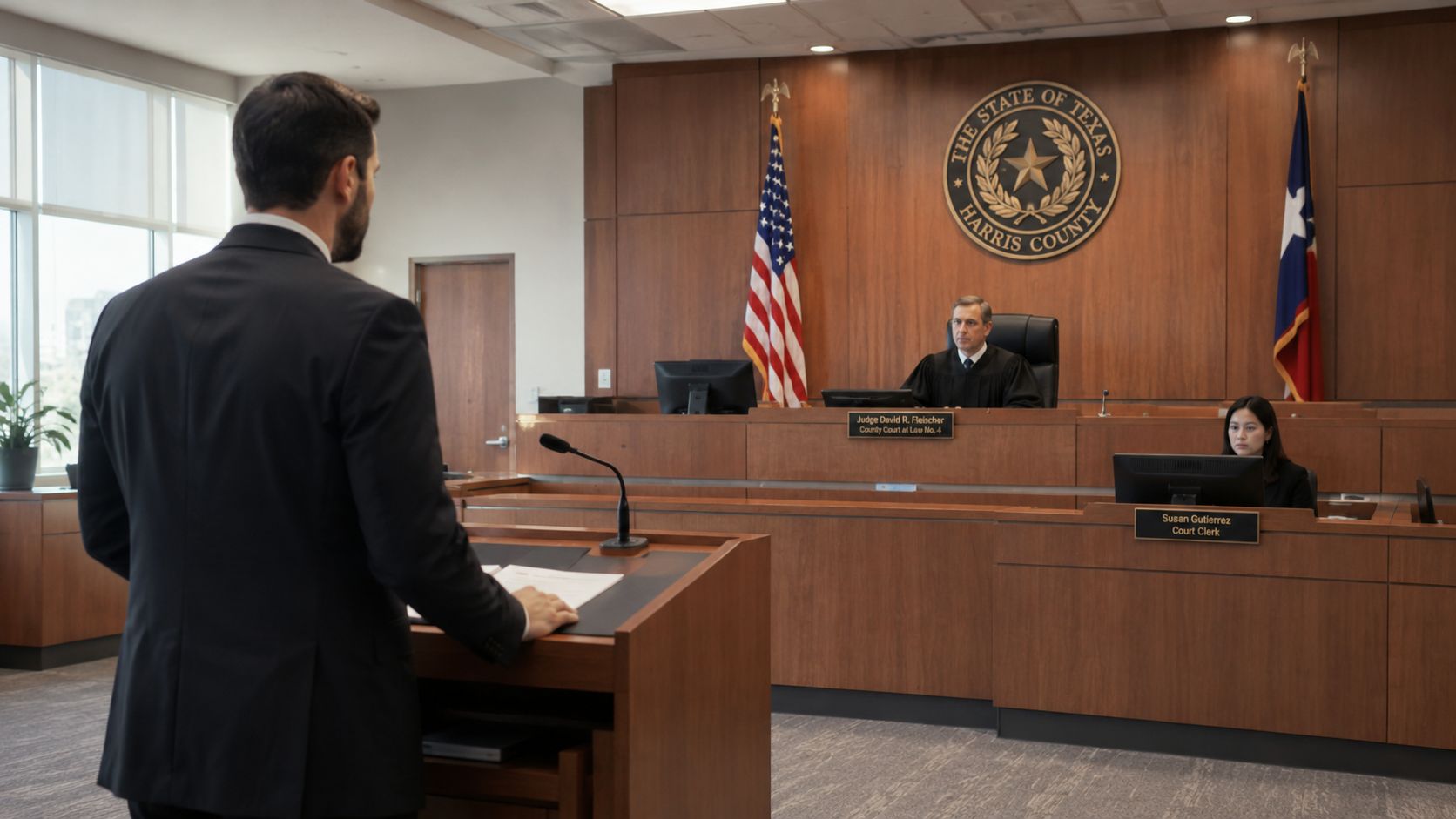
The hearing is usually less dramatic than clients fear, but judges expect organized paperwork and honest answers. Bring your certified driving record, proof of financial responsibility, interlock installation documentation when required, an employment letter, and a proposed order that clearly states the permitted purposes of driving.
The judge may ask where you work, why driving is essential, what vehicle you'll use, and whether you understand the restrictions. Answer directly. Don't exaggerate your schedule, and don't ask for broad personal transportation if the statute limits the license to work, essential household duties, or school-related activities.
What can cause delay or denial
- Incomplete petition: Missing identification, suspension details, or signatures can send the filing back for correction.
- Weak employment proof: A vague statement that you “need to drive” is less useful than a letter identifying the job and required transportation.
- Missing interlock evidence: If the order requires an interlock and you haven't documented installation, the judge may continue or deny the request.
- Insurance gap: A pending or lapsed SR-22 filing can prevent DPS from issuing or maintaining the license.
- Commercial vehicle confusion: An occupational license doesn't authorize operation of a commercial motor vehicle.
The commercial-driver issue is especially serious. A CDL holder who drives a company truck for work may still need transportation for personal employment-related purposes, but the occupational license itself cannot be used to operate the commercial vehicle. Texas guidance confirms that the restricted license does not authorize a commercial motor vehicle. Review the separate hearing process in what happens at an arraignment hearing only as general courtroom preparation, not as a substitute for advice about the occupational-license petition.
Bring the proposed order before the judge sees the case. A clear order reduces confusion about the vehicle, purpose, and restrictions.
Your Next 48 Hours and When to Call an Atascocita Attorney
The first two days should be about preserving options, not trying to solve the entire DWI case from your phone.
Today
- Find the DPS paperwork: Locate the suspension notice and identify the ALR deadline.
- Calendar the deadline: Use the arrest and notice dates, not the criminal court date, to organize the file.
- Preserve evidence: Save the citation, release papers, vehicle information, insurance records, and every notice from DPS.
- Stop unsafe driving: Don't drive a suspended vehicle or assume an occupational license exists before DPS issues it.
This week
Confirm whether your matter is an arrest-only suspension, a conviction-based suspension, or a repeat-offense situation. Request the certified driving record, ask an insurance provider about the SR-22 filing, and determine whether an ignition interlock applies to each vehicle you own or operate.
If you're comparing legal-service options, a firm's ability to convert traffic into cases is a marketing issue, not proof that a lawyer understands your ALR deadline or Harris County filing requirements. Judge counsel by the questions they ask about your dates, record, vehicle, and court order.
Before any hearing
Prepare the petition, supporting records, employment documentation, insurance confirmation, interlock certificate, and proposed order. Confirm the correct Harris County court before you appear. If you drive for work, identify whether the vehicle is commercial, because an occupational license cannot authorize commercial-motor-vehicle operation.
A local lawyer can coordinate the license issue with the underlying DWI defense. The DWI lawyer in Atascocita, TX page provides information about the firm's Atascocita criminal-defense service. The important point is timing. Missing the ALR window or filing before you're eligible can create months of avoidable problems.
The Law Office of Bryan Fagan, Atascocita TX Lawyers helps residents of Atascocita, Humble, and northeast Harris County address DWI defense and occupational-license paperwork, including deadlines, court petitions, and DPS submissions. Schedule a free consultation and visit Law Office of Bryan Fagan – Atascocita TX Lawyers so an Atascocita attorney can review your suspension notice and identify the next lawful step.